
Box Jellyfish And Crocodiles: Staying Safe Around Darwin Harbour
Box jellyfish are more likely in Northern Territory waters from 1 October to 1 June, and Darwin Harbour is managed as a no-tolerance area for crocodiles. Here is what that advice means in plain words, and why it matters so little for a dinner cruise that never leaves the deck.
Short answer
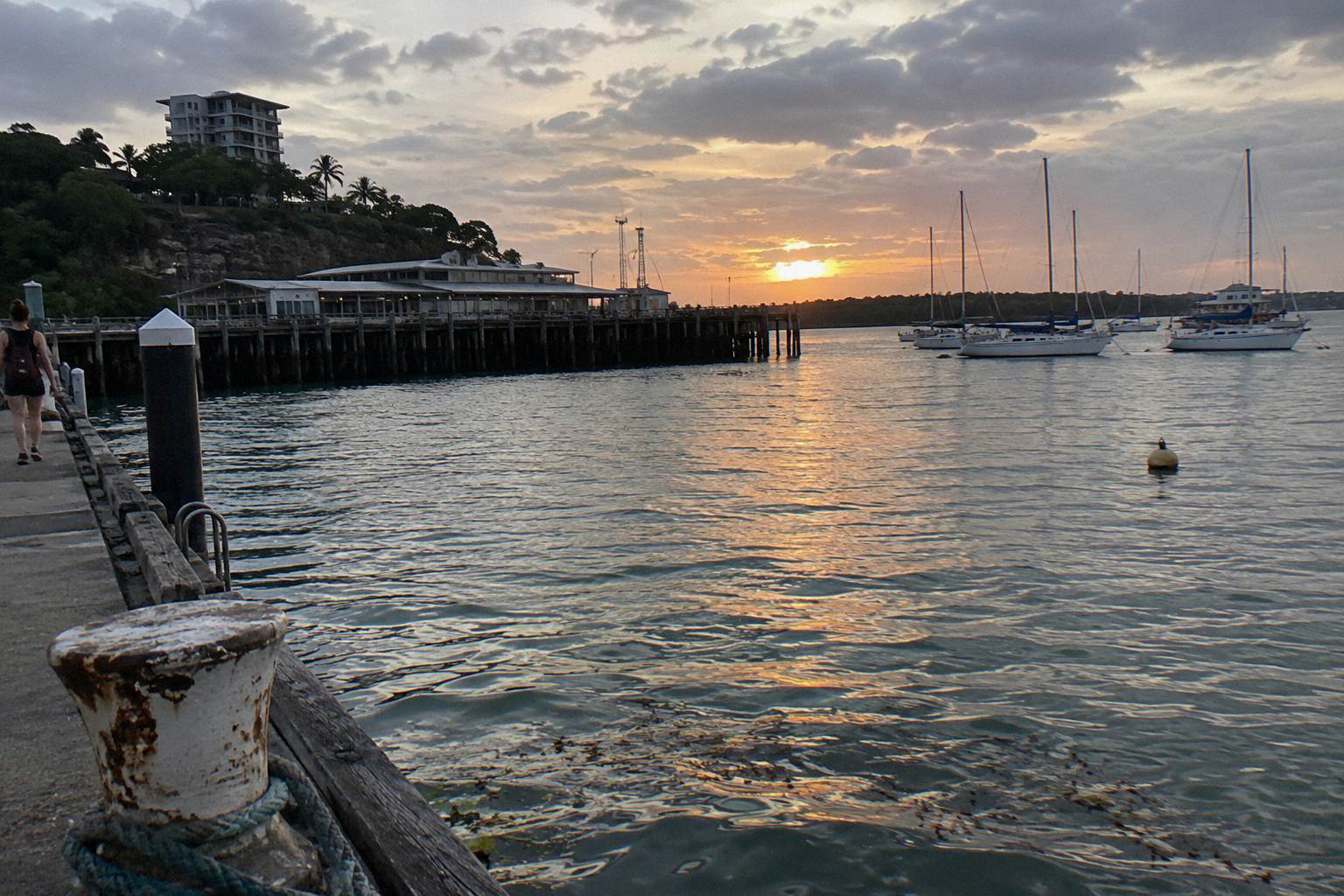
NT Government advice says box jellyfish are more likely in Territory waters from 1 October to 1 June, though stings have been recorded in every month, and the harbour is managed as a no-tolerance crocodile area. Every dinner cruise on this site stays on the boat: none includes swimming, and the standing advice is simply not to swim from the boat or the foreshore.
Every Darwin visitor hears two warnings within a day of arriving: box jellyfish and crocodiles. Both are real, both are worth understanding, and neither applies to an evening dinner cruise the way new arrivals tend to fear. The cruises on this site, the Cape Adieu ketch, the Charles Darwin catamaran, the Sail Darwin sunset sail and the Gaze And Graze cruise, are deck-based experiences that board at Stokes Hill Wharf and stay on the water, not in it. None of them includes swimming, and none of the operators claims otherwise.
This page sets out what the official advice actually says, in words rather than statistics, and separates the rules for swimmers from the situation for passengers. The short version: the stinger season runs long, the harbour is actively managed for crocodiles, and the only behaviour that puts you in contact with either animal is getting into the water, which no dinner cruise invites you to do.
When Is Box Jellyfish Season In Darwin?
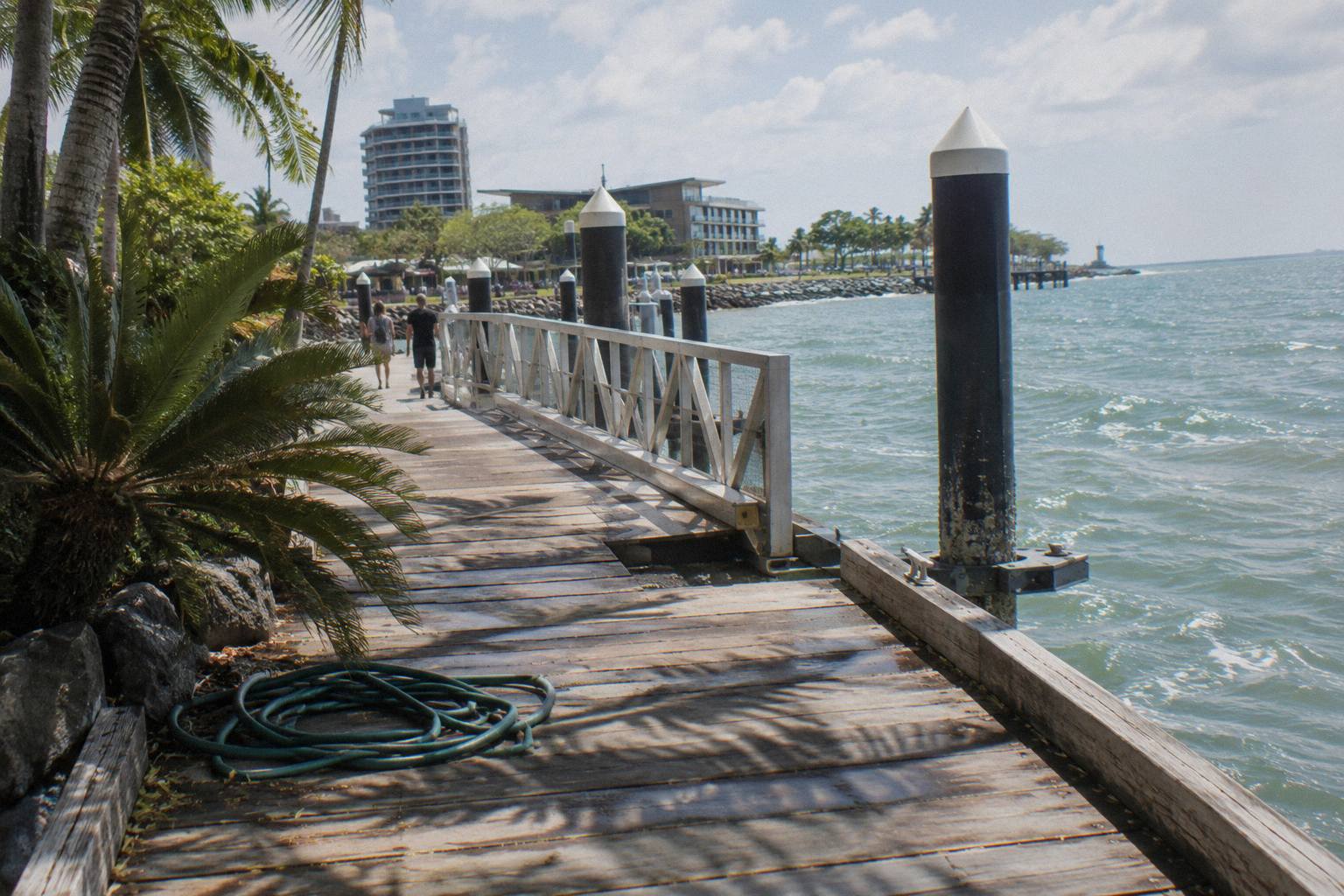
NT Government advice says box jellyfish are more likely to be in Northern Territory waters from 1 October to 1 June during stinger season, though stings have been recorded in every month of the year, and NT Health advice likewise points to October through the end of May as the higher-likelihood window. That is roughly eight months of the year, and it is the reason swimming in open Territory waters is treated so seriously.
The season is long because it is defined by water temperature rather than a calendar event. Warm northern waters suit box jellyfish across the build-up, the Wet and much of the Dry, and the advice does not carve out an exception for the middle of the year. The phrase to notice in the official wording is "more likely", not "present only". A stinger recorded in July does not contradict the season; it simply sits inside the "every month" caveat the Government itself attaches.
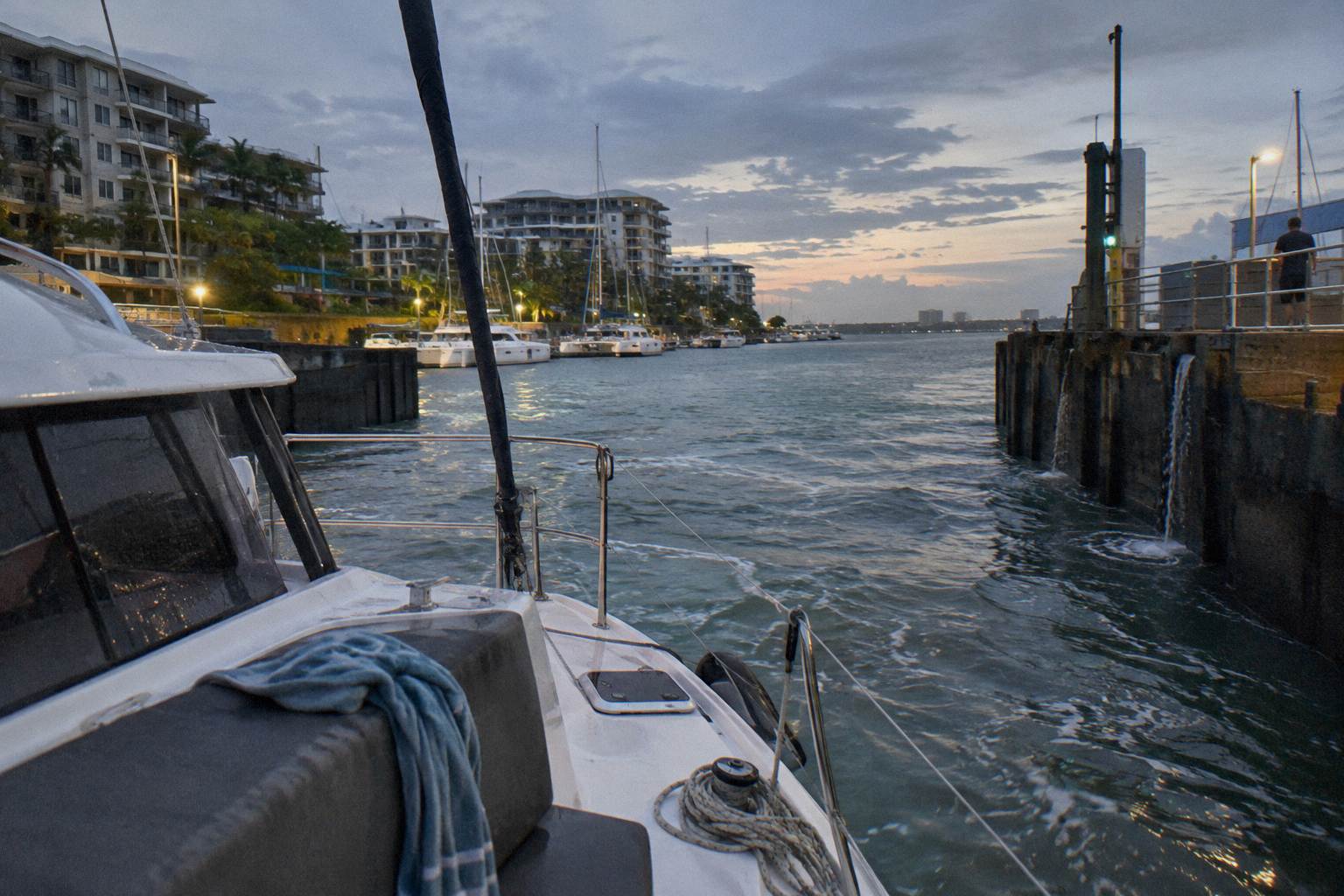
For a visitor planning an evening on the harbour, the practical reading is this: the stinger season overlaps almost entirely with the visitor season. The Dry months that bring the clearest skies, reading the Bureau of Meteorology's long-term averages for Darwin Airport, June through September, with monthly rainfall under about 25 mm, are also months inside or bordering the October-to-June window. You cannot schedule your way around stingers by visiting in the Dry. You schedule around them by not entering the water, which is exactly what a dinner cruise does.
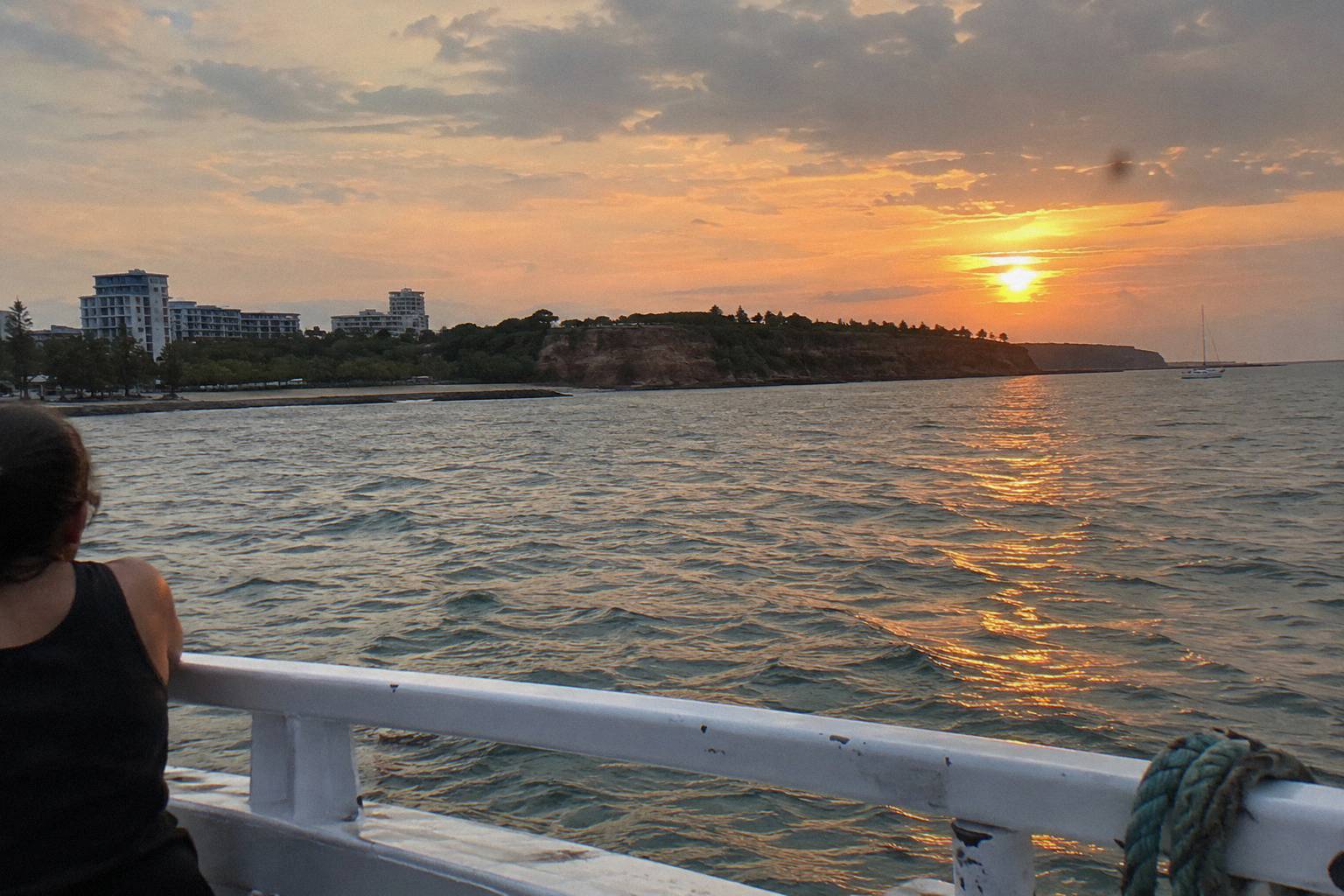
It also pays to be precise about what no one can tell you. There is no published count of stings, no incident rate, no risk percentage and no map of where box jellyfish concentrate. If a page elsewhere quotes you a number, ask where it came from. The Bureau of Meteorology's Darwin climate averages can tell you about rain and sunshine, but stinger behaviour is not a weather table, and treating it like one is how bad advice spreads.
| Question | What the advice says | What it means for a cruise passenger |
|---|---|---|
| When are box jellyfish more likely? | 1 October to 1 June (NT Government); October to end of May (NT Health) | Covers most of the visitor year, including the Dry |
| Have stings occurred outside that window? | Yes, recorded in every month | Do not treat off-season water as clear water |
| Is there a verified sting count for Darwin Harbour? | Not in the sources used here | Nothing printed; do not rely on numbers elsewhere without a source |
| Does a cruise involve swimming? | No, none of the four cruises includes swimming | The stinger question changes from "am I at risk" to "am I entering the water" |
Are There Crocodiles In Darwin Harbour?
Darwin Harbour is managed as a no-tolerance area for crocodiles, which means animals found in the harbour are removed under an active management program, and the NT advice is to swim only in signposted exclusion areas. That is a statement about how the harbour is managed, not a count of animals, and no operator publishes a crocodile number, sighting rate or risk percentage.
The no-tolerance designation is the single most useful fact for a visitor to understand. It does not mean the harbour has a fence. It means the relevant authorities treat any crocodile located in the harbour as an animal to be trapped and moved, continuously, because a big working harbour next to crocodile country is exactly the kind of place animals turn up. Management reduces the presence of crocodiles; it does not transform open water into a swimming pool, and the official advice reflects that by directing swimmers to signposted exclusion areas only.
This is also where a dinner cruise and a swim diverge completely. A passenger standing on the Sun Deck of the Charles Darwin, or at the rail of the Cape Adieu ketch, is doing what several thousand people do on this harbour every week: observing the water from above it. The cruise experience and the crocodile question share a location and nothing else. The behaviour the NT advice regulates, entering the water, is not part of any of these cruises.
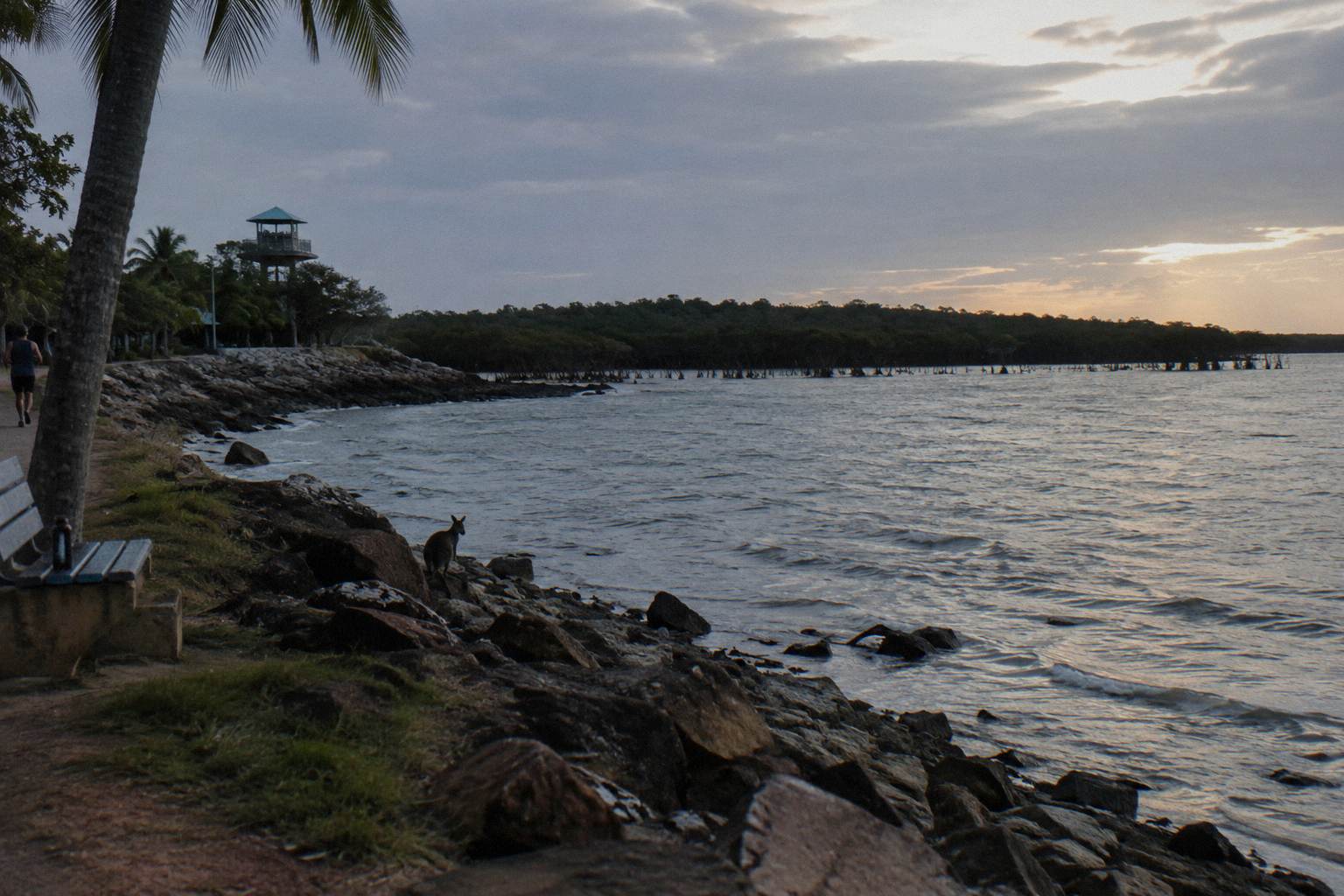
The same honesty applies to the flip side of the question. None of the four operators states a wildlife sighting of any kind, so no cruise here comes with a crocodile, a dolphin or a fish. Two context operators describe their own harbour experiences: Spirit of Darwin Cruises says batfish feed at the bow of its own cruises, and City of Darwin Cruises describes bottlenose dolphins, turtles, snubfin dolphins and dugong as an opportunity to see, with no guarantee. Those are their statements about their boats, not a claim about the four cruises on this site, and they are the closest thing to wildlife commentary available.
| Topic | What is verified | What is not stated |
|---|---|---|
| Harbour crocodile management | No-tolerance area; animals removed; swim only in signposted exclusion areas | Crocodile count, sighting rate, risk level |
| The four cruises and the water | None includes swimming; all boarding at Stokes Hill Wharf | Any operator wildlife-sighting claim |
| Context operators and wildlife | Batfish at the bow (Spirit of Darwin, its own cruises); dolphins, turtles, dugong as an opportunity (City of Darwin Cruises) | Sightings on these four cruises; any guarantee |
| Swimming from boats or foreshore | Do not swim; follow NT Government advice | Everything else |
If you want to read more about which animals you might actually notice from the deck, the companion page on what you can see from a Darwin harbour boat keeps to the same sourcing rules, and the deeper dive into the crocodile question on whether crocodiles appear in Darwin Harbour at dusk works through the same evidence. Between those and this page, you have the full honest picture: managed water, no promises, no panic.
Do Sunset Cruises Involve Any Water Contact?
No. None of the four cruises on this site includes swimming, wading, water entry or any activity that puts a passenger in the water, and the only safety advice for them is the standing one: do not swim from the boat or from the foreshore, and follow NT Government advice. Boarding is via wharf gangway, the cruise is on deck, and disembarkation is the same gangway in reverse.
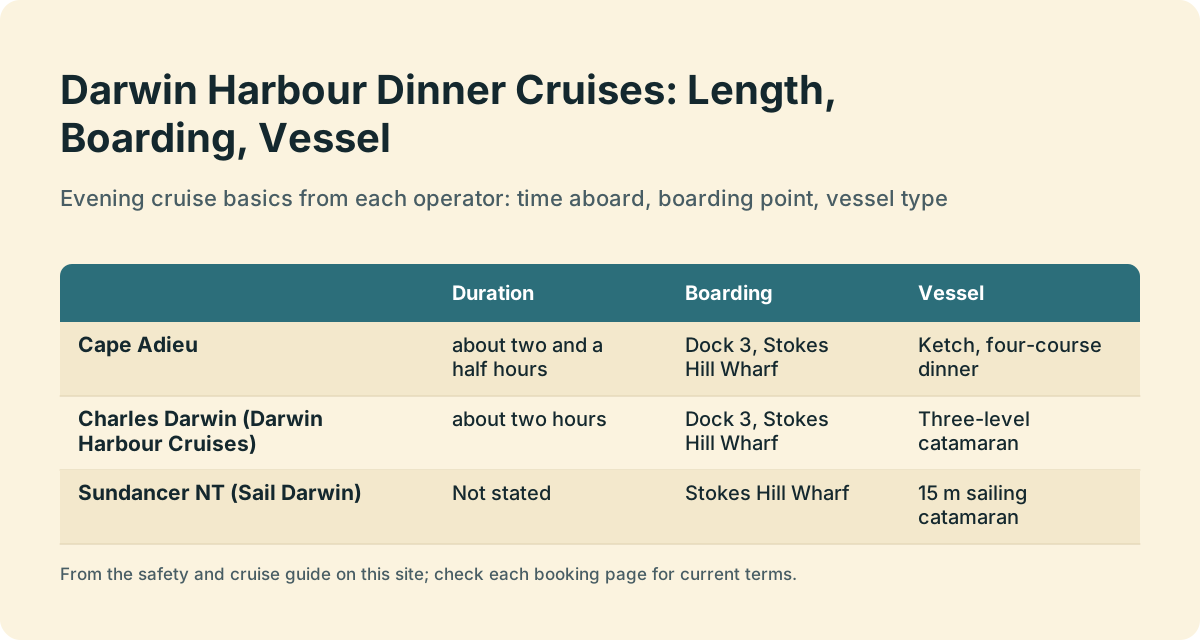
Think about what an evening cruise actually consists of. The Cape Adieu ketch boards at Dock 3, Stokes Hill Wharf, and runs about two and a half hours with a four-course dinner served on board. The Charles Darwin, a three-level catamaran with an open-air Sun Deck and two air-conditioned indoor levels, boards at the same dock and cruises for about two hours. Sail Darwin's Sundancer NT, a 15 m sailing catamaran, boards at Dock 1 nearby and sails about three hours. In every case the passenger's relationship with the harbour is optical: you look at it, photograph it, eat above it.
The gangway itself is the only moment where water and passenger come near each other, and Darwin Harbour Cruises notes that tides affect gangway access, which is one reason its vessels cannot take wheelchairs, scooters or walkers. That is a boarding-logistics fact, not a wildlife fact, and it is covered in full on the page about sunset boat accessibility in Darwin. The relevant point here is that even the wettest part of the evening is a walk down a wharf.
There is a temptation among worried travellers to convert "the water has stingers and crocs" into "the boat is risky", and the evidence does not support the leap. The risk behaviour is entry into unmanaged water. A cruise removes that behaviour from the itinerary entirely, which is why the same NT advice that makes swimming in Darwin a serious decision makes an evening on a dinner boat an ordinary one. For a wider look at that comparison, see whether you can swim in the ocean around Darwin, which separates the harbour question from the beach question.
What About Tides, Weather And The Boat Itself?
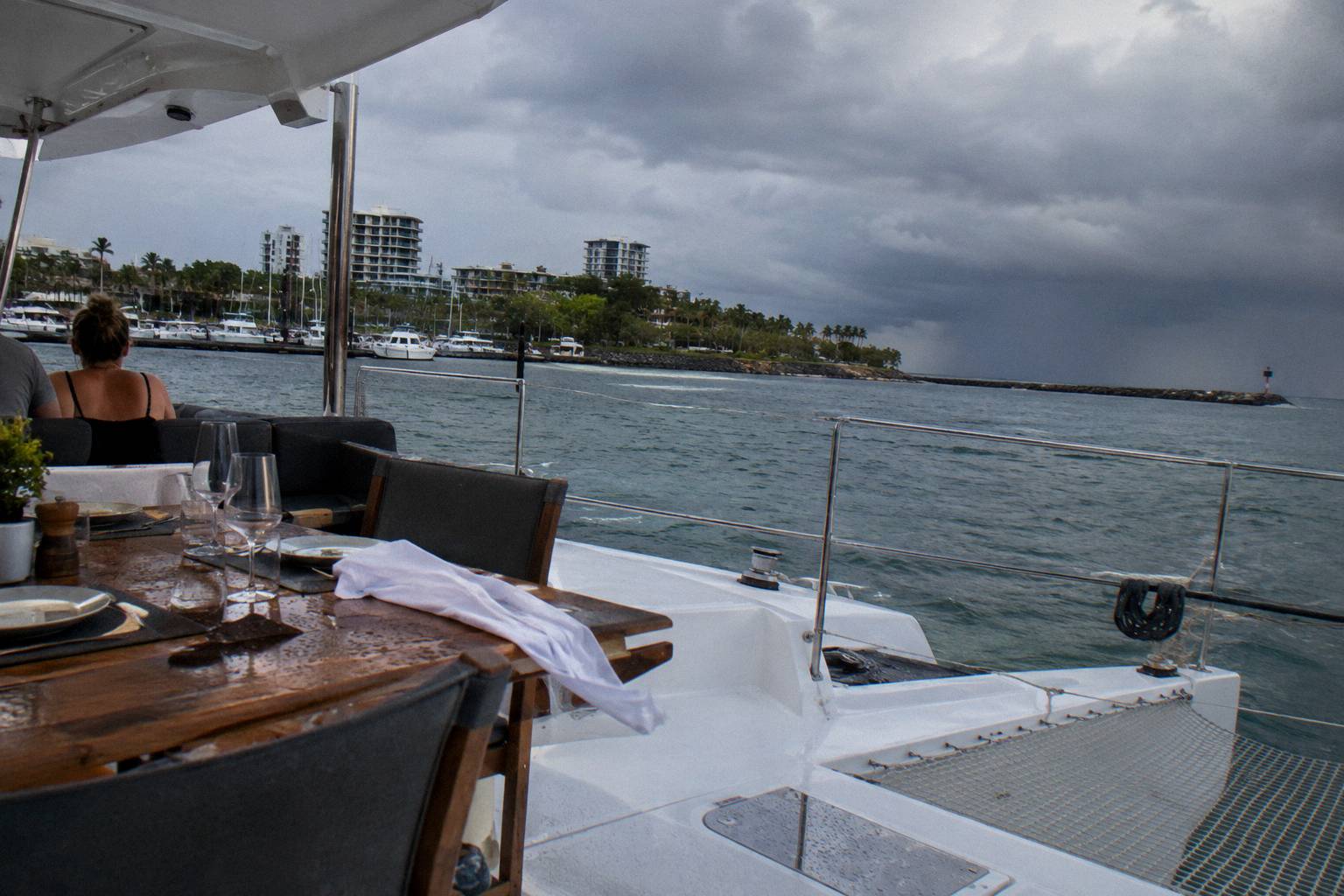
The tide point matters because visitors sometimes read "very large tides" as drama. In practice it means the harbour changes shape across the day, water moves a long way in and out, and the people driving the boats plan around it. Darwin Harbour Cruises' published route for its Charles Darwin cruises, along the Esplanade past the Larrakeyah naval barracks, Cullen Bay and Fannie Bay at about 4 knots, comes with the explicit note that the skipper may change it. Sail Darwin frames it in its terms and conditions: all sailing is subject to suitable tides and weather. The Bureau of Meteorology publishes the official NT tide tables for Darwin, and the Bureau's tide tables page is the primary source if you want to read them yourself.
Weather cancellations are handled by the operators, not by you. Sail Darwin's terms state that the captain decides on the weather and that affected guests get a reschedule or a 100 percent refund, and that if fewer than 10 guests are booked the operator reschedules or refunds in full. Darwin Harbour Cruises and Cape Adieu do not publish cancellation windows, so check the booking page for the terms that apply to your ticket. A related question, what happens when cloud hides the sunset, is answered on its own page.
For stinger-season timing specifically, the weather interacts with your planning in one useful way: the months with the least rain and the most clear days are also months when an evening on deck is comfortable. Reading the BOM figures, July averages 17.6 clear days and August 19.0, against January's 0.6, and mean daily sunshine runs 10.2 hours in July. The stinger season does not pause for the Dry, but the cruising conditions are at their best inside it. Darwin Harbour Cruises and Sail Darwin state no season for their sunset cruises, so check the booking page for their schedules.
| Factor | What the operator or authority says | Figure printed? |
|---|---|---|
| Tides and route (Darwin Harbour Cruises) | Tides decide how close to the coast; skipper may change the route | No tide figure verified |
| Sailing conditions (Sail Darwin) | All sailing subject to suitable tides and weather | No figure verified |
| Weather calls (Sail Darwin) | Captain decides; reschedule or 100 percent refund | Not a percentage of trips |
| Season (Cape Adieu) | Cruises run through the Dry season, April to October | Operator statement |
| Season (Darwin Harbour Cruises, Sail Darwin) | No season stated; check the booking page | Not stated |
How Do You Read Safety Advice Without Statistics?
Treat it as behavioural guidance rather than a probability estimate: the NT advice tells you what to do, which means swimming only in signposted exclusion areas and never from boats or the foreshore, and the missing numbers are deliberate, because a risk percentage for one patch of water on one evening would be false precision. Any page quoting a crocodile count or stinger risk rate for Darwin Harbour exceeds what official sources provide.
Behavioural advice is more durable than statistics for exactly this reason. "Swim only where it is signposted" works in every month, every tide and every year, whereas "a one in some-thousand chance" would need a dataset nobody publishes and would change with every trapping season. When you read the official wording, notice that it never tells you water is fine; it tells you where swimming is acceptable. That is a different kind of claim, and it is the one you should carry with you.
Apply the same filter to cruise marketing. This site prints no ratings or review counts for these tours because no operator publishes them, and it prints no "safe" or "unsafe" verdict about the harbour because none exists to cite. What can be said with confidence is narrow and reliable: managed crocodile population, long stinger season, no swimming on any of these cruises, and operators who plan their navigation around tides and weather. Narrow and reliable beats sweeping and invented. The page on how to read sunset boat reviews applies the same discipline to guest feedback.
There is a social-proof trap here too. A traveller review that says "we saw dolphins, it is totally safe" is a real evening and a meaningless generalisation, in the same way a review that says "no wildlife, boring" is. Neither describes the management regime or the season. Darwin Harbour Cruises' own FAQ is a better anchor: it describes what its vessels do, what the buffet contains, what to bring, and it leaves the wildlife to chance. You can read the operator's framing directly on the Darwin Harbour Cruises FAQ page, which is the source for the route, dietary and boarding details quoted across this site.
Is An Evening Cruise A Good Way To See The Water Safely?
Yes, in the specific sense that a deck-based cruise gives you the harbour without the water contact the official advice regulates, and it does so in the hours when the light is at its best. It is not a safety product and no operator sells it as one; it is a dinner, a sail and a view, with the practical side effect that stingers and crocodiles are simply not part of your itinerary.
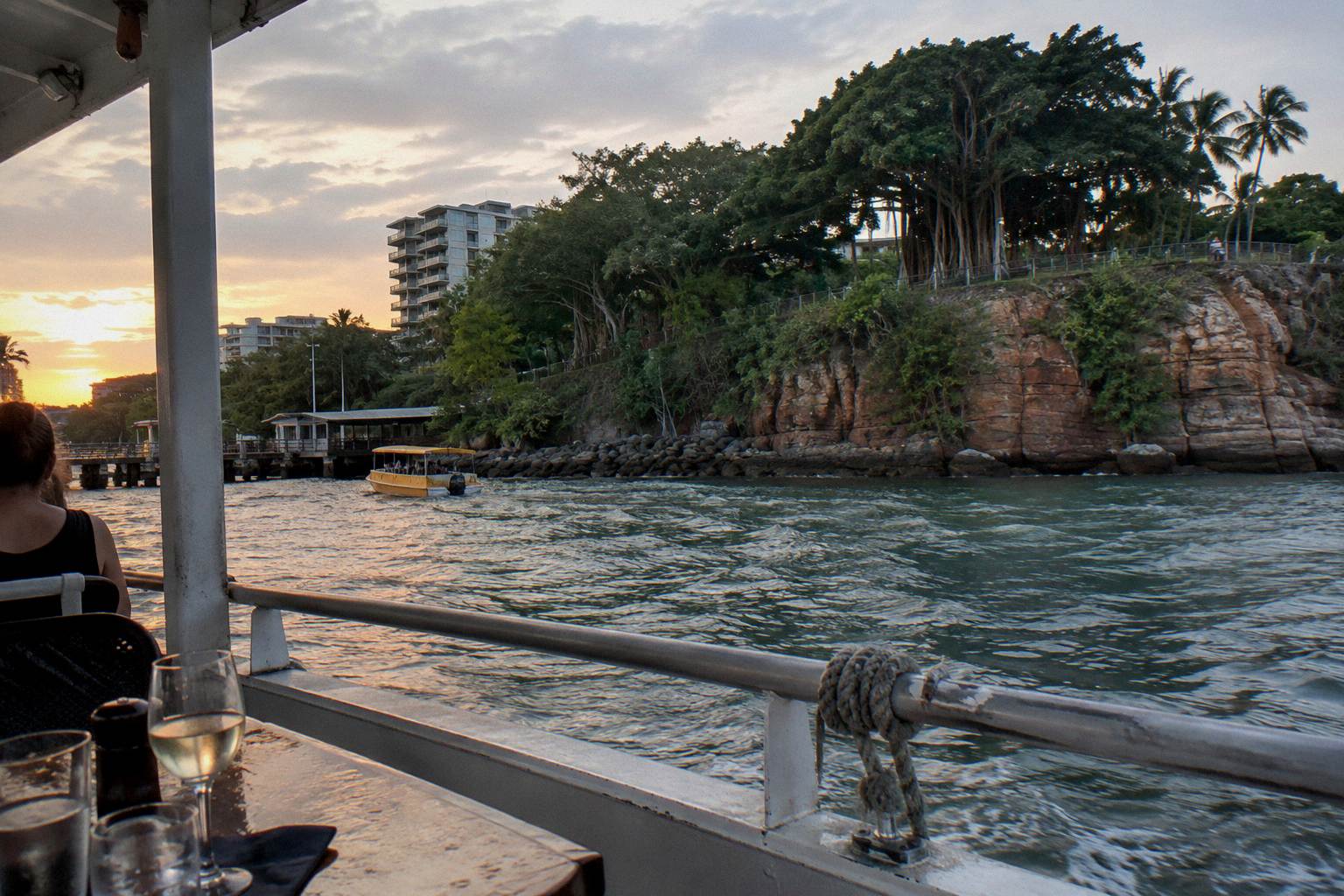
The buyer logic on this page is straightforward. A reader researching box jellyfish in Darwin is usually weighing whether the water is off limits, and the answer for swimming is largely yes outside signposted areas, for most of the year. The answer for boating is different. The harbour remains fully available as a view, and these four cruises are the civilised way to take it: the Cape Adieu ketch with its four-course dinner, the Charles Darwin buffet, the Sail Darwin sunset sail with sparkling wine, and the Gaze And Graze grazing cruise with its mango ice cream.
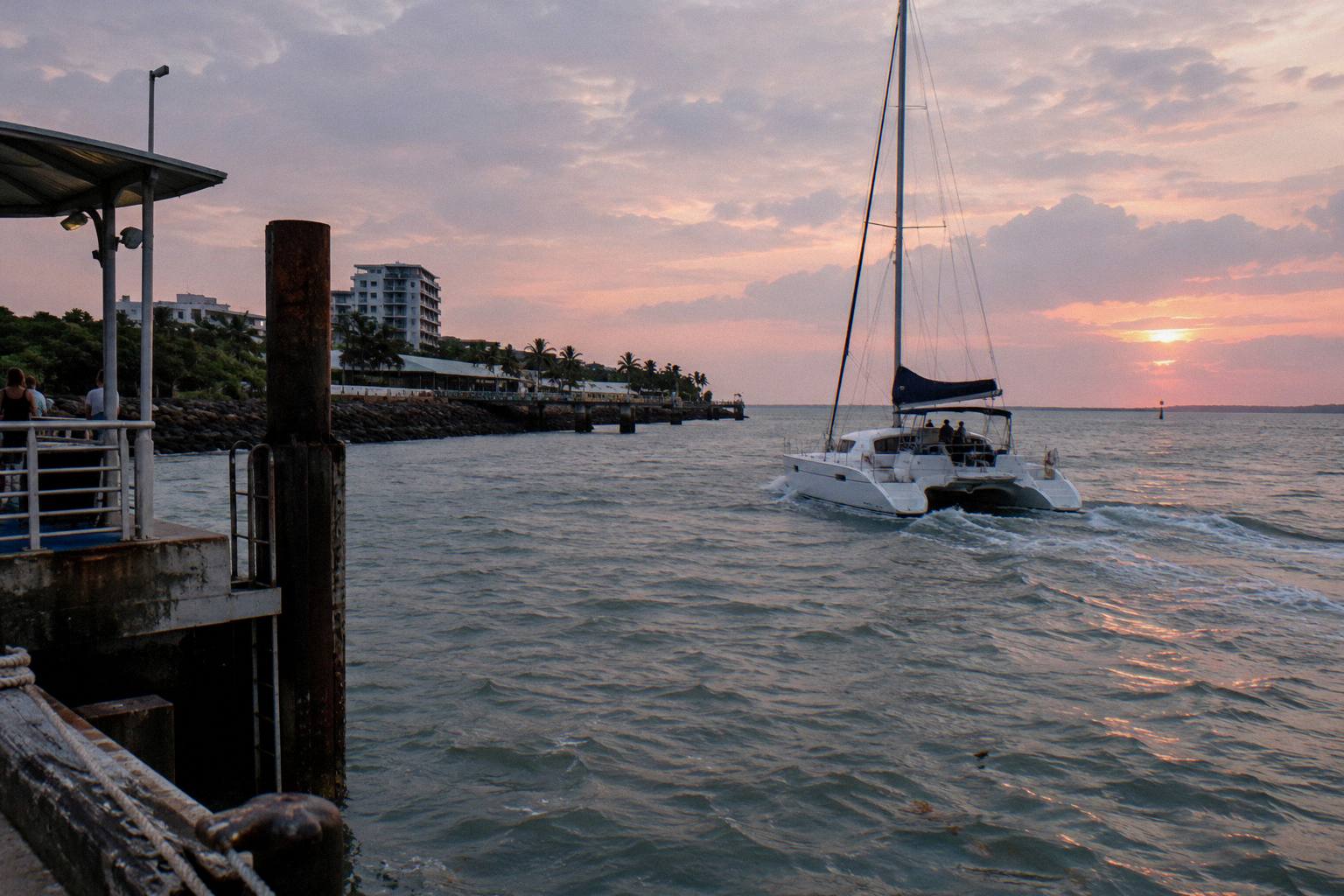
Timing your evening around the light is easy in Darwin because the sunset barely moves. A calculation using a NOAA solar algorithm for Darwin's coordinates puts the earliest sunsets in late May to early July at about 6:29 pm and the latest in December and January at about 7:19 pm, a swing of only about 50 minutes across the entire year, with day-to-day change under a minute. Every one of these cruises boards ahead of sunset, and the exact boarding time is on your booking confirmation, since operators move their schedules with the season.
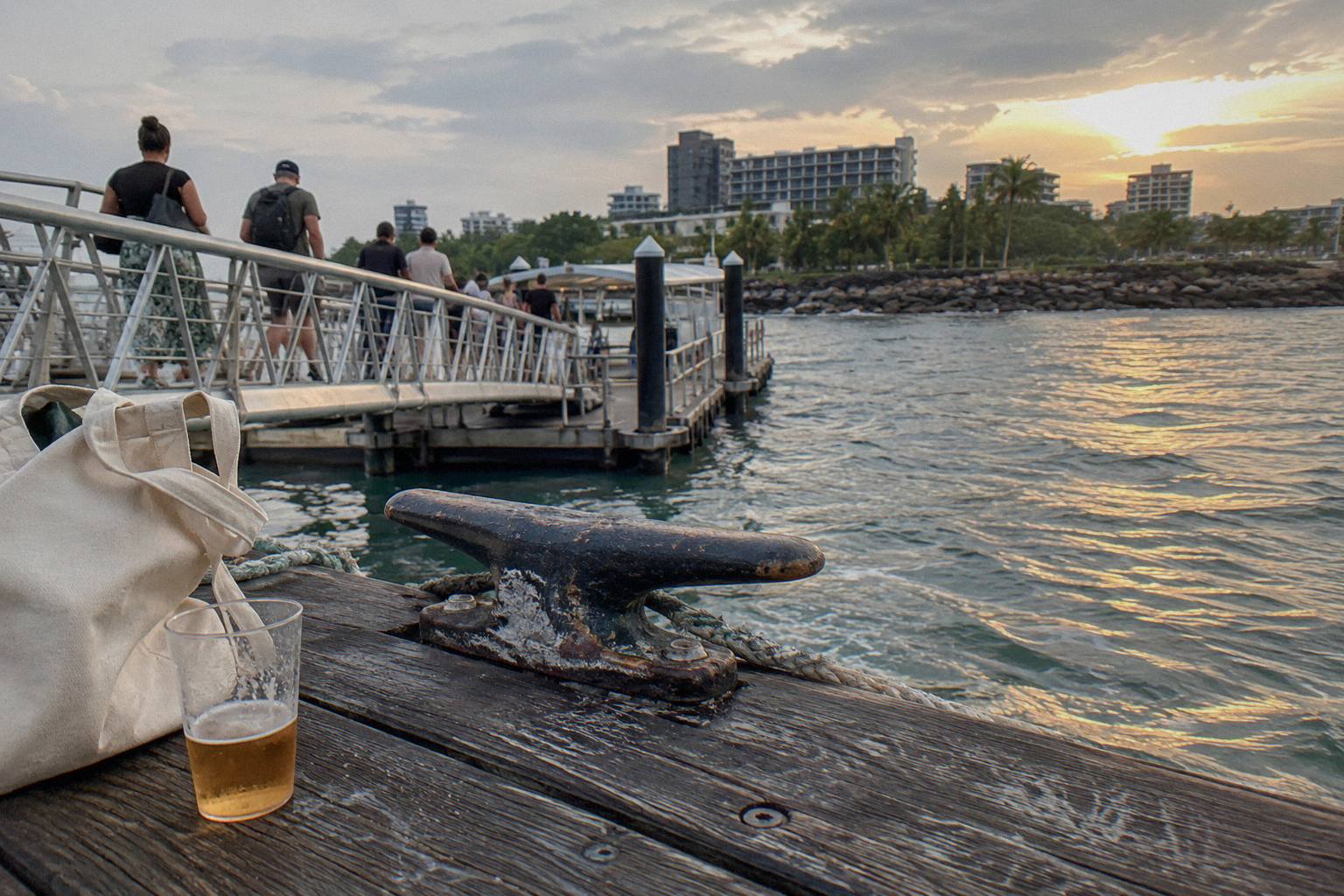
If your interest in the water is more about the table than the tank, the comparison page on a dinner cruise versus a sunset sail breaks down the formats, and the broader Darwin dinner cruise guide walks through all four products side by side. Both keep to the same sourcing: operator figures only, no review counts, no promises about animals.
What Should Families With Kids Know?
Children are welcome on these cruises under each operator's own rules: Darwin Harbour Cruises charges a youth fare for ages 4 to 17 with infants 0 to 3 free, Cape Adieu welcomes families and asks for ages at booking, and Sail Darwin requires under 18s to be accompanied by an adult. None of this changes the water-contact picture, because children on these cruises are passengers on deck, not swimmers.
The stinger and crocodile questions come up more sharply for parents, and the honest framing helps here too. The official advice about box jellyfish and about swimming in signposted areas is written for people entering the water, which is the one thing a family on a dinner cruise is not doing. The practical safety items for a family evening are the ordinary ones: hold a small child's hand on the gangway, note that Darwin Harbour Cruises permits small strollers if you tell reservations, and remember the Charles Darwin vessel is cashless, EFTPOS and Visa or Mastercard only, if ice cream from the bar is on the cards.
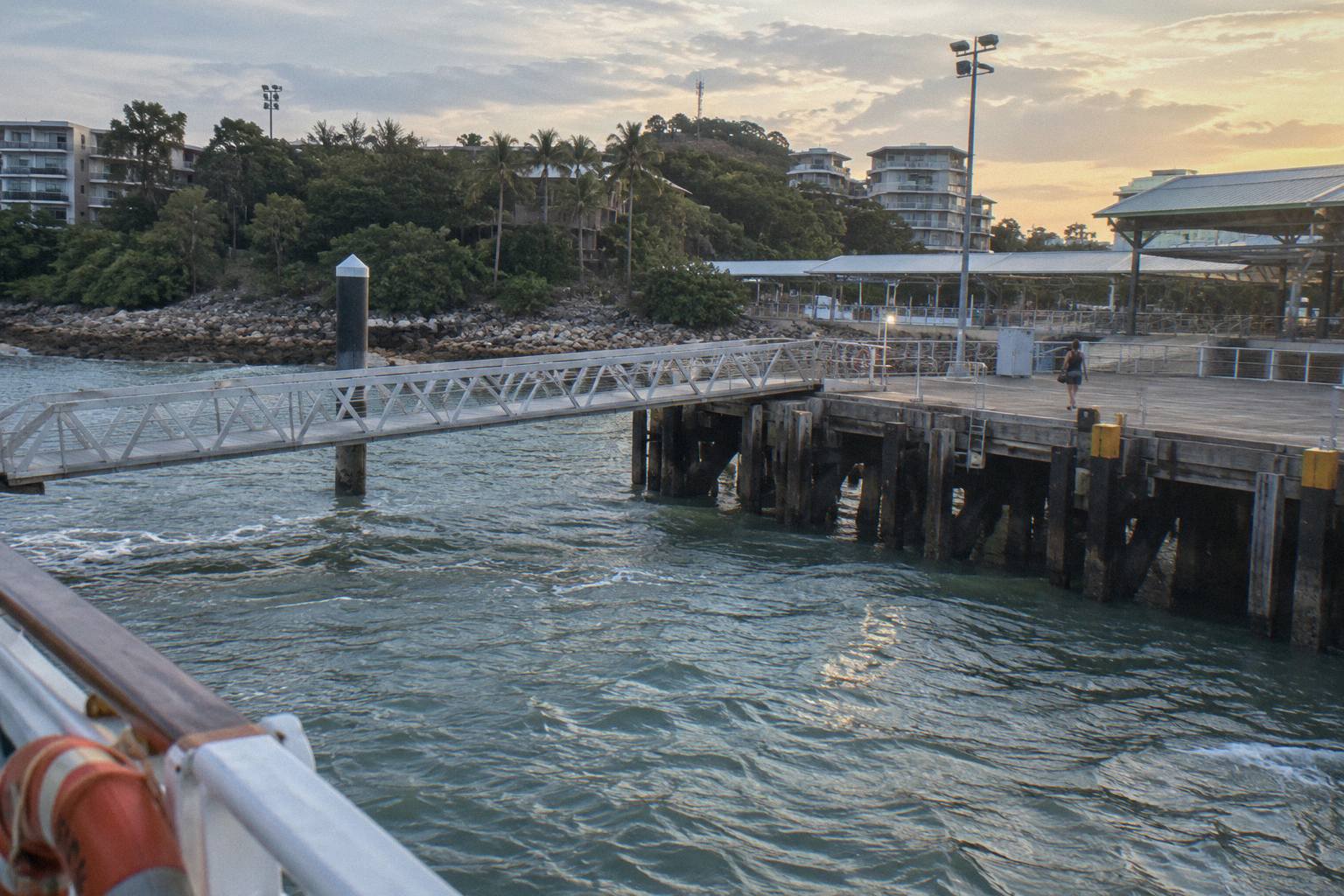
The full family run-down, including fares and age bands in detail, sits on the page about sunset boats with kids in Darwin, and the packing angle, the hat, camera, ticket and light cardigan Darwin Harbour Cruises suggests, is on what to bring on a sunset boat. Neither page adds safety claims beyond the sources, because there are none to add.
| Operator | Children and ages stated | Accompanying rule |
|---|---|---|
| Darwin Harbour Cruises | Youth fare ages 4 to 17; infants 0 to 3 free; small strollers permitted, tell reservations | Not stated beyond fares |
| Cape Adieu | Families welcome; give ages at booking | Not stated |
| Sail Darwin | No age band or fare stated | Under 18s accompanied by an adult |
| Gaze And Graze cruise | Infants 0 to 3 free; child fare not stated | Not stated |
Where Does This Leave Your Evening Plans?
With a clean separation: the official stinger and crocodile advice governs swimming, swimming in Darwin is confined to signposted areas, and every dinner cruise here removes swimming from your evening altogether. You get the harbour, the sunset window that barely moves all year, and a table on the water, while the animals that make the news stay exactly where the advice assumes they are, in the water you are not entering.
Plan the evening the way the locals do. Pick your format: a four-course dinner on the Cape Adieu ketch from A$226 per person at the operator's price, a Charles Darwin buffet from A$149 adult and A$89 youth at the operator's online price, or the Sail Darwin sail and the Gaze And Graze cruise, whose prices appear on the live listing only. Book with the cancellation terms in front of you, note that Cape Adieu needs dietary requests at least 48 hours ahead, and arrive early: Sail Darwin asks guests to arrive at least 15 minutes before departure, and its 48-hour no-change window is firm.
Then forget about the wildlife plan, because there isn't one, and that is the point. The harbour at dusk is a managed, working, beautiful body of water best enjoyed from a deck with a plate in front of you, and Darwin Sunset Dinner Cruise exists to help you choose that deck. The animals get the water; you get the view.
Common Questions About Staying Safe Around Darwin Harbour
When Is Box Jellyfish Season In Darwin?
NT Government advice says box jellyfish are more likely in Northern Territory waters from 1 October to 1 June, and NT Health advice points to October through the end of May. Stings have been recorded in every month of the year, so the season marks higher likelihood, not an absolute window.
Are There Crocodiles In Darwin Harbour?
Darwin Harbour is managed as a no-tolerance area for crocodiles, meaning animals located in the harbour are removed under active management, and the NT advice is to swim only in signposted exclusion areas. No operator publishes a crocodile count, sighting rate or risk percentage, so none is quoted.
Is It Safe To Swim In Darwin Harbour?
This page gives no safe or unsafe verdict, because the sources do not make one. The official advice is behavioural: swim only in signposted exclusion areas, do not swim from boats or the foreshore, and follow NT Government advice.
Do Darwin Sunset Cruises Include Swimming?
No. None of the four cruises includes swimming or water entry of any kind. Boarding is by wharf gangway at Stokes Hill Wharf, the cruise is spent on deck, and the standing advice is simply not to swim from the boat or the foreshore.
Can You See Crocodiles Or Dolphins From A Darwin Sunset Cruise?
No operator of these cruises publishes a wildlife sighting promise of any kind. Context operators describe their own experiences, batfish feeding at the bow for Spirit of Darwin Cruises, and dolphins, turtles, snubfin dolphins and dugong as an opportunity to see for City of Darwin Cruises, but neither is a promise about the cruises on this site.
Does Rain Or Stinger Season Affect Cruise Schedules?
Stinger season does not affect deck-based cruises, since no swimming is involved. Weather can: Sail Darwin's terms make all sailing subject to suitable tides and weather, with the captain deciding and a reschedule or 100 percent refund if a trip cannot run. Check the booking page for the terms on your ticket.