
Can I Swim In The Ocean In Darwin?
No, not in the open ocean or the harbour. NT Government advice is to swim only in signposted exclusion areas, stinger season runs 1 October to 1 June, and Darwin Harbour is a no-tolerance crocodile management zone.
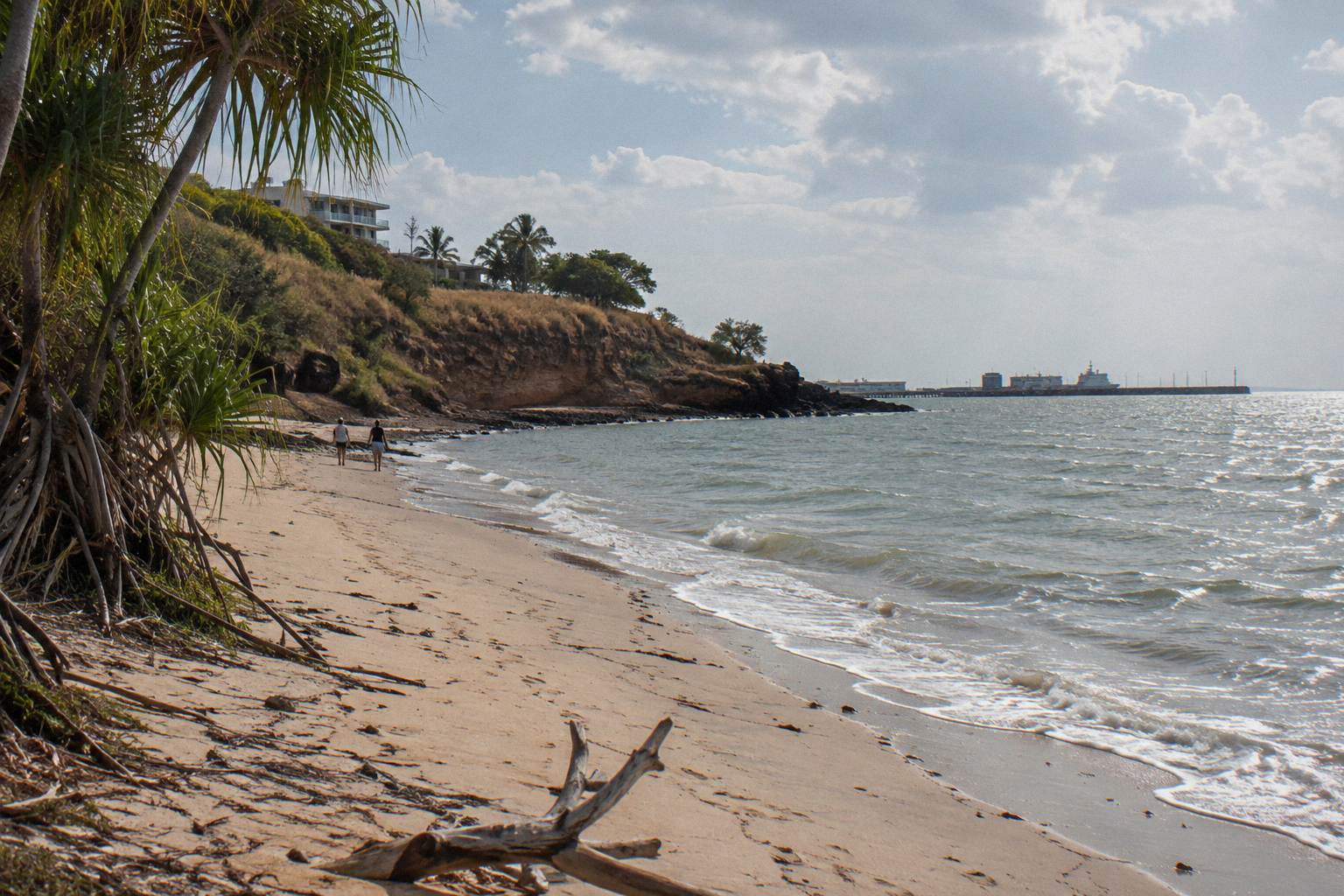
No, not in the open sea and not in the harbour. NT Government advice for the Northern Territory is to swim only in signposted exclusion areas, box jellyfish are more likely in Territory waters from 1 October to 1 June, and Darwin Harbour is managed as a no-tolerance area for crocodiles. Swimming from a boat or the foreshore is not something any of these cruises permits, and the official position leaves very little room for improvisation.
The short version of why: Darwin's water is tropical, warm and productive, which is exactly the combination that brings box jellyfish close to shore for most of the year and saltwater crocodiles through the harbour and along the coast. Neither hazard is a tourism slogan. Both come from NT Government advice that is plain about the risk, and the Territory has no equivalent of the patrolled surf beaches you would find in New South Wales or Queensland, where nets and flags do some of the work.
That does not make the water off limits to enjoyment. It changes the way people enjoy it. Locals and visitors watch the sunset from the shore, eat by the water, and go out on boats, and the harbour is the stage for a lot of Darwin's evening life. If you came here wondering about a swim and are now reconsidering, that instinct is correct, and the rest of this page explains the detail, the advice in plain words, and what an evening on the water looks like when swimming is off the menu.
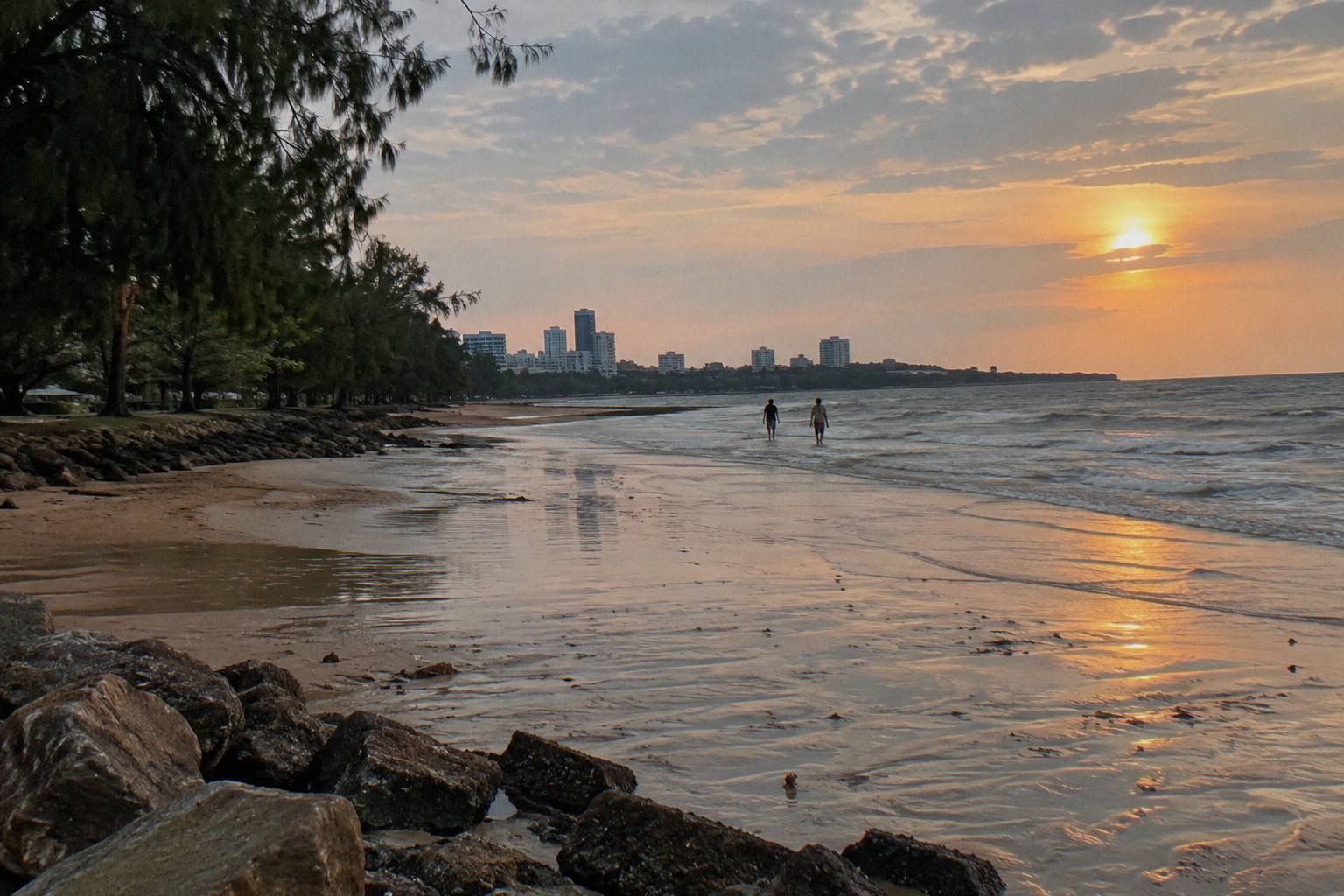
Why The Beaches Here Do Not Work Like Beaches Down South
Darwin's beaches are shaped by two tropical hazards rather than by surf. Box jellyfish, the reason NT Government advice frames stinger season from 1 October to 1 June, are present in Territory waters for most of the year, and NT Health advice says they are more likely from October to the end of May. Crocodiles move through the harbour and coast independently of any season, which is why the advice covers the whole year.
The detail that catches visitors out is the length of stinger season. Eight months, October through May, is most of the calendar, and even that is a probability statement rather than a guarantee. NT Government advice notes that box jellyfish stings have been recorded in every month of the year, so the shoulder weeks of June to September are better, not safe by declaration. Neither the cruise operators nor any official source we could find calls a Darwin beach safe to swim at any time.
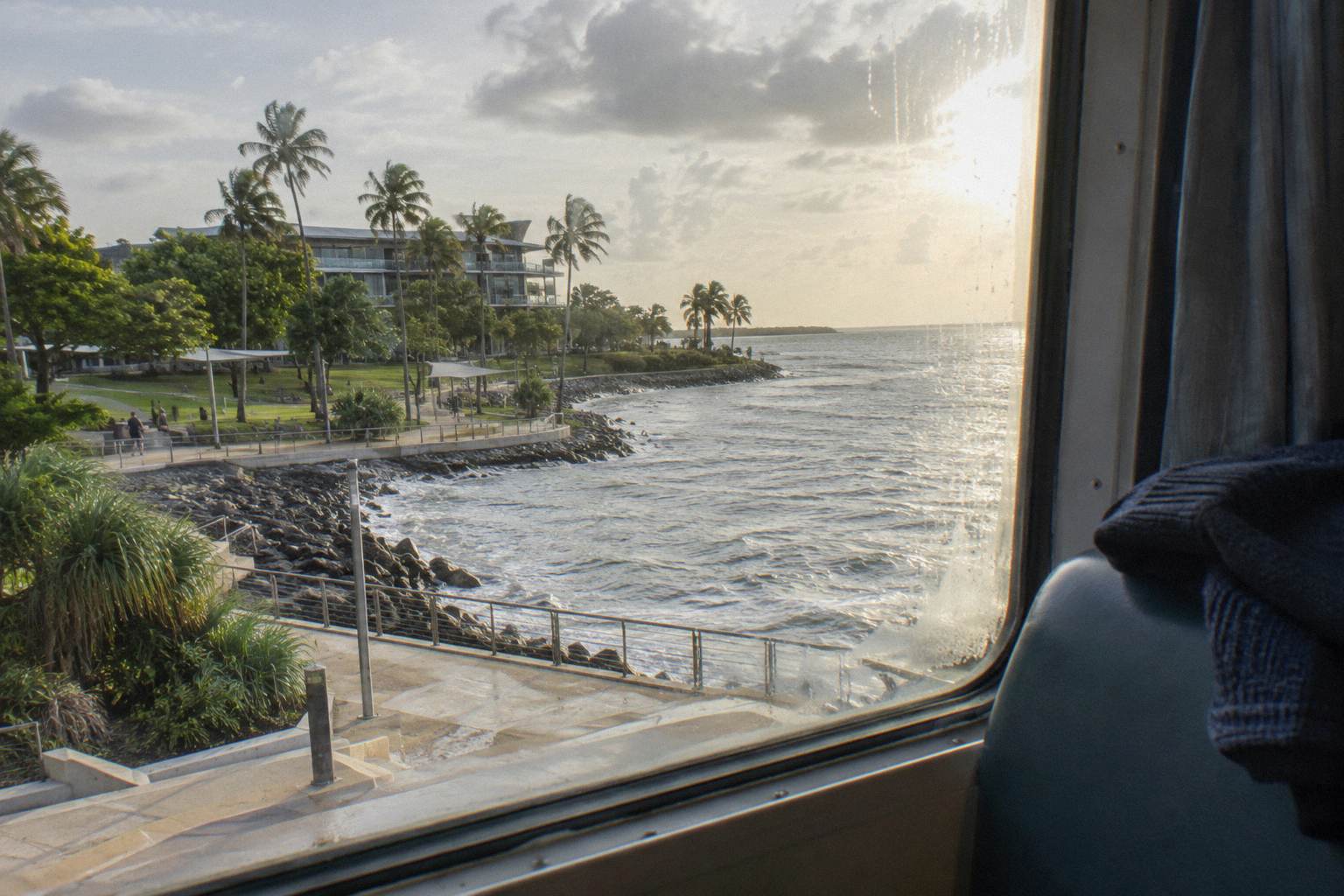
The second detail is that the tropical calendar here is a wet and dry one, not a summer and winter one. Reading the Bureau of Meteorology's long-term averages for Darwin Airport, mean rainfall stays under about 25 mm a month from May to September and the wet months run roughly November to April. The same BOM climate table shows June and July averaging 1.8 and 1.0 mm respectively, with only about 0.3 days of rain of 1 mm or more in each. Dry, in other words, is the comfortable half of the year for being outdoors near the water, and it is also the half outside stinger season's likeliest window. The BOM page prints no wet-season definition of its own, so treat this as a reading of the figures rather than an official boundary.
| Hazard or condition | What NT Government advice says | When it applies |
|---|---|---|
| Box jellyfish (stingers) | More likely in NT waters during stinger season; stings recorded in every month | 1 October to 1 June |
| Box jellyfish, NT Health wording | More likely in Territory waters | October to end of May |
| Crocodiles | Darwin Harbour managed as a no-tolerance area; swim only in signposted exclusion areas | Year round |
| Swimming from boats or foreshore | Not included on any of the four cruises; follow NT Government advice | Always |
What the table adds up to is a simple planning rule: the water is for looking at, travelling on and eating beside, unless you are inside a signposted exclusion area that the NT Government has cleared for swimming. Those areas exist and are signposted on the ground, and they are the only places the advice endorses. Everything else on this page follows from that.
Crocodiles In The Harbour And Along The Coast
Darwin Harbour is managed as a no-tolerance area for crocodiles, meaning animals found there are removed, and the NT advice that follows from it is to swim only in signposted exclusion areas. No one publishes a crocodile count, a sighting rate or a risk percentage for the harbour, so those numbers are not quoted here.
The no-tolerance management is the reason a harbour that looks like a postcard is not a swimming spot. It means the authorities treat any crocodile in the harbour as an animal to be trapped and relocated, which tells you the risk is managed rather than absent. The practical instruction for swimmers is the same whether the animal population is large or small: stay out of the water outside signposted areas, and treat the foreshore and the water off a boat as places to keep your feet on deck or on dry land.
If you want the longer treatment of this subject, our piece on whether crocodiles turn up in Darwin Harbour goes into what the management approach means for visitors, and our guide to stingers, crocodiles and harbour safety collects the advice in one place. The short form is this: neither hazard is a reason to avoid Darwin's coast, and both are firm reasons not to swim in it.
There is a tempting middle ground people ask about, wading or cooling ankles at the waterline, and the honest answer is that NT Government advice does not carve out an exception for shallow water. Box jellyfish in particular are not a depth-dependent risk in the way swimmers sometimes assume. Follow the official advice, keep to signposted exclusion areas, and give the rest of the water its distance.
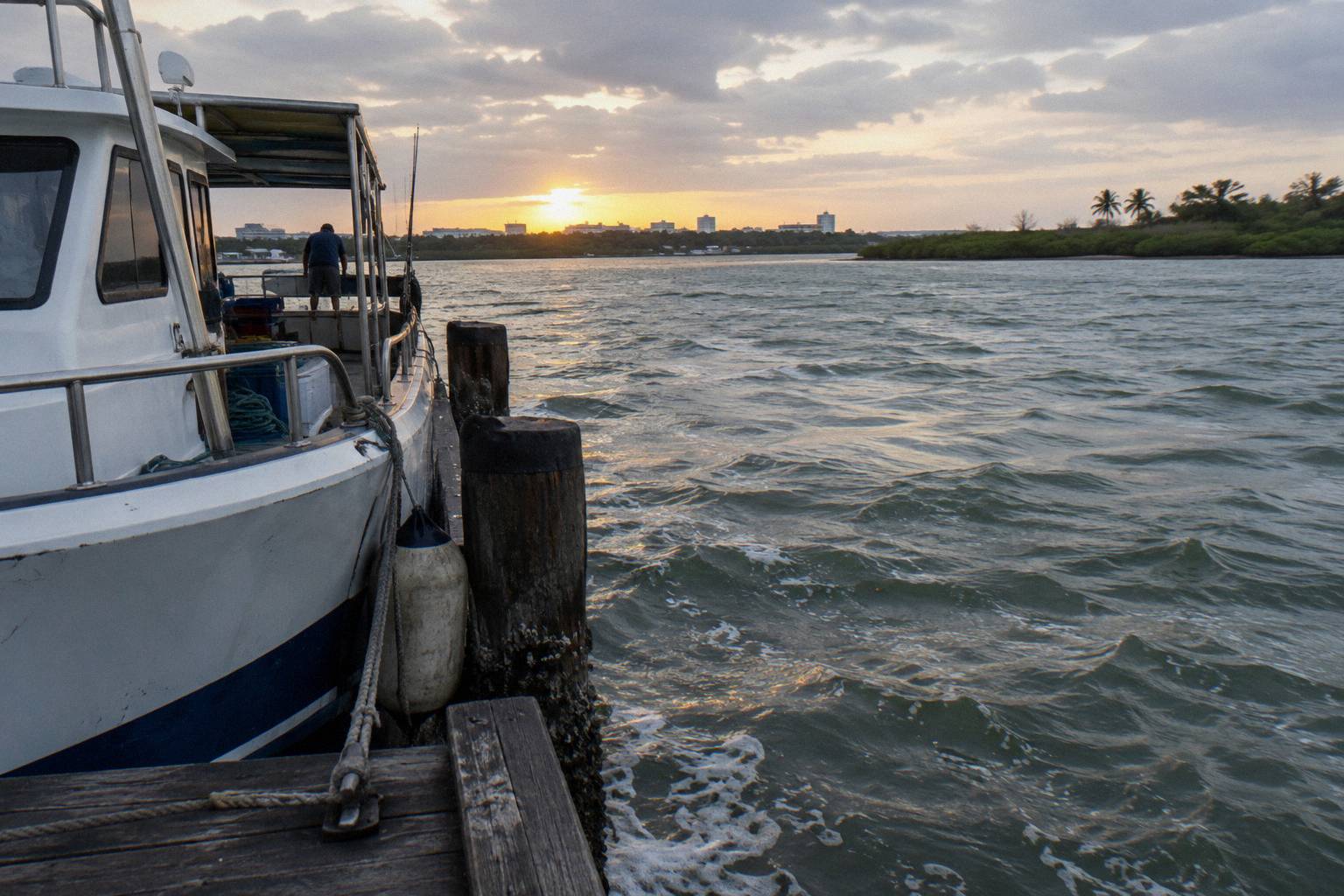
If You Cannot Swim, The Water Still Belongs To Your Evening
Every cruise on this site puts you on the harbour without swimming, and none of them includes swimming. Darwin Harbour Cruises, Cape Adieu Cruises and Charters and Sail Darwin all board at Stokes Hill Wharf on the Darwin Waterfront, at Dock 3 or Dock 1, and the only instruction that matters on board is do not swim from the boat.
This is the practical pivot of the whole question. A harbour you cannot swim in is still a harbour you can dine on, and Darwin's evening cruise calendar is built exactly for that. The Four-Course Ketch Sunset Dinner Cruise from Cape Adieu Cruises and Charters puts a chef-prepared four-course dinner with local produce on a traditional ketch for about 2.5 hours, boarding at Dock 3, and Darwin Sunset Dinner Cruise covers it in detail, along with the alternatives below. Its operator's price is from A$226 per person, it carries a fully licensed bar with no BYO alcohol, and the operator states its cruises run through the Dry season, April to October, with private charters by enquiry outside those months.
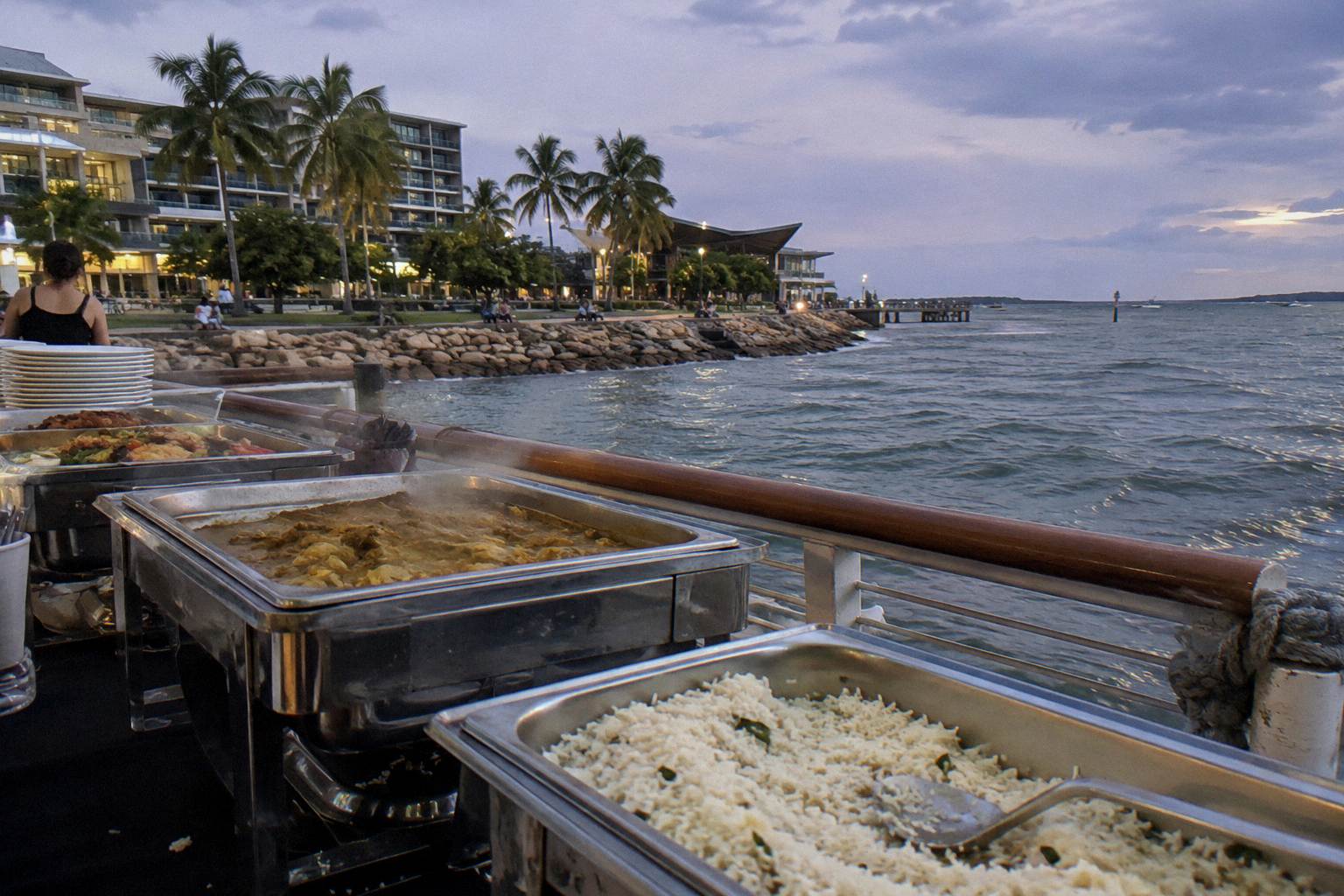
The contrast pair from Darwin Harbour Cruises works on a different model, a three-level catamaran called the Charles Darwin with an open-air Sun Deck and two air-conditioned indoor levels. Its buffet dinner cruise is about 2 hours, from A$149 adult and from A$89 youth for ages 4 to 17 on the operator's own page, with infants 0 to 3 free, and the operator notes that booking online saves up to 9 percent compared with walk-up. For a lighter evening, the same operator's Gaze And Graze Sunset Cruise serves a gourmet grazing platter with locally made mango ice cream on the Sundeck, also about 2 hours; the operator's page shows no current price for it, so check the booking page.
| Cruise | Vessel and style | Duration | Food | Dock |
|---|---|---|---|---|
| Four-Course Ketch Sunset Dinner Cruise | Cape Adieu, traditional ketch | About 2.5 hours | Four-course chef-prepared dinner, local produce | Dock 3 |
| Charles Darwin Sunset Buffet Dinner Cruise | Three-level catamaran with Sun Deck | About 2 hours | Territory-style buffet, drinks to purchase | Dock 3 |
| Gaze And Graze Sunset Cruise | Same catamaran, allocated Sundeck seating | About 2 hours | Grazing platter, mango ice cream | Dock 3 |
| Sunset Sail With Dinner And Sparkling Wine | Sundancer NT, 15 m sailing catamaran | About 3 hours | Dinner and sparkling wine per the listing title | Dock 1 |
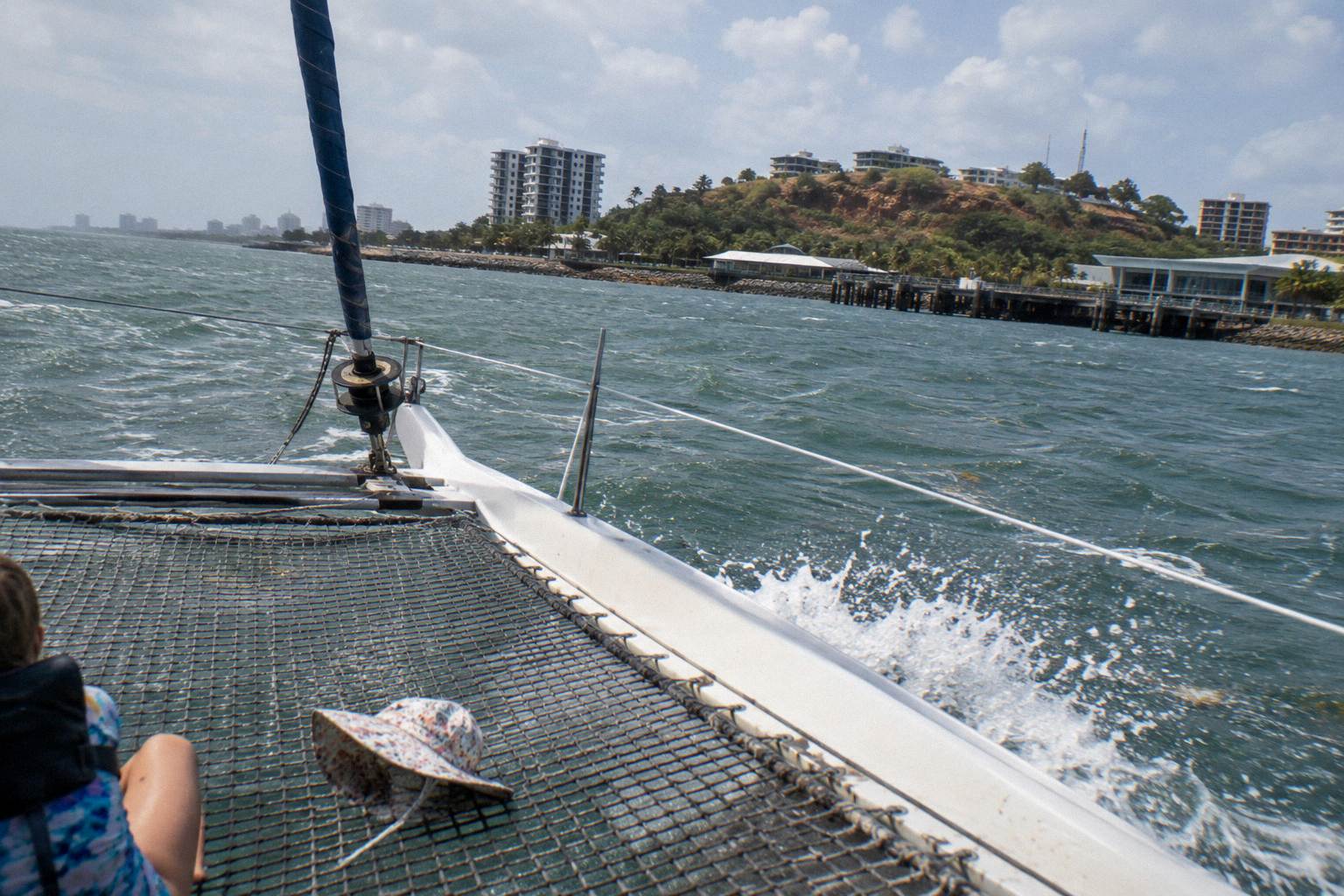
Sail Darwin rounds out the options with a different silhouette altogether, a 15 m aluminium sailing catamaran called Sundancer NT, built in 2005, maximum 30 passengers in-shore, boarding at Dock 1 for an about-3-hour sail with dinner and sparkling wine named in the listing title. Its terms are worth reading before you book: tickets are refundable or transferable but there are absolutely no changes or cancellations within 48 hours of departure, and if fewer than 10 guests are booked the operator reschedules or refunds 100 percent. The operator's own terms page is the source for all of that.
One crossover detail that matters for families: Darwin Harbour Cruises allows under 18s with a youth fare from age 4, Cape Adieu welcomes families and asks for children's ages at booking, and Sail Darwin requires under 18s to be accompanied by an adult without stating a fare band. Our guide to taking a sunset boat with kids in Darwin works through the age rules side by side.
Why The Sunset Is The Reason People Come To The Water Anyway
Swimming was never the main draw on this coast. Darwin's harbour evenings give a sunset that a calculation based on a NOAA solar algorithm places between about 6:29 pm in late May to early July and about 7:19 pm in December and January, a swing of only about 50 minutes across the whole year, which makes an evening on the water reliable in a way few Australian cities can match.
The numbers deserve a little context. The sunset times below are computed, not official: a calculation for Darwin's latitude and longitude on the 15th of each month, accurate to about plus or minus two minutes, in Australian Central Standard Time, since the Northern Territory does not use daylight saving. Day to day the shift is under a minute, so an evening plan made for one week holds for the next. Cruises board ahead of sunset, and operators publish clock times that move with the season, so the time on your booking confirmation is the one to trust.
| Month (15th) | Approximate sunset | Month (15th) | Approximate sunset |
|---|---|---|---|
| January | About 7:19 pm | July | About 6:36 pm |
| February | About 7:16 pm | August | About 6:42 pm |
| March | About 7:02 pm | September | About 6:42 pm |
| April | About 6:42 pm | October | About 6:43 pm |
| May | About 6:29 pm | November | About 6:52 pm |
| June | About 6:29 pm | December | About 7:07 pm |
Pair that with the climate record and the pattern is clear. The same BOM averages that show the dry months from May to September also show July averaging 10.2 sunshine hours a day and August 10.4, with 17.6 and 19.0 mean clear days respectively, against 0.6 clear days in January. An evening cruise booked in the middle of the year is drawing on the most dependable sky Darwin offers, and the water you are not swimming in does an entirely different job, holding the light while you eat.
None of the cruises here includes swimming, and the only water contact on any of them is none at all. Do not swim from the boat or the foreshore, follow NT Government advice, and let the harbour be what it is best at, which is a very large, very scenic dining room with a sunset schedule you can plan around.
What To Know Before You Book An Evening On The Water
Boarding for every cruise is at Stokes Hill Wharf on the Darwin Waterfront, Cape Adieu and Darwin Harbour Cruises at Dock 3 and Sail Darwin at Dock 1, and no operator publishes a hotel pickup. None of them confirms parking arrangements at Stokes Hill Wharf either, so plan the arrival around that uncertainty rather than assuming a spot.
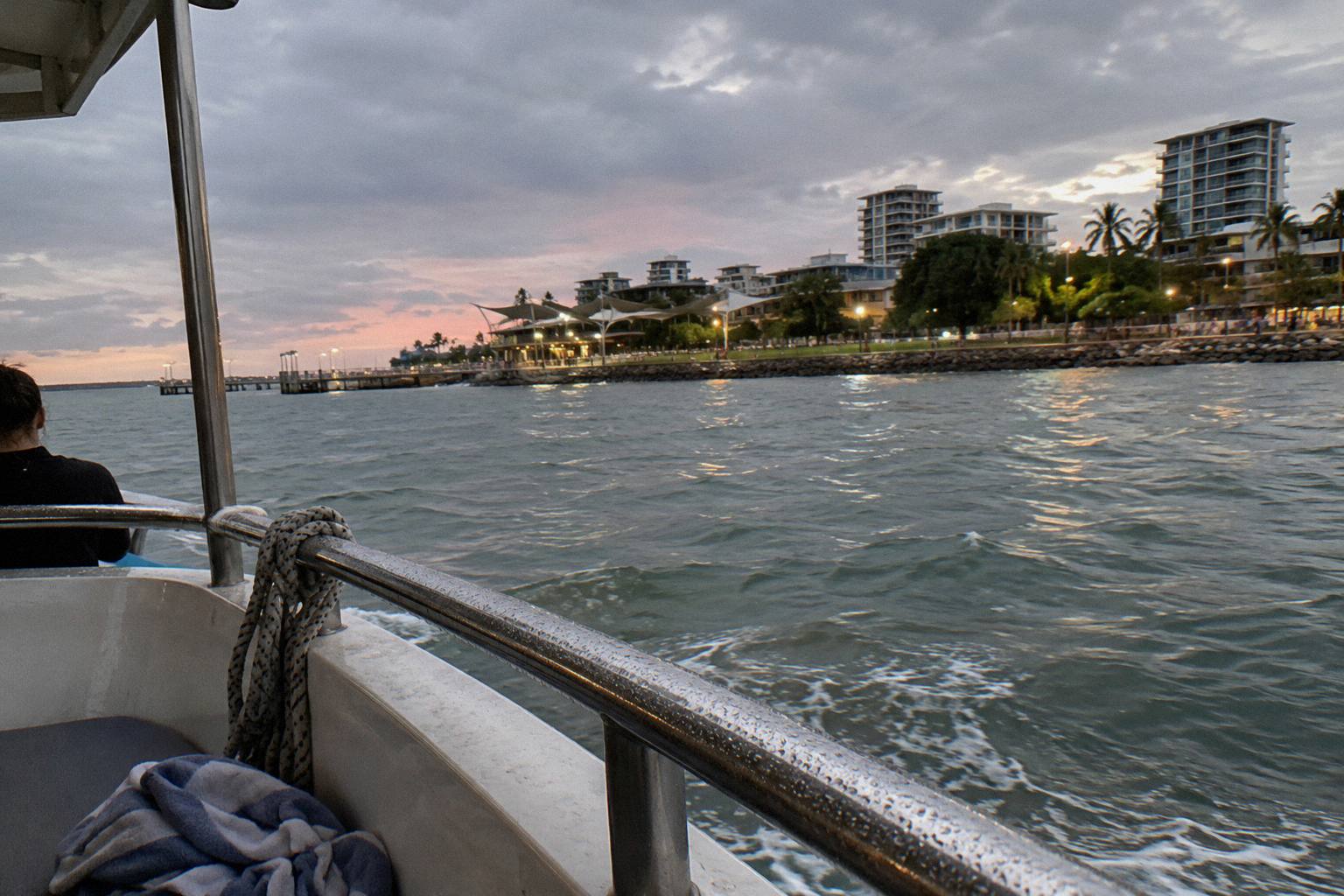
A few practical points carry over from the operators' own pages. Sail Darwin asks guests to arrive at least 15 minutes before departure and gives no refund for missing the boat, and its sailing is subject to suitable tides and weather, with the captain deciding and a reschedule or 100 percent refund if weather stops the trip. Darwin Harbour Cruises' vessel is cashless, EFTPOS and Visa or Mastercard only, so a card is the only way to buy a drink on board. Its FAQ suggests a hat, camera, ticket or voucher and a light cardigan, describing the harbour at about 25 degrees at night, with ginger tablets as a suggestion for motion sickness and the harbour generally calm in the operator's words. Cape Adieu and Sail Darwin publish no dress code, so dress for a warm tropical evening.
Accessibility differs sharply between vessels and is worth asking about before booking rather than after. Darwin Harbour Cruises states its vessel cannot take wheelchairs, scooters or walkers, citing gangways and tides, with walking sticks fine and guests needing support asked to bring a capable companion. Cape Adieu has an accessibility page, so ask the operator directly. For Sail Darwin the position is not published, and a 15 m sailing catamaran is exactly the kind of boat where the question is worth asking in advance. Our guide to sunset boat accessibility in Darwin sets out what each operator publishes.
Dietary needs follow a similar pattern of checking early. Cape Adieu asks for at least 48 hours' notice for gluten-free, vegetarian and allergy requests, and Darwin Harbour Cruises says its dinner buffet caters for vegetarian and gluten-free guests. For Sail Darwin and the Gaze And Graze cruise the position is not published, so ask the operator, and treat no answer here as a promise of allergen safety. Darwin Harbour Cruises and Cape Adieu do not publish cancellation windows, so check the booking page for the terms that apply to your ticket.
Common Questions About Swimming In Darwin
Can I Swim In The Ocean In Darwin?
Not outside signposted exclusion areas. NT Government advice for the Northern Territory is to swim only in those areas, box jellyfish are more likely in Territory waters from 1 October to 1 June, and Darwin Harbour is managed as a no-tolerance area for crocodiles. Swimming from a boat or the foreshore is not permitted on any of these cruises.
Is There Any Month When Ocean Swimming Is Safe?
No month carries an official all-clear. Stinger season runs 1 October to 1 June, stings have been recorded in every month, and the crocodile advice applies year round. The signposted exclusion areas are the only places NT Government advice endorses for swimming.
Can I Swim From A Dinner Cruise?
No. None of the four cruises on this site includes swimming, and the advice is simply do not swim from the boat or the foreshore. The cruises are dining and sightseeing trips, and they keep you on deck.
What Is Stinger Season?
It is the period NT Government advice identifies as when box jellyfish are more likely in Northern Territory waters, from 1 October to 1 June, with NT Health wording saying October to the end of May. Stings have been recorded outside the season too, so the dates describe likelihood, not a boundary.
Are There Crocodiles In Darwin Harbour?
The harbour is managed as a no-tolerance area for crocodiles, meaning animals found there are removed under an active management program. No verified count, sighting rate or risk percentage exists in our sources, and the standing advice is to swim only in signposted exclusion areas.
What Can I Do On The Water If I Cannot Swim?
Plenty, and all of it on deck. Dinner cruises, grazing cruises and sailing trips board at Stokes Hill Wharf every evening through the season, from the Cape Adieu ketch's four-course dinner to the Charles Darwin catamaran's Territory-style buffet. See the options below.