
What You See From A Darwin Harbour Boat: Landmarks And Wildlife
The honest answer to what you see on a Darwin harbour tour: one published route with named landmarks, wildlife attributed only to the operators who state it, and a lot of water between them.
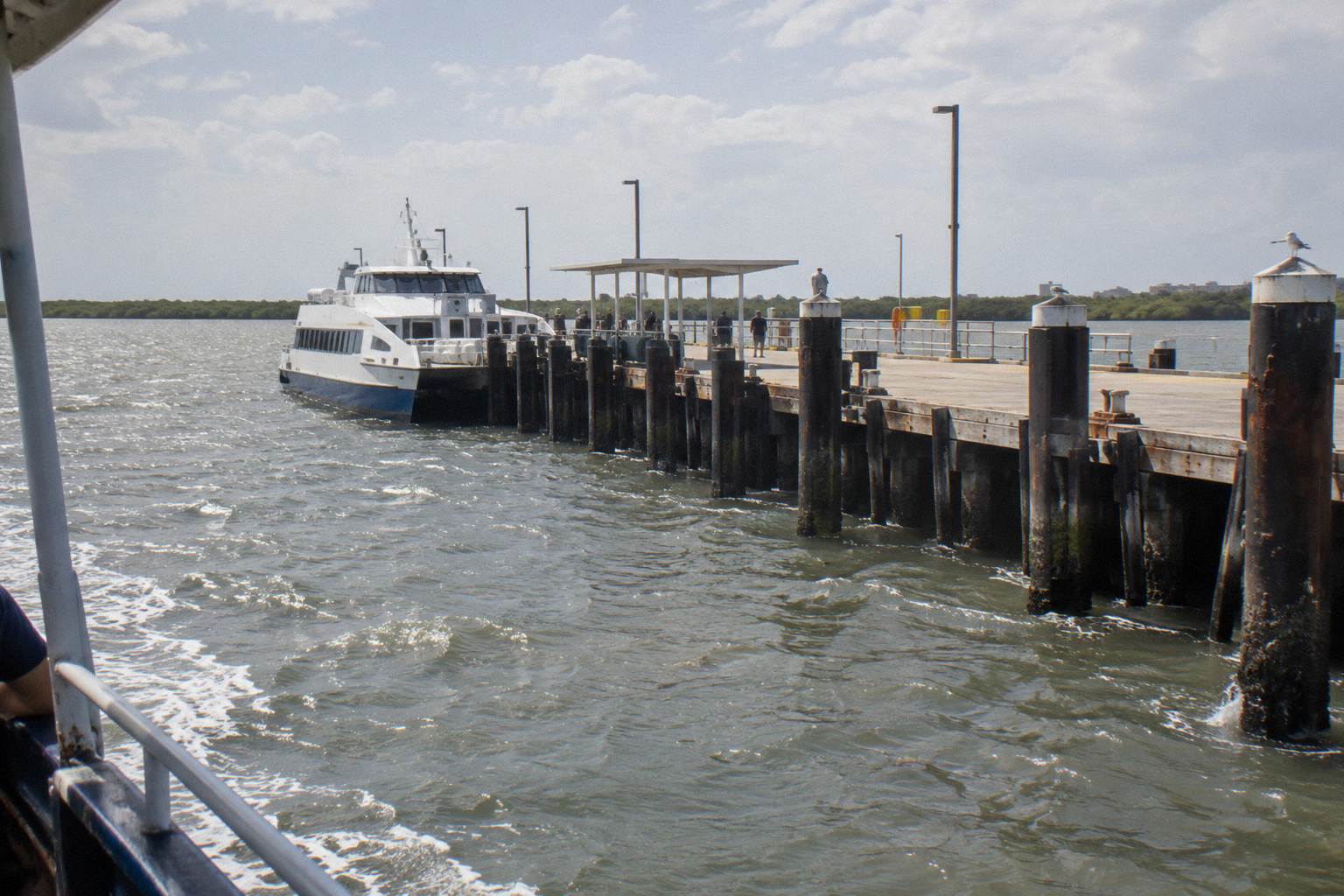
Short answer
One operator publishes a route: the Charles Darwin cruises leave Stokes Hill Wharf, run along the Esplanade past the Larrakeyah naval barracks, Cullen Bay and Fannie Bay at about 4 knots, and the skipper may change route for tides. No operator promises a wildlife sighting; dolphins, turtles and dugong are an opportunity to see, not a guarantee.
Darwin sits on a working harbour, and almost every evening some boat is out on it with dinner on board and the sun going down behind the mangroves. What is actually out there is a fair question, and the honest answer is narrower than the brochures imply. One operator publishes a route with named landmarks. One publishes nothing about its route at all. Wildlife sightings are stated, where they are stated at all, by operators whose boats this site does not sell, and always as an opportunity rather than a promise.
This page sets out what is documented, operator by operator, so you can decide whether a Darwin harbour tour earns its fare on the strength of what you will see. The facts come from the operators' own pages, plus a computed sunset table and Bureau of Meteorology climate averages. Where something is not stated anywhere, it says so here rather than guessing.
What Landmarks Will You Pass On A Darwin Harbour Cruise?
Only one operator publishes a route. Darwin Harbour Cruises' FAQ says its Charles Darwin cruises leave Stokes Hill Wharf, run along the Esplanade past the Larrakeyah naval barracks, Cullen Bay and Fannie Bay at about 4 knots, and that the skipper may change the route for tides. Cape Adieu and Sail Darwin state no route on their published pages, so there is nothing to report for their cruises beyond the departure dock.
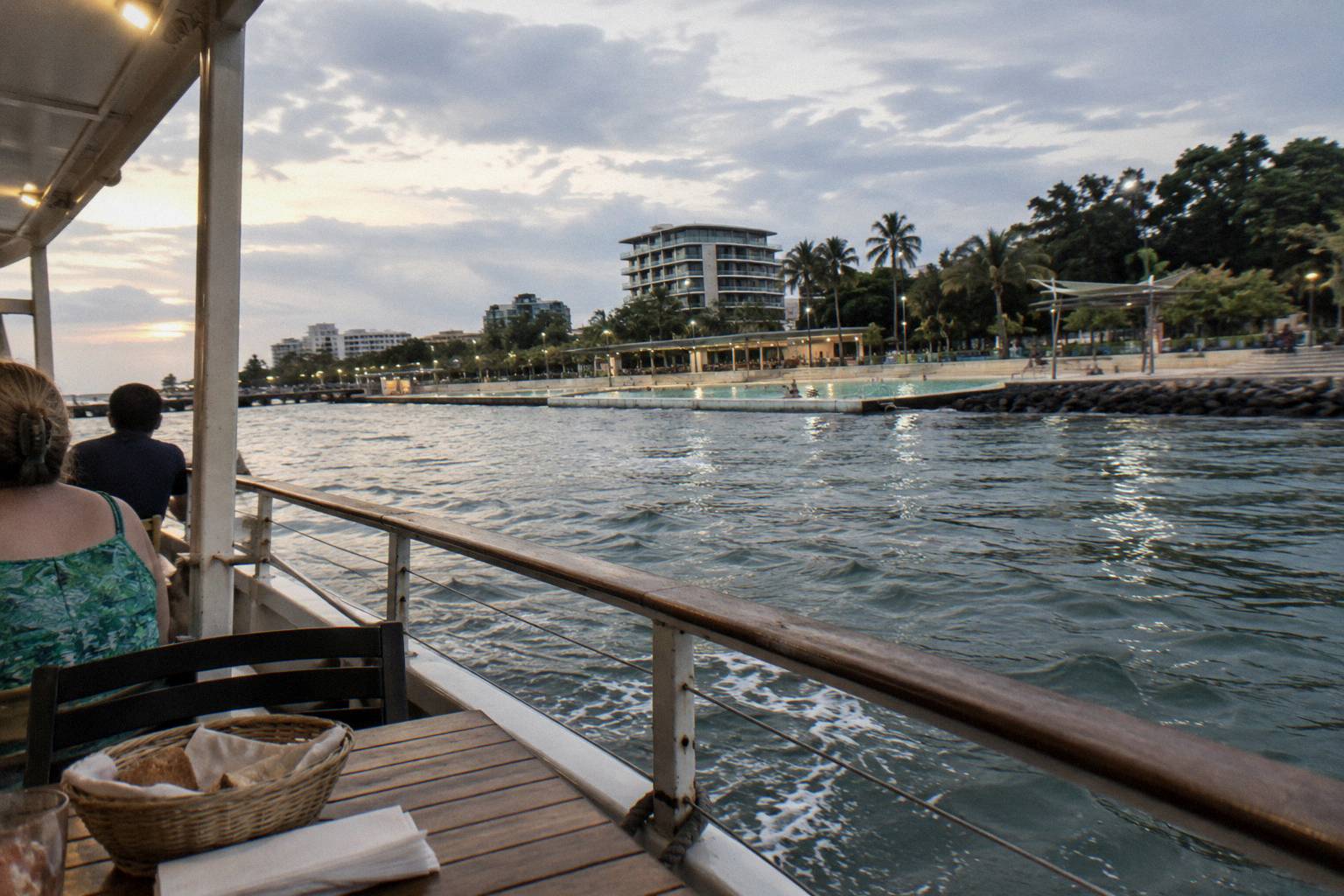
The named landmarks are Stokes Hill Wharf itself, the Esplanade stretch, the Larrakeyah naval barracks, Cullen Bay and Fannie Bay. No operator publishes a fuller skyline description, so enjoy the view as it comes. The naval barracks are a working defence establishment on the harbour's western side; Cullen Bay is a residential marina arm; Fannie Bay opens the harbour toward the north. Between them is water, mangrove fringe and the ordinary business of a port.
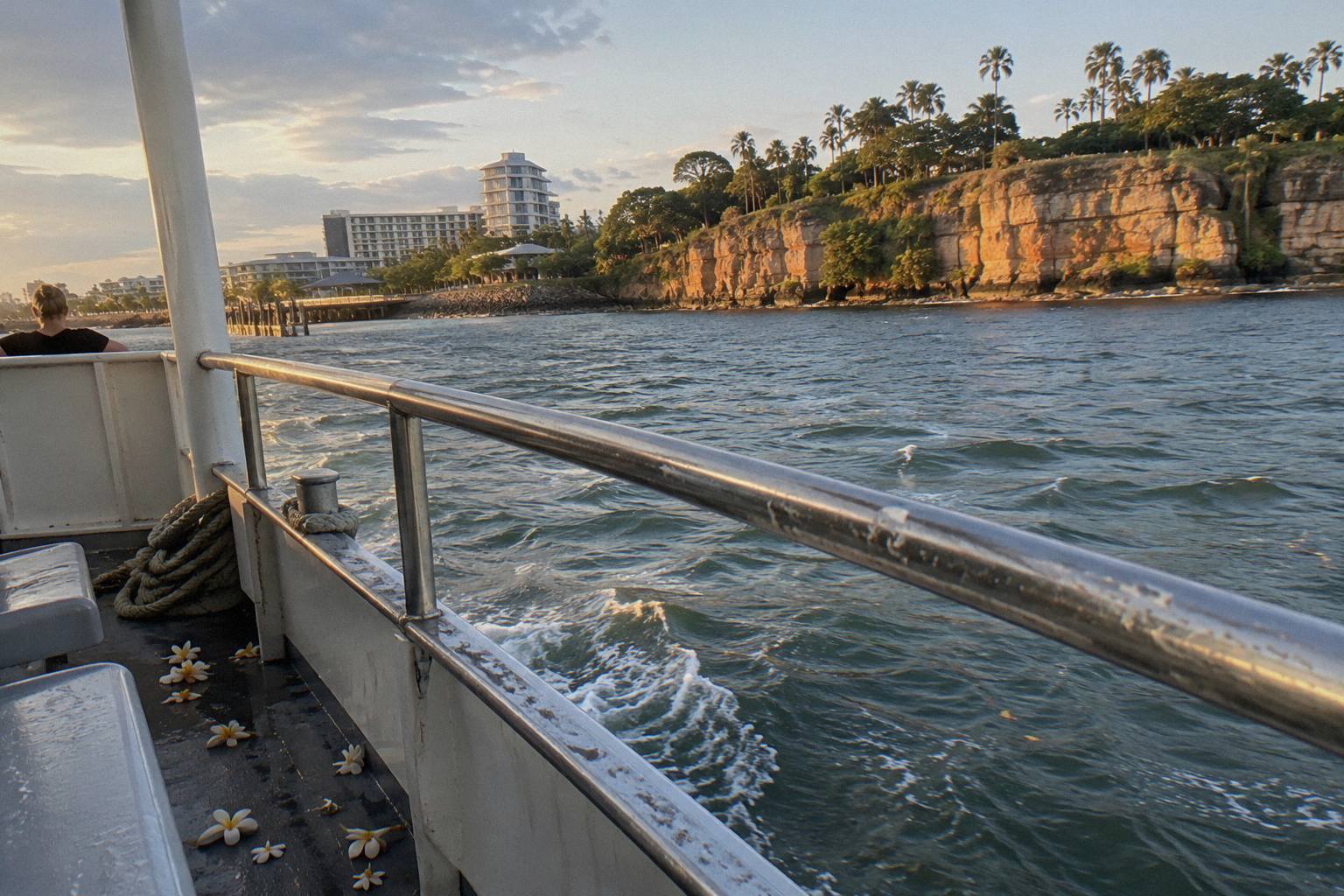
The four-knot figure is worth pausing on, because it shapes what kind of sightseeing this is. At about 4 knots the Charles Darwin is moving at a slow stroll, close enough to the Esplanade shoreline for the named points to pass in a reasonable order without rushing any of them. It is a cruise built for eating and standing at the rail, not a scenic sprint. If your idea of a harbour tour is a fast circuit with commentary at every point of interest, this is not that, and no operator advertises commentary.
The route also matters for expectations. All of it stays inside the harbour: the operator says both of its vessels stay in the harbour, so open-sea coastline is not part of the deal on any Darwin Harbour Cruises product. For the other two operators, route not stated; the honest position is that you buy the boat, the dinner and the sunset rather than a published sightseeing itinerary.
| Landmark | Published for | What the operator states |
|---|---|---|
| Stokes Hill Wharf | Charles Darwin cruises | Departure point, Dock 3 |
| The Esplanade stretch | Charles Darwin cruises | Route runs along the Esplanade |
| Larrakeyah naval barracks | Charles Darwin cruises | Passed along the route |
| Cullen Bay | Charles Darwin cruises | Passed along the route |
| Fannie Bay | Charles Darwin cruises | Passed along the route |
The route facts come straight from the operator's own FAQ page, which is the primary source for everything in the table: the Darwin Harbour Cruises FAQ. If a seller or review lists other landmarks, that is their claim, not the operator's.
What Wildlife Might You See From The Boat?
No operator states a wildlife sighting. The only wildlife claims in the verified sources belong to context operators this site does not sell: Spirit of Darwin Cruises says batfish feed at the bow of its own cruises, and that queenfish, trevally, barramundi and sharks are seen on some tours. City of Darwin Cruises calls bottlenose dolphins, turtles, snubfin dolphin and dugong an opportunity to see, with no guarantee.
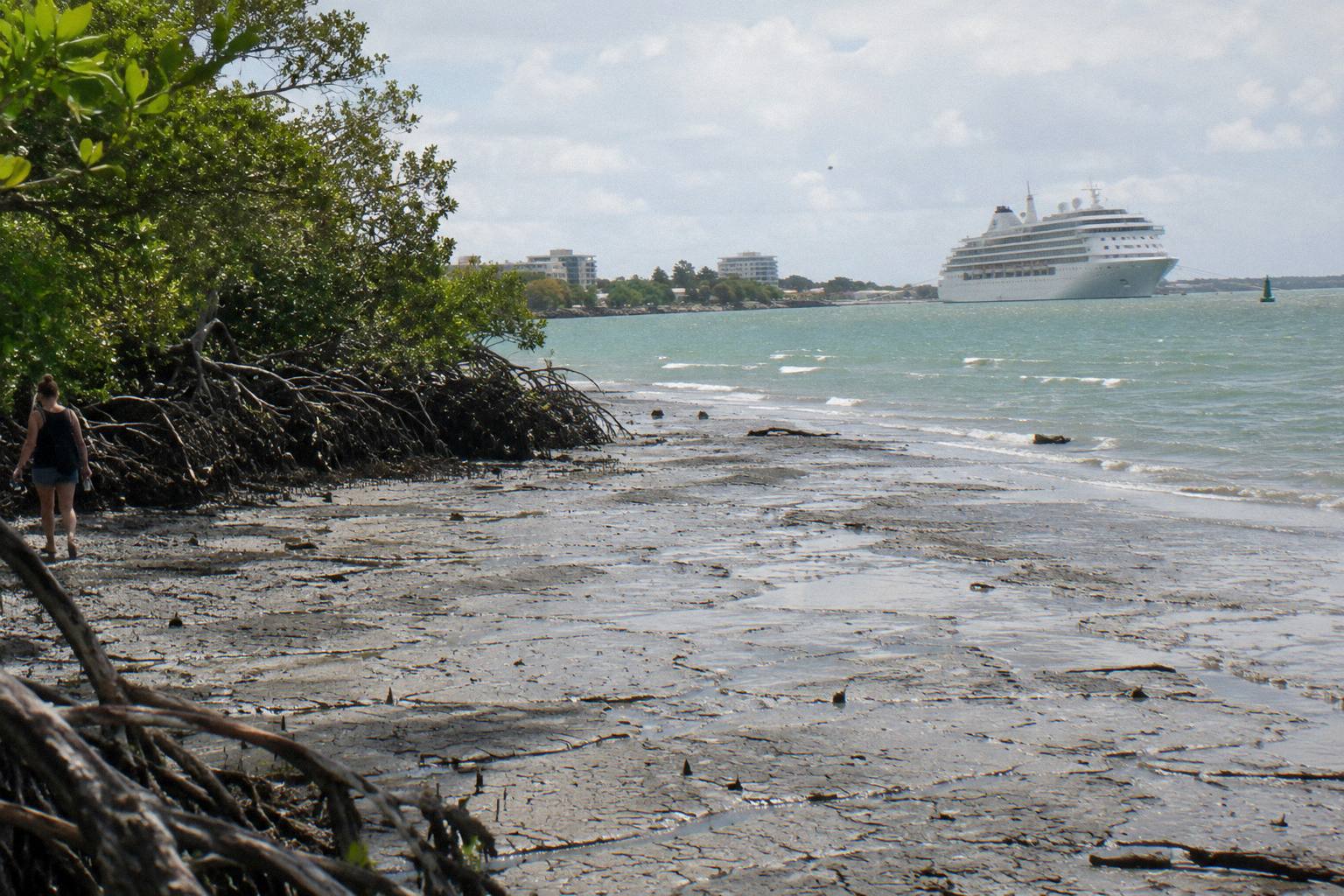
That distinction matters more on Darwin Harbour than on most. The harbour is managed as a no-tolerance area for crocodiles, and the NT advice is to swim only in signposted exclusion areas; none of the cruises compared here includes swimming, and the only sensible rule on board is do not swim from the boat or the foreshore and follow NT Government advice. Anyone telling you the harbour is safe for a dip is not reading the same advice. The wider question of estuarine crocodiles and what lives in the harbour is covered in more depth on whether crocodiles live in Darwin Harbour.
The fish-feeding claim deserves a specific warning. Batfish feeding at the bow is a real thing on Spirit of Darwin's own cruises, stated by that operator about that boat. It is not a claim made by Darwin Harbour Cruises, Cape Adieu or Sail Darwin, so do not credit it to them. If a fish feeding show is the thing that would sell you a ticket, you would need to take that up with the operator that states it, and no operator matches it.
The dolphin, turtle, snubfin dolphin and dugong list comes from City of Darwin Cruises, in the operator's own wording an "opportunity to see", no guarantee. These animals do occur in the harbour, but an evening dinner cruise is not a wildlife tour, and no operator suggests they steer toward them. If seeing marine life is the primary goal of your Darwin trip, book a dedicated wildlife cruise and hold it to its own claims, not to a dinner cruise's ambience.
| Wildlife claim | Attributed to | Strength of claim |
|---|---|---|
| Batfish feed at the bow | Spirit of Darwin Cruises, its own cruises | Operator-stated, its boat only |
| Queenfish, trevally, barramundi, sharks | Spirit of Darwin Cruises | Seen on some tours |
| Bottlenose dolphins, turtles | City of Darwin Cruises | Opportunity to see, no guarantee |
| Snubfin dolphin, dugong | City of Darwin Cruises | Opportunity to see, no guarantee |
The practical takeaway: go for the water, the dinner and the sunset hour, and treat any animal as a bonus. A reader who books purely on the strength of a dugong photograph in a listing gallery is setting up a disappointment the operator never promised them.
Which Boat Follows Which Route?
The route facts belong to the Charles Darwin catamaran's cruises; the other operators publish none. Darwin Harbour Cruises runs the Charles Darwin, a three-level catamaran with an open-air Sun Deck and two air-conditioned indoor levels, from Dock 3 at Stokes Hill Wharf. Cape Adieu boards its traditional ketch at the same Dock 3, and Sail Darwin boards the Sundancer NT, a 15 m sailing catamaran, at Dock 1.
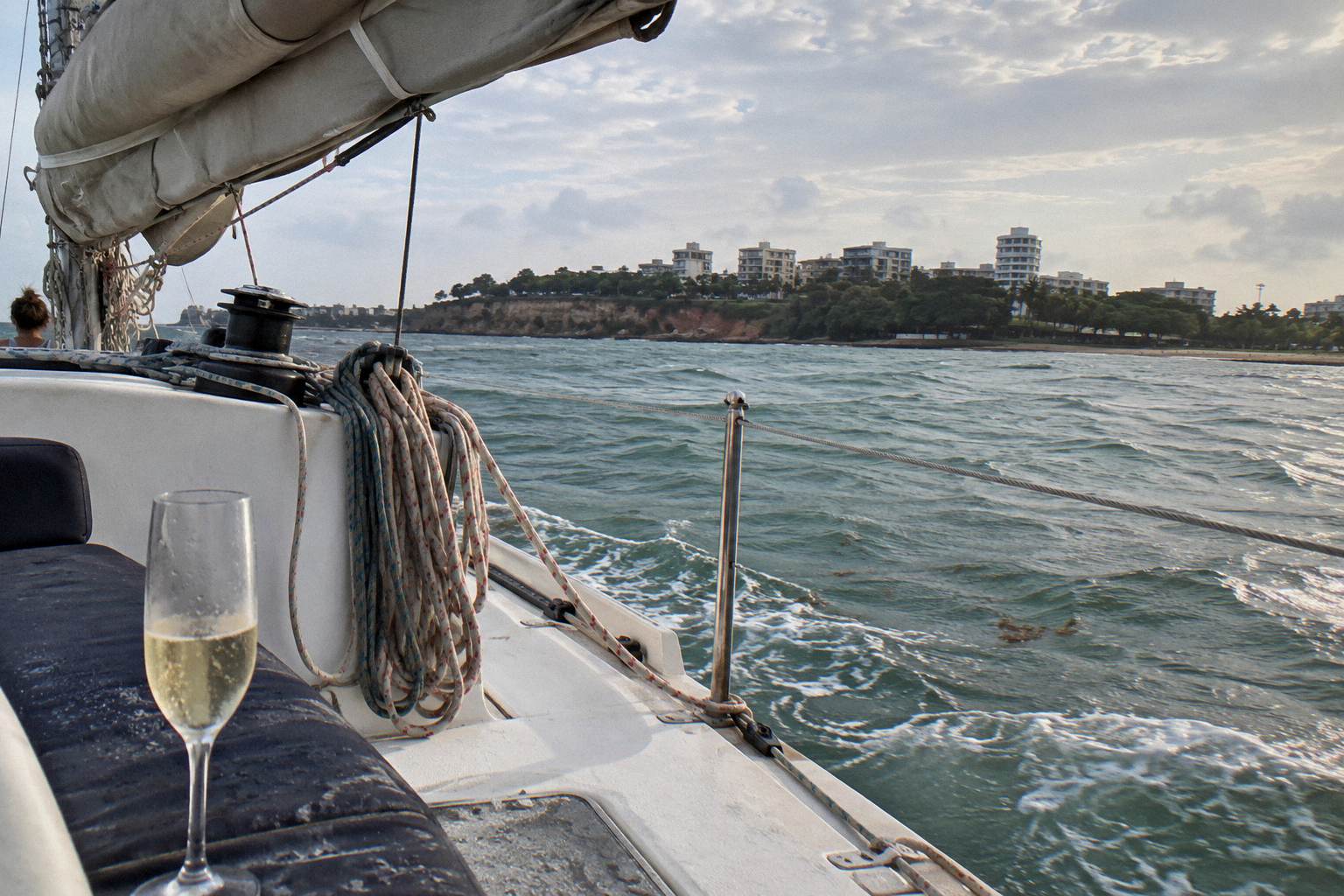
So if a published sightseeing route is what decides it for you, the Charles Darwin dinner cruise and the operator's grazing cruise are the products with a documented path past the named landmarks. If a sailing boat is what decides it, Sail Darwin's Sundancer NT takes up to 30 passengers in-shore, with under 18s accompanied by an adult, and its sunset product runs about 3 hours with dinner and sparkling wine . Price for that sail is not published; check the live listing.
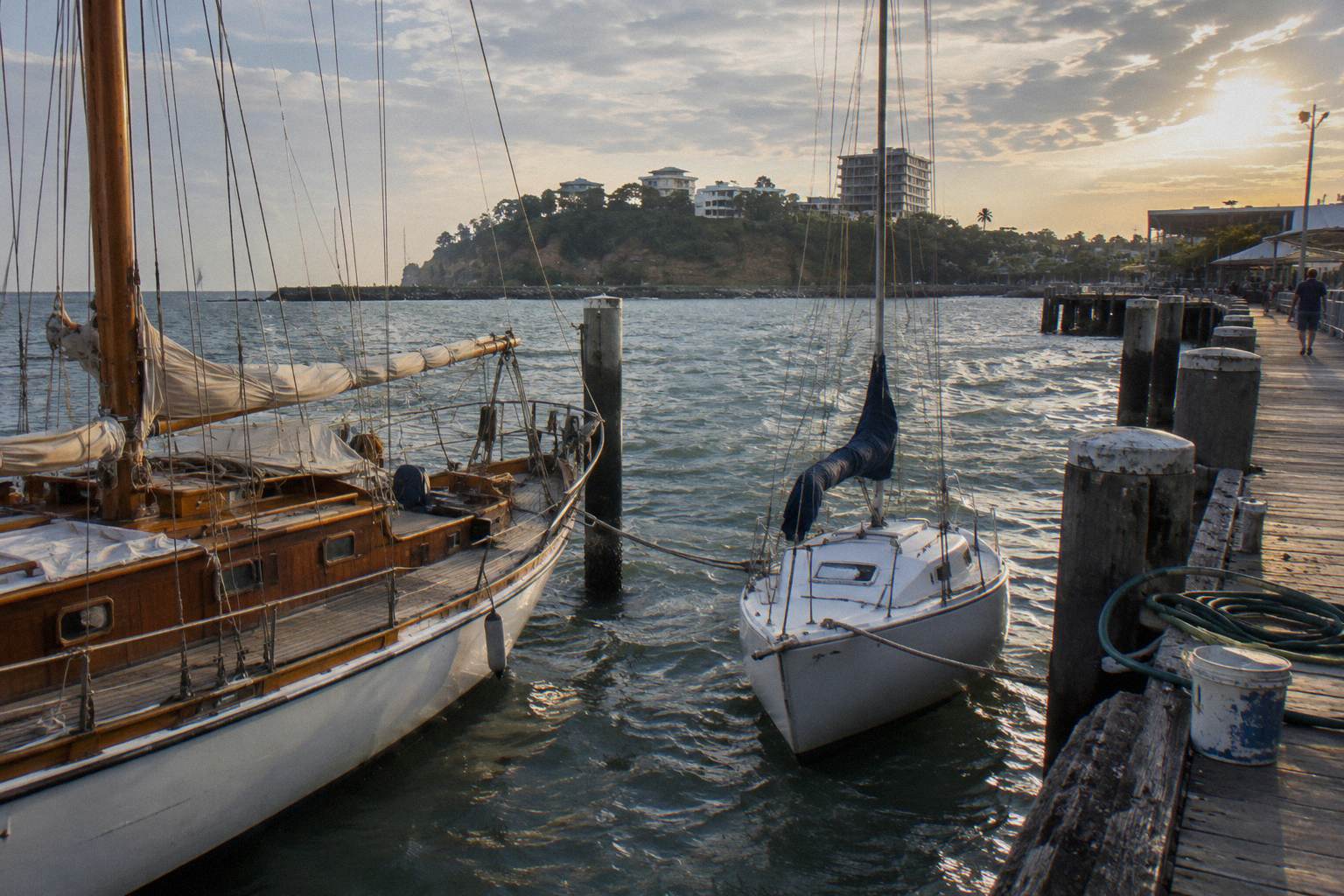
The ketch option is a different animal again. The Cape Adieu is a traditional ketch, the operator's only vessel, and its Signature Four-Course Sunset Dinner Cruise is the offering compared here: a chef-prepared four-course dinner with local produce, a fully licensed bar with no BYO alcohol, about 2.5 hours on the water, and the operator's own price from A$226 per person. Route not stated; the operator page instead tells you the season, with cruises running through the Dry season, April to October, and private charters by enquiry outside those months, with exclusive hire up to 60 guests. If you want that boat with its sit-down dinner on the water, the details are on the four-course ketch sunset dinner cruise page, and the operator's own cruise page is the primary source for the vessel and season facts: Cape Adieu Cruises and Charters.
Darwin Harbour Cruises also runs a second cruise from the same dock: the Gaze And Graze Sunset Cruise, about 2 hours with a gourmet grazing platter, locally made mango ice cream, allocated seating on the Sundeck and music. It shares the operator and the dock, and the operator's route statement covers its vessels' harbour cruising, but the FAQ route description is written for the Charles Darwin cruises, so treat the grazing cruise's exact path the same way: ask the operator. Its price is not stated here.
| Cruise | Operator and vessel | Dock | Duration | Route published? |
|---|---|---|---|---|
| Charles Darwin Sunset Buffet Dinner Cruise | Darwin Harbour Cruises, catamaran Charles Darwin | Dock 3, Stokes Hill Wharf | About 2 hours | Yes, per operator FAQ |
| Gaze And Graze Sunset Cruise | Darwin Harbour Cruises, catamaran Charles Darwin | Dock 3, Stokes Hill Wharf | About 2 hours | Route not stated |
| Four-Course Ketch Sunset Dinner Cruise | Cape Adieu Cruises and Charters, ketch Cape Adieu | Dock 3, Stokes Hill Wharf | About 2.5 hours | Route not stated |
| Sunset Sail With Dinner And Sparkling Wine | Sail Darwin, catamaran Sundancer NT | Dock 1, Stokes Hill Wharf | About 3 hours | Route not stated |
Duration itself changes what you see, in a simple way: a 3-hour sail spends more time on the water than a 2-hour buffet run, and a 2.5-hour ketch dinner sits between them. None of the durations converts into a longer landmark list, because the landmark list exists for one operator only.
Where Do The Cruises Leave From, And When?
Every cruise compared here boards at Stokes Hill Wharf on the Darwin Waterfront: Cape Adieu and Darwin Harbour Cruises at Dock 3, Sail Darwin at Dock 1. Boarding is ahead of sunset, and because operators publish clock times that differ by page and move with the season, the time that counts is the one on your booking confirmation. No operator publishes hotel pickup, so plan your own way to the wharf.
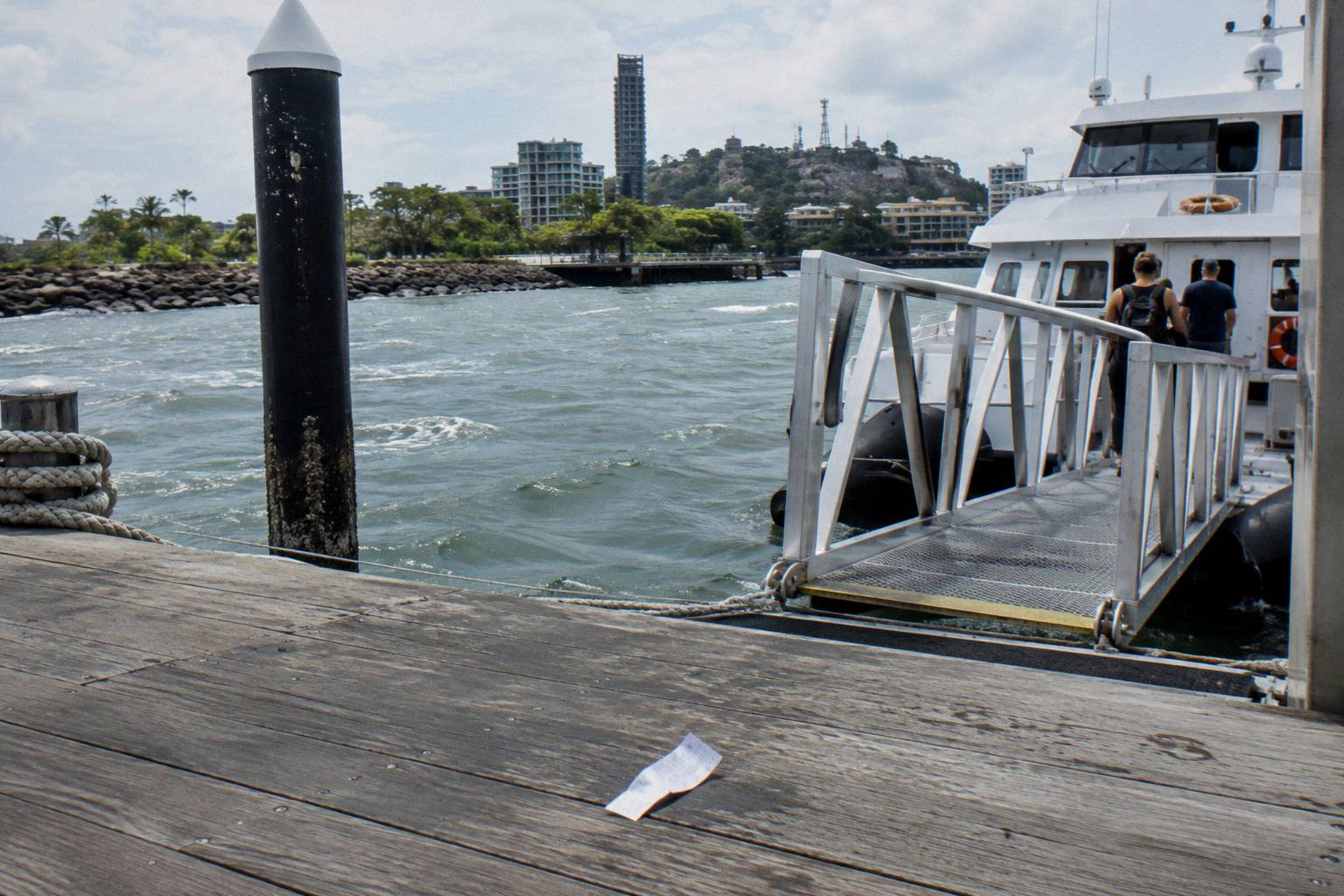
Stokes Hill Wharf is itself one of the sights, in a modest way: the Darwin Waterfront departure point, with the cruise boats tied up at their berths. Arriving with time to spare costs nothing and gives you the dock-end water view before you board. Sail Darwin asks guests to arrive at least 15 minutes before departure and states the boat departs promptly, with no refund for missing the boat; that is the firmest arrival rule any operator publishes. Parking details for Stokes Hill Wharf are not published, so if you are driving, check before you go rather than assuming a spot. For the wharf itself and how the docks are laid out, the Stokes Hill Wharf departures guide covers the detail.
The timing question leads naturally to sunset itself, because every one of these products is built around it. Darwin's sunset barely moves across the year, which is the single most useful planning fact on this page.
A calculation using a NOAA solar algorithm for Darwin's coordinates, on the 15th of each month and accurate to about plus or minus 2 minutes, puts sunset at about 7:19 pm in January, about 6:29 pm in late May and June, and about 7:07 pm in December. Across the whole year sunset shifts by only about 50 minutes, and the day-to-day change is under a minute, so a cruise that boards ahead of sunset boards within a predictable window whenever you travel. The table below carries the full monthly figures; it is a calculation, not an official table, and none of these numbers is a boat time.
| Month | Sunset (approximate) | Month | Sunset (approximate) |
|---|---|---|---|
| January | about 7:19 pm | July | about 6:36 pm |
| February | about 7:16 pm | August | about 6:42 pm |
| March | about 7:02 pm | September | about 6:42 pm |
| April | about 6:42 pm | October | about 6:43 pm |
| May | about 6:29 pm | November | about 6:52 pm |
| June | about 6:29 pm | December | about 7:07 pm |
Do Tides And Weather Change What You See?
Yes, and the operators say so themselves. Darwin Harbour Cruises states that tides decide how close to the coast the vessel can go, that the skipper may change the route, and that tides affect gangway access. Sail Darwin's terms state that all sailing is subject to suitable tides and weather, with the captain deciding on weather and a reschedule or 100 percent refund if a trip does not run.
Darwin has very large tides, and that single fact explains the operators' hedging. No operator publishes tidal figures, but the direction of the effect is clear: on a big tide the same cruise can hug a different line than on a small one, and the route past the named landmarks is the skipper's call on the night, not a contract. If the Larrakeyah stretch matters to you, know that the FAQ already tells you it may be reordered or varied.
The Bureau of Meteorology publishes the Northern Territory tide tables for Darwin for 2026 and 2027, and they are the primary source if you want the actual tide numbers for your date: BOM NT tide tables. Weather works the same way. Reading the BOM averages for Darwin Airport, rainfall stays under about 25 mm a month from May to September and the wet months run roughly November to April, with June to September the driest months in the long-term figures. The BOM page prints no wet-season definition, so take that as a reading of the table rather than an official season.
One honest note on cloud, because it is the most common disappointment on any sunset product: no operator promises a visible sunset, and no operator states a cloud-refund policy. What each states is its own booking terms, from Sail Darwin's 48-hour no-change window to the check-the-booking-page position for the other two. If a grey sky would ruin the night for you, read your ticket's terms before you book rather than after, and see the site's wider take on whether a sunset dinner cruise is worth it.
What Will You Definitely Not See?
You will not swim, you will not be promised an animal, and, on Darwin Harbour Cruises products, you will not pay cash on board. None of the cruises compared here include swimming, and NT advice is blunt: swim only in signposted areas. No operator states a wildlife sighting, so no dolphin, dugong or feeding fish belongs in your expectations. The Charles Darwin is cashless, EFTPOS and Visa or Mastercard only.
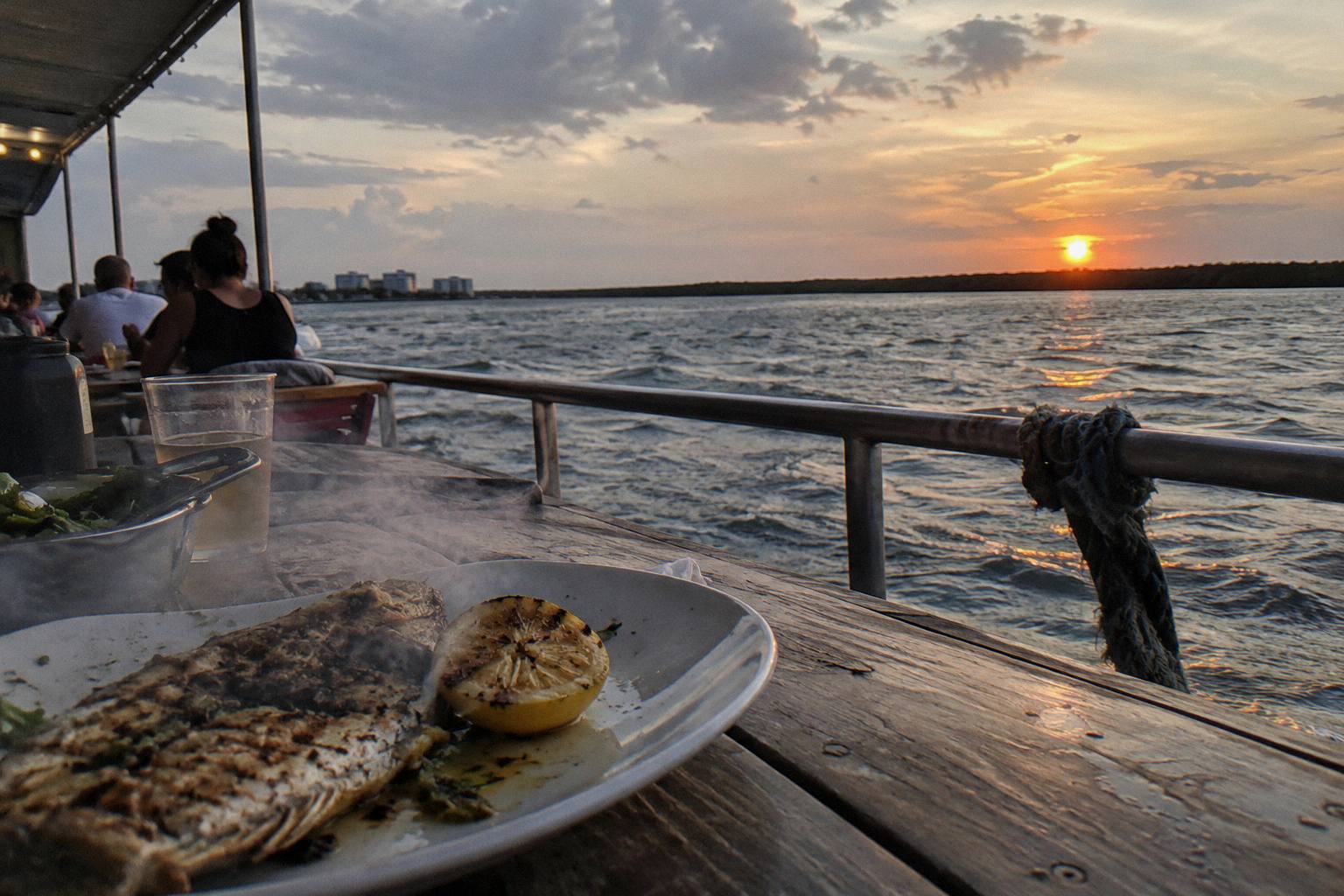
A few more negatives worth knowing before you commit. Darwin Harbour Cruises' vessels stay in the harbour, so none of this operator's dinner cruises head out to open sea or along the coast. Cape Adieu's cruises run through the Dry season, April to October, with private charters by enquiry outside it, so a February ketch dinner is not a public product. Darwin Harbour Cruises and Sail Darwin do not publish a season for their sunset cruises; if none is stated, check the booking page for the months you want.
The not-stated list goes further, and it is printed plainly rather than papered over. Cape Adieu and Sail Darwin publish no dress code. Sail Darwin's listing includes dinner and unlimited sparkling wine, with soda, bottled water and snacks alongside. No menu details are published beyond dinner, so if you have dietary needs, mention them when booking. Darwin Harbour Cruises' buffet caters for vegetarians and gluten-free guests per its FAQ, and Cape Adieu takes dietary requests with at least 48 hours' notice, but no operator promises allergen safety.
There is also no commentary claim. Nothing in any operator's pages mentions guided narration of the landmarks on the Charles Darwin route, so if a narrated harbour tour is what you are after, ask the operator before booking rather than assuming the background music comes with a guide. The operator's FAQ mentions background music, not a commentary.
So Is A Harbour Cruise Worth It For What You See?
On the documented facts, you are buying three things: a slow water-level pass along one published route of named landmarks, a dinner format that ranges from a Territory-style buffet to a four-course ketch dinner, and roughly two to three hours on the harbour around sunset. The landmark list is short, the wildlife list is a maybe, and the sunset is close to guaranteed by the calendar even when clouds argue.
Read that way, the decision is straightforward. If landmarks and a known route are the draw, the Charles Darwin cruises are the documented product, with the buffet dinner from the operator's own price of A$149 adult online, youth from A$89, and the operator saying online booking saves up to 9 percent against walk-up. If the draw is the boat itself, the ketch with its four-course dinner at the operator's from price of A$226 per person, or the 3-hour sail with sparkling wine in its title, are the alternatives, and their prices and terms live on the live listings.
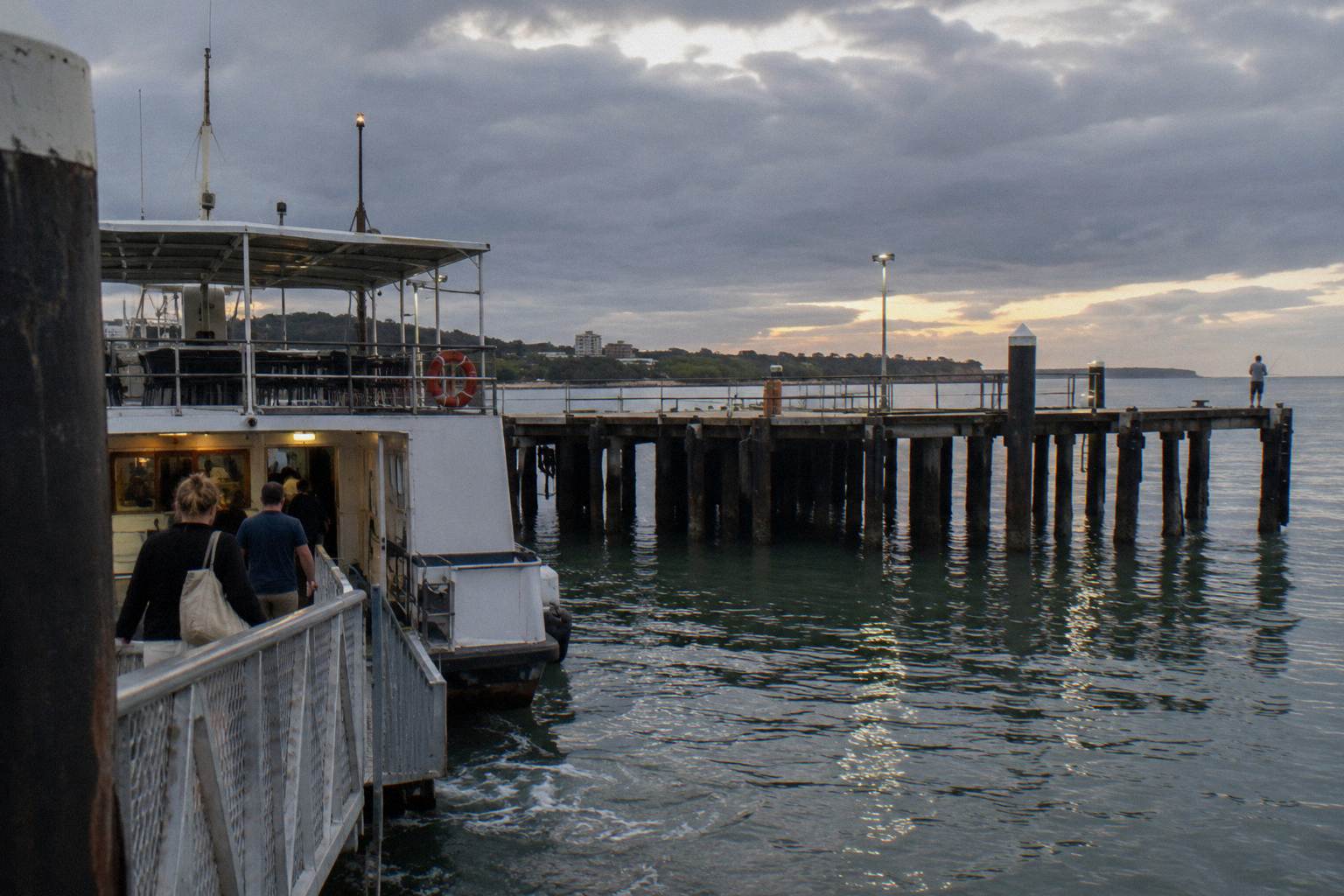
What none of them can sell you is a promised animal or a promised sky. The honest framing is that a Darwin harbour tour is a dinner on a moving deck in the best light of the day, past a handful of named places you can point at, in a harbour whose tides may quietly redraw the route. Readers who want the fuller decision framework, including how the dinner formats compare, can start with the Darwin Sunset Dinner Cruise site's main comparison, or read more about what you actually do on a sunset cruise before picking a boat.
The grazing option deserves its own sentence before you go. The Gaze And Graze Sunset Cruise runs about 2 hours with a gourmet platter, mango ice cream, allocated Sundeck seating and music, its price is not stated here, and it suits a traveller who wants the water and the hour without the full dinner-and-sails production.
Booking practically: every operator's booking page shows the terms that apply to your ticket, and no verified sell-out or book-weeks-ahead figure exists, so the only honest timing advice is to check availability for your date and read the terms there. Sail Darwin's terms are the most detailed, including the 10-guest minimum with reschedule or full refund if the trip cannot run, sole charters excepted.
Common Questions About What You See From A Darwin Harbour Boat
What Landmarks Do You Pass On A Darwin Harbour Cruise?
On the only published route, the Charles Darwin cruises leave Stokes Hill Wharf, run along the Esplanade past the Larrakeyah naval barracks, Cullen Bay and Fannie Bay at about 4 knots, and the skipper may change the route for tides. No other operator publishes a route.
Will You See Dolphins Or Dugong On A Darwin Sunset Cruise?
No operator states a wildlife sighting. The dolphin, turtle, snubfin dolphin and dugong claims belong to context operators and are an opportunity to see, not a guarantee. Treat any animal as a bonus on a dinner cruise.
Does The Route Change With The Tides?
Yes. Darwin Harbour Cruises states that tides decide how close to the coast the vessel can go, that the skipper may change the route, and that tides affect gangway access. Sail Darwin's terms state all sailing is subject to suitable tides and weather.
Where Do Darwin Harbour Cruises Leave From?
All the cruises compared here board at Stokes Hill Wharf on the Darwin Waterfront: Cape Adieu and Darwin Harbour Cruises at Dock 3, Sail Darwin at Dock 1. Boarding is ahead of sunset; check the time on your booking confirmation.
Can You Swim From The Boat?
No. None of the cruises compared here includes swimming, Darwin Harbour is managed as a no-tolerance area for crocodiles, and the NT advice is to swim only in signposted exclusion areas. Follow NT Government advice.
Does The Cruise Go Out To Open Sea?
Darwin Harbour Cruises says both of its vessels stay in the harbour. For the other operators no route is stated, but none of the cruises compared here are described as an open-water or coastline cruise.