
Photographing The Harbour At Dusk: Settings For A Phone Or A Camera
Darwin's sunset barely moves all year, which makes harbour photography unusually forgiving. Here is what you can shoot from the water, when the sun goes down month by month, and how to keep your pictures sharp on a boat.
Short answer
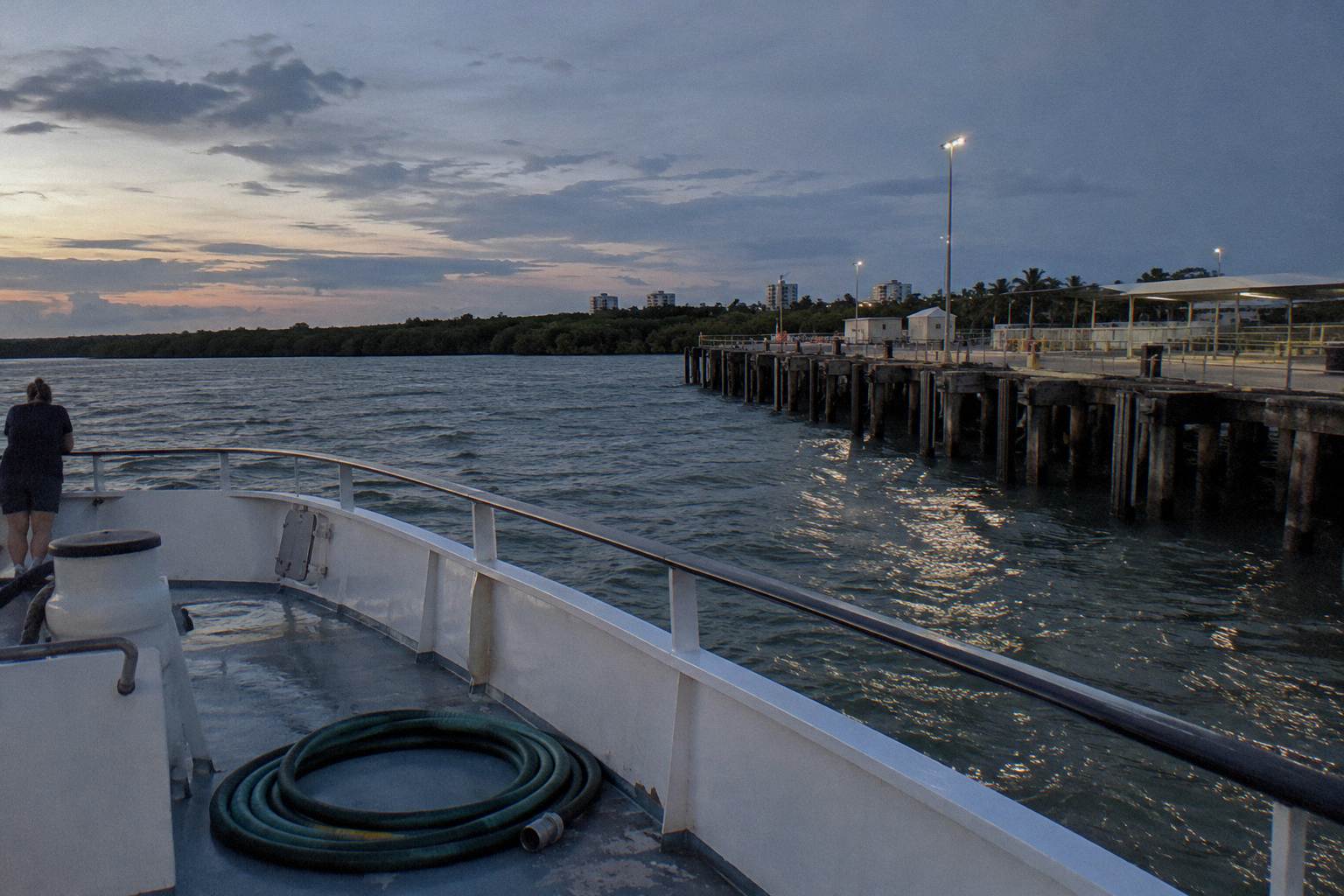
Darwin sunsets run from about 6:29 pm in late May to early July to about 7:19 pm in December and January, a swing of roughly 50 minutes all year. All three cruises board at Stokes Hill Wharf ahead of sunset. Adults pay from A$149 for the Charles Darwin buffet cruise or from A$226 for the Cape Adieu four-course dinner cruise.
Darwin sits close enough to the equator that its sunset barely moves. A calculation from a NOAA solar algorithm puts the sun down at about 6:29 pm in late May and early July and about 7:19 pm in December and January, a spread of roughly 50 minutes across the whole year, and the day-to-day change is under a minute. For a photographer that is a gift: whenever you visit, you can plan a harbour evening around a sunset time you can look up in advance.
This guide covers what you can actually photograph from the water on the Darwin sunset cruises discussed here, how each vessel's layout changes your shooting, and the practical habits that keep pictures sharp when the deck is moving. It sticks to what the operators publish and to evergreen technique. It deliberately avoids exposure numbers and setting recipes, because the light on a harbour at dusk changes minute to minute and no formula beats a steady hand and a clean lens.
What Can You Photograph From A Darwin Harbour Cruise?
The published route for the Charles Darwin buffet cruises runs from Stokes Hill Wharf along the Esplanade, past the Larrakeyah naval barracks, Cullen Bay and Fannie Bay at about 4 knots, with the skipper free to change course for the tides. Neither other operator publishes a route, so treat everything beyond those named points as unknown until you are on board. What you shoot depends on which boat you choose.
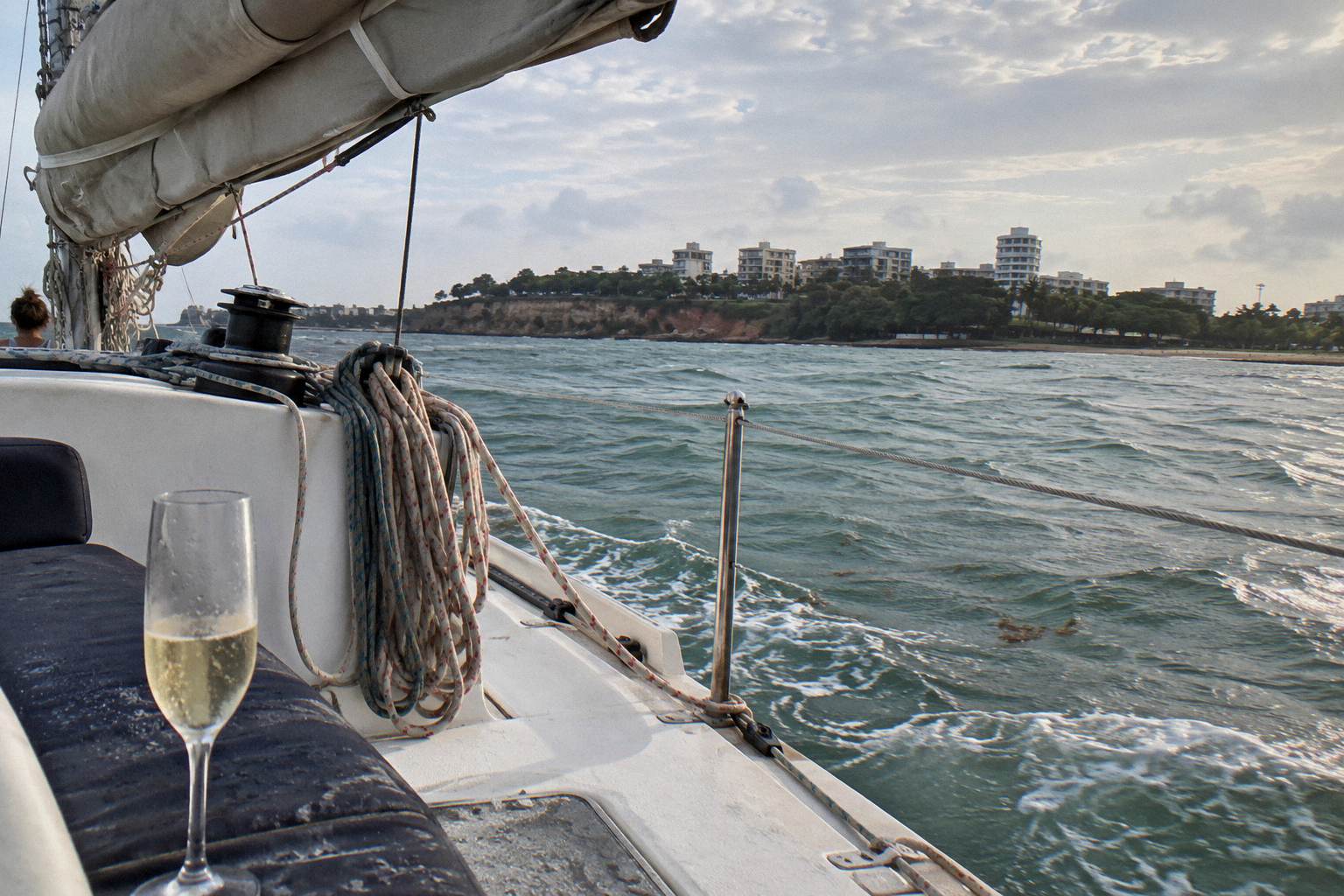
Darwin Harbour Cruises, the operator of the three-level Charles Darwin catamaran, is the only one of the three operators that publishes what its dinner cruise passes. Its FAQ names the Esplanade stretch, the Larrakeyah naval barracks, Cullen Bay and Fannie Bay as the landmarks on the Charles Darwin run. That is a working list of subjects: wharf structures close to departure, a waterfront city edge, naval installations, two bay shorelines. The operator also notes the skipper may change the route, which means no landmark is guaranteed on any given night.
The other two cruises publish no route at all. Cape Adieu's Signature Four-Course Sunset Dinner Cruise boards at Dock 3, Stokes Hill Wharf for about 2.5 hours in the Dry season, April to October, and its operator page says nothing about where the ketch sails. Sail Darwin's three-hour sunset sail with dinner and sparkling wine boards at Dock 1, Stokes Hill Wharf, and its terms state only that all sailing is subject to suitable tides and weather. If a specific landmark matters to your shot list, the honest answer is that neither operator publishes a route, so ask before you book.
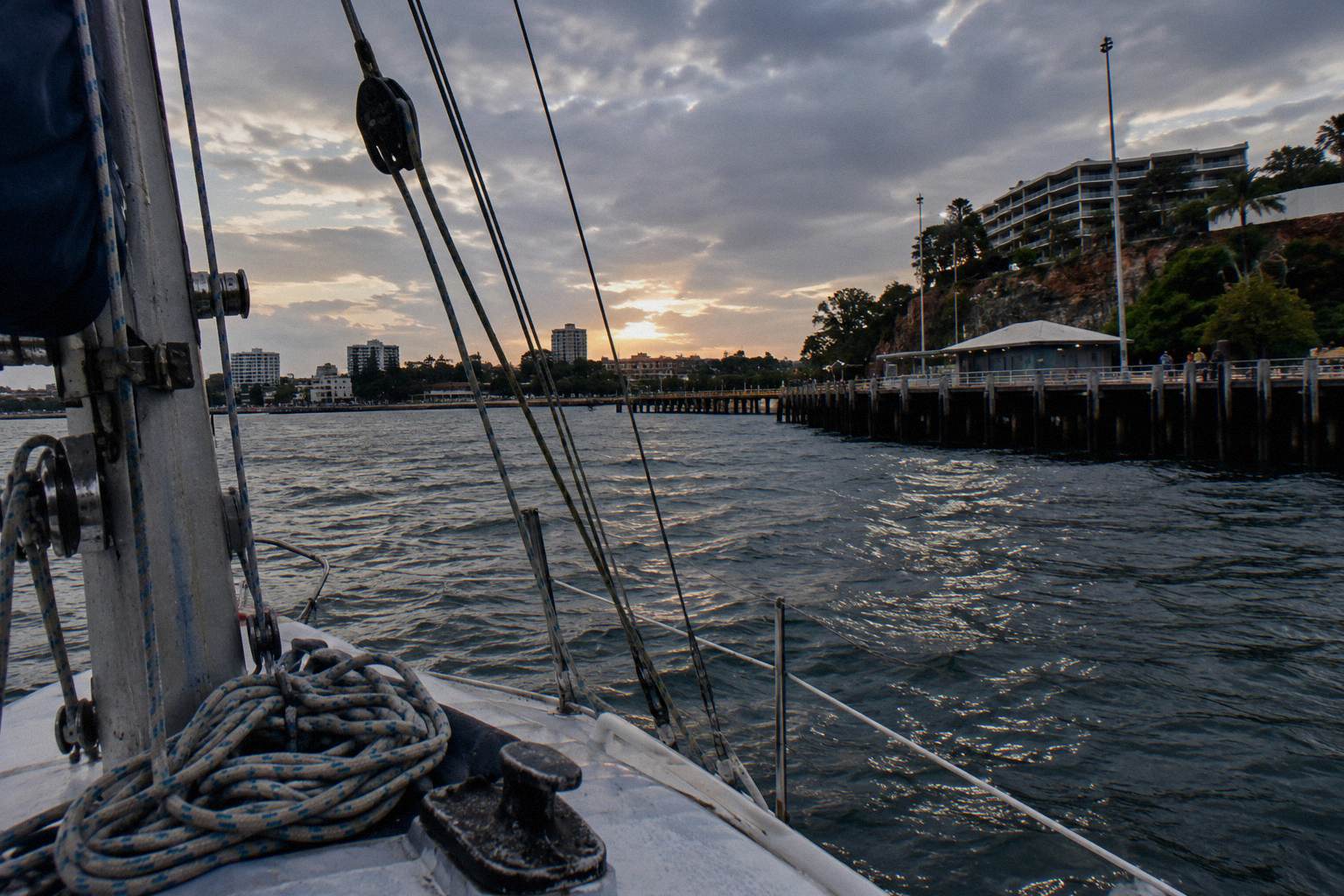
One more subject is honest to include: the boats themselves. The Cape Adieu is a traditional ketch, the Sundancer NT is a 15 m aluminium sailing catamaran built in 2005, and the Charles Darwin is a three-level catamaran with an open-air Sun Deck and two air-conditioned indoor levels. Rigging, deck lines, rails and bows all photograph well against a dusk sky, and unlike the passing shoreline they are guaranteed to be there.
| Cruise | Operator | Vessel and layout | Published route |
|---|---|---|---|
| Four-Course Ketch Sunset Dinner Cruise | Cape Adieu Cruises and Charters | Traditional ketch, exclusive hire up to 60 guests | Route not stated |
| Charles Darwin Sunset Buffet Dinner Cruise | Darwin Harbour Cruises | Three-level catamaran, open Sun Deck plus two air-conditioned levels | Esplanade, Larrakeyah naval barracks, Cullen Bay, Fannie Bay |
| Gaze And Graze Sunset Cruise | Darwin Harbour Cruises | Sundeck allocated seating, gourmet grazing platter | Route not stated |
| Sunset Sail With Dinner And Sparkling Wine | Sail Darwin | 15 m sailing catamaran, maximum 30 passengers in-shore | Route not published |
Route and tides interact, too. Darwin Harbour Cruises says tides decide how close to the coast its vessels can go, and tides also affect gangway access. The Bureau of Meteorology publishes NT tide tables for Darwin covering 2026 and 2027, worth a look if you care about which side of the boat the shoreline sits on.
Which Darwin Sunset Cruise Suits Photographers Best?
Photographers should pick by deck access and time on the water rather than by price. The Sail Darwin sunset sail runs about 3 hours, the longest of the three evenings, on a catamaran carrying at most 30 passengers in-shore. The Charles Darwin buffet cruise offers an open-air Sun Deck over about 2 hours, and the Cape Adieu ketch runs about 2.5 hours with a four-course dinner served through the sailing.
Time on the water is the simplest photographic variable. Sail Darwin's product, titled Sunset 3-Hour Cruise from Darwin with Dinner and Sparkling Wine on its booking page, gives you the longest window, which means more chances as the light drops and more time to move around the boat between courses. Its terms note a minimum of 10 guests per trip except sole charters, and that if fewer than 10 are booked the operator reschedules or refunds in full.
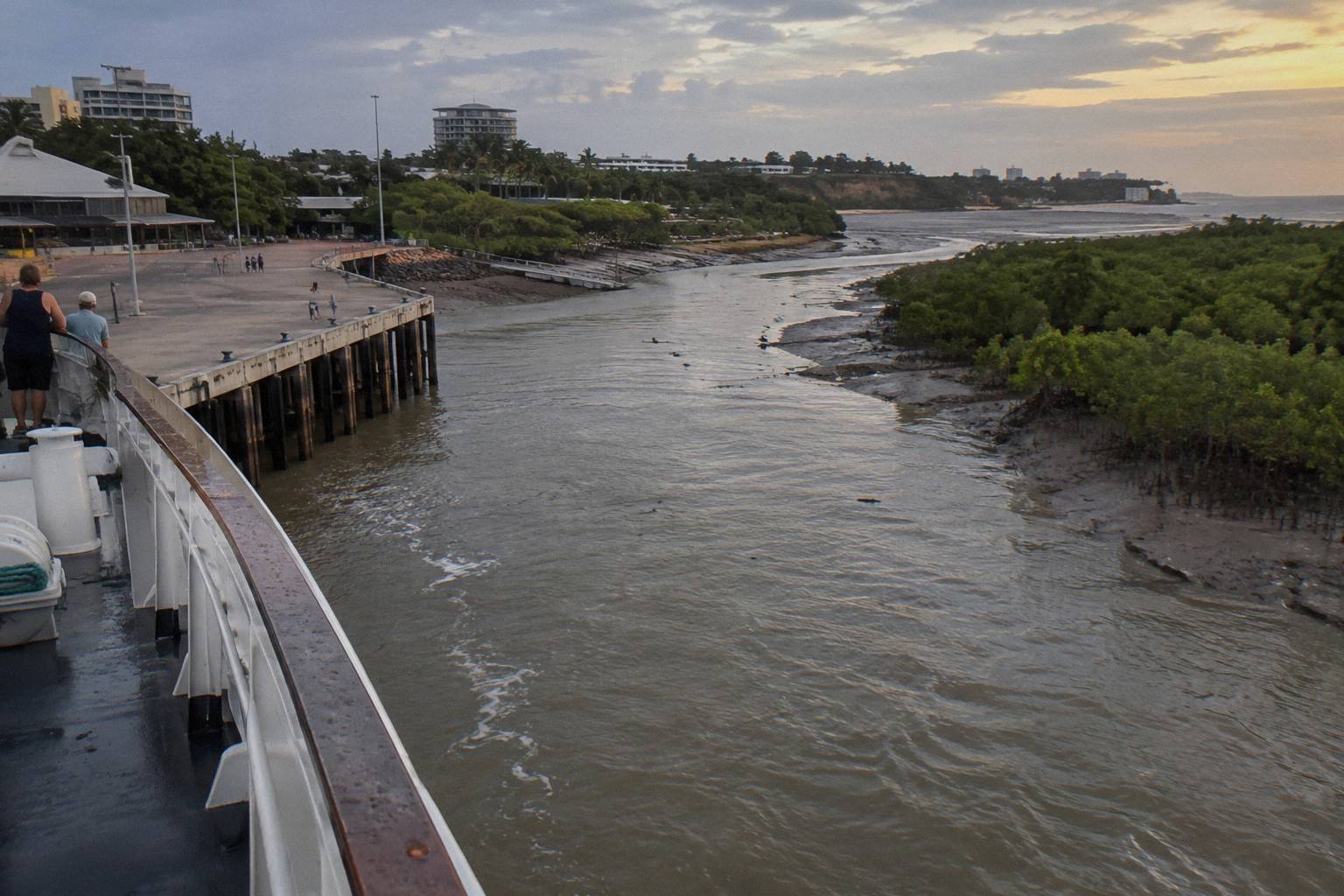
The Charles Darwin catamaran is the layout play. An open-air Sun Deck above two air-conditioned indoor levels gives you a standing, unobstructed horizon plus a place to stash gear and cool off, on an about 2-hour run. Adult fares start at A$149 online, the operator's own figure, youth ages 4 to 17 from A$89, infants 0 to 3 free, and the operator says booking online saves up to 9 percent compared with walk-up.
The Cape Adieu ketch is the character play. A traditional rig gives you foreground shapes most harbour photos lack, over about 2.5 hours in the Dry season, April to October, with a chef-prepared four-course dinner from local produce and a fully licensed bar, no BYO alcohol. The operator's price is from A$226 per person.
Cost sits somewhere in that spread too. The operator's from-price for the four-course ketch dinner is A$226 per person, the buffet cruise starts at A$149 adult online, and the Sail Darwin and Gaze And Graze cruises publish no price, so check the live listing for those. A longer article comparing costs across the year is our guide to sunset boat prices in Darwin.
When Does The Sun Set On A Darwin Cruise Evening?
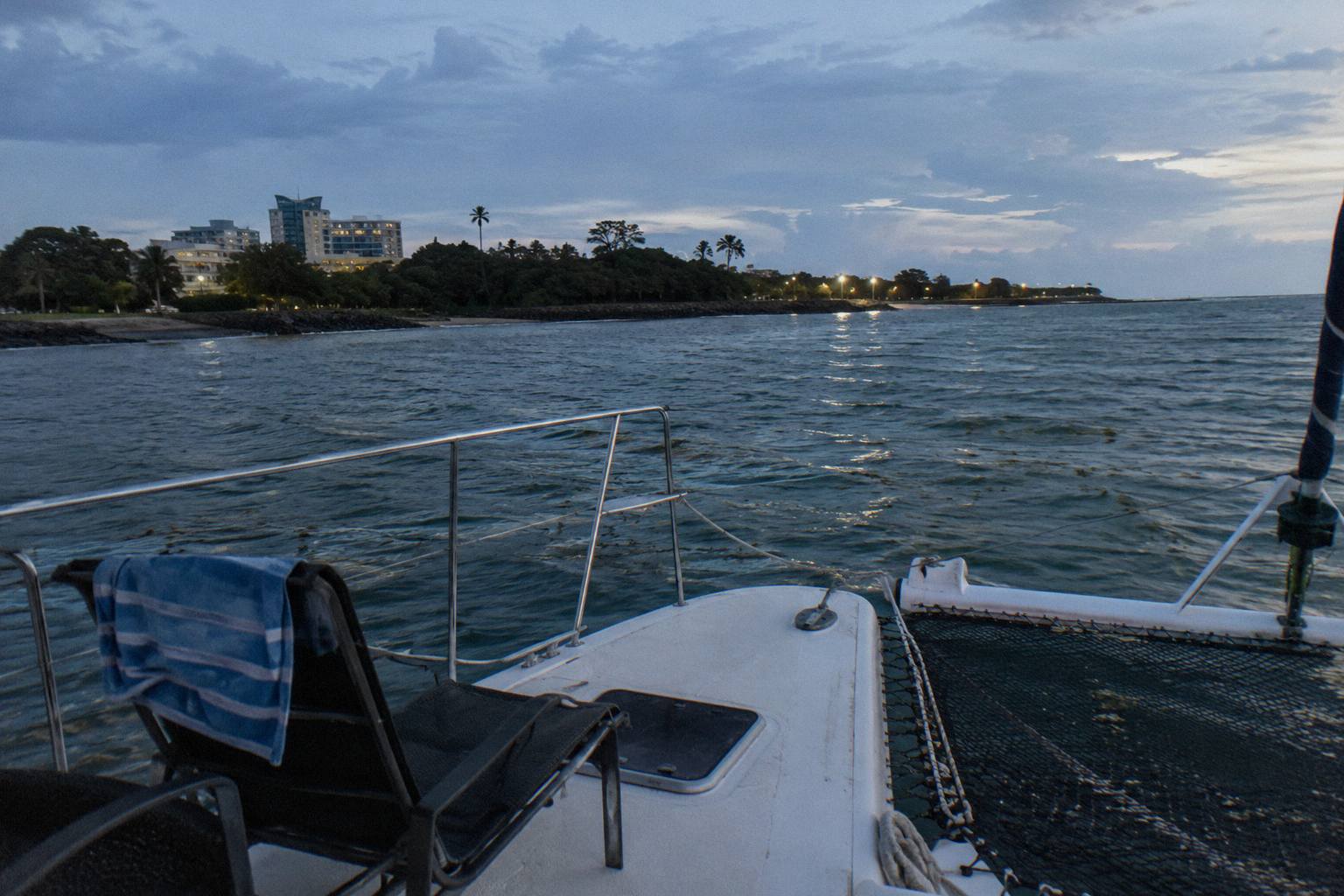
A solar calculation for Darwin puts sunset between about 6:29 pm in late May to early July and about 7:19 pm in December and January, with the sun crossing 7:00 pm in March and early December. The Northern Territory runs Australian Central Standard Time all year with no daylight saving, so these figures hold in every season. All three cruises board at Stokes Hill Wharf ahead of sunset, and exact boarding times come on your booking confirmation.
The table below is a calculation from a NOAA solar algorithm for Darwin's coordinates, taken on the 15th of each month and accurate to about plus or minus 2 minutes. It is not an official timetable, so treat every figure as approximate. It is also not a boat time: no cruise departs exactly at sunset, and operators move their clock times with the season.
| Month | Approximate sunset (15th) | Month | Approximate sunset (15th) |
|---|---|---|---|
| January | about 7:19 pm | July | about 6:36 pm |
| February | about 7:16 pm | August | about 6:42 pm |
| March | about 7:02 pm | September | about 6:42 pm |
| April | about 6:42 pm | October | about 6:43 pm |
| May | about 6:29 pm | November | about 6:52 pm |
| June | about 6:29 pm | December | about 7:07 pm |
For photographers the practical reading is that Darwin's sunset is predictable to within an hour all year, so you can arrive at the wharf knowing roughly when the light will drop. If you want the fuller picture month by month, including sunrise figures, see our table of Darwin sunset times by month.
Never print a clock time from this page onto a cruise. Operator pages publish boarding and departure times that differ between pages and shift with the season, and this guide lists none of them on purpose. Check the time on your booking confirmation, and for Sail Darwin the terms add a sharp edge: the boat departs promptly, guests should arrive at least 15 minutes before, and there is no refund for missing the boat.
The Gaze And Graze Sunset Cruise, which this site features across its planning guides, is worth a note for photographers specifically because of its seating: allocated spots on the Sundeck with a gourmet grazing platter and locally made mango ice cream. Knowing where you will sit removes the scramble that happens on unseated decks when the sky turns. Its grazing platter sunset cruise details page covers the rest, and the price is on the live listing.
How Do You Keep Photos Sharp On A Moving Boat?
The three habits that matter on a harbour cruise are steady hands, a clean lens and watching the sky rather than the screen. Hold the phone or camera with both elbows braced against your body, wipe the lens before the light drops, and look up often so you see the sky change instead of discovering it later in your gallery. No setting rescues a smeared lens or a rushed frame.
Boats move in three ways at once: they roll, they pitch and they vibrate with the engine. Generic advice beats any formula here. Keep your elbows in and your feet apart, brace against a rail or a cabin wall where the operator allows it, and press the shutter gently rather than tapping. If your device has a burst mode, use it and pick the sharpest frame afterwards, because motion on a boat defeats even careful single shots.
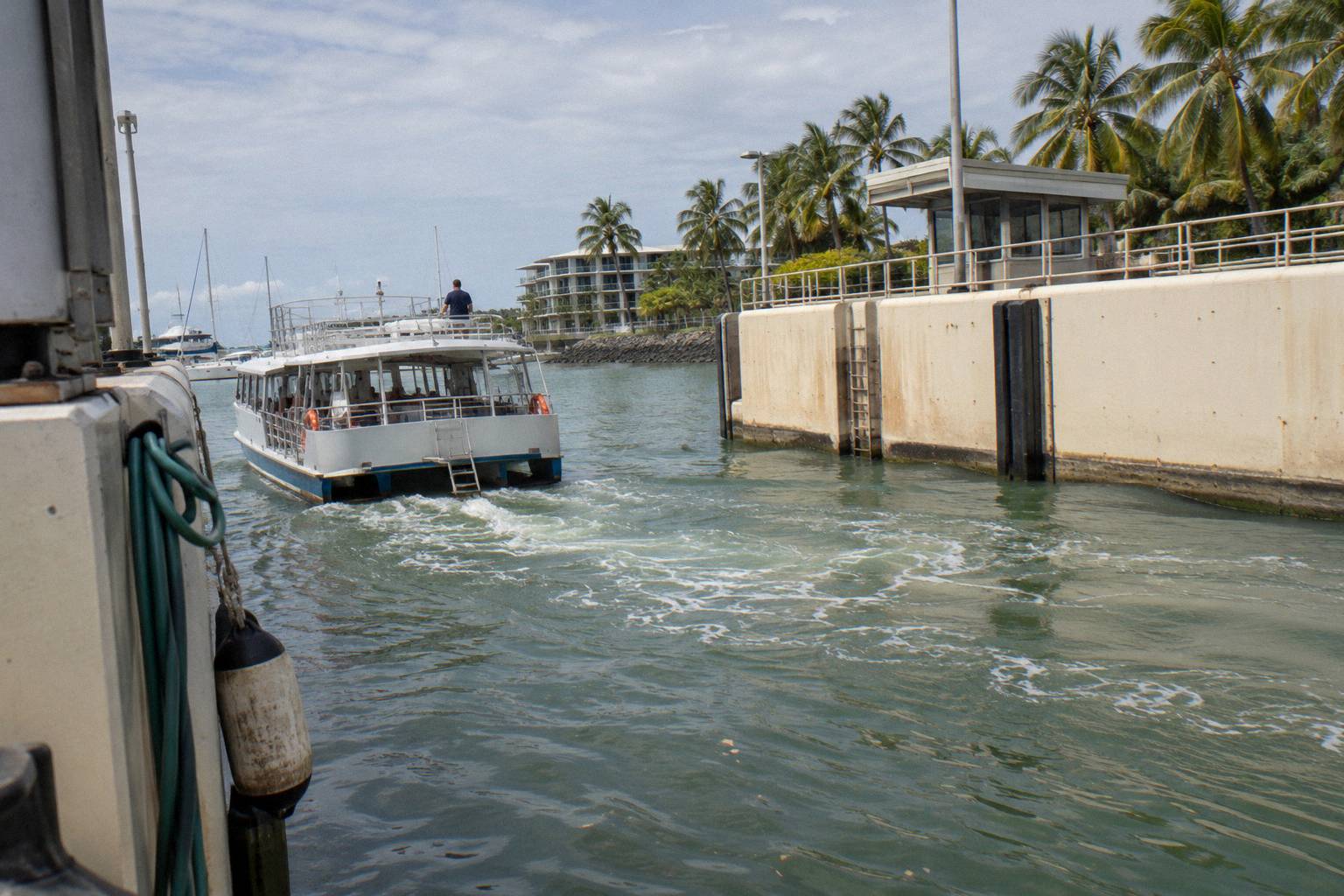
The lens point sounds trivial until you see the results. Harbour air carries salt and spray, sunscreen fingers find lenses, and a dusk smudge turns every light source into a soft blob. Wipe the lens with a clean cloth at the start of the evening and again after any trip to the open deck. It costs nothing and it is the single most common fix for disappointing sunset shots.
The sky is your subject and it changes faster than you expect. Rather than chasing the moment the sun touches the horizon, watch how the light shifts across the water and the boat through the whole sailing. Some of the strongest frames of any harbour evening come after the sun is gone, when the sky holds colour and the boat's own lights come on. Darwin's harbour at night runs about 25 degrees in the operator Darwin Harbour Cruises' own description, so you can stay out on deck comfortably while that after-glow develops.
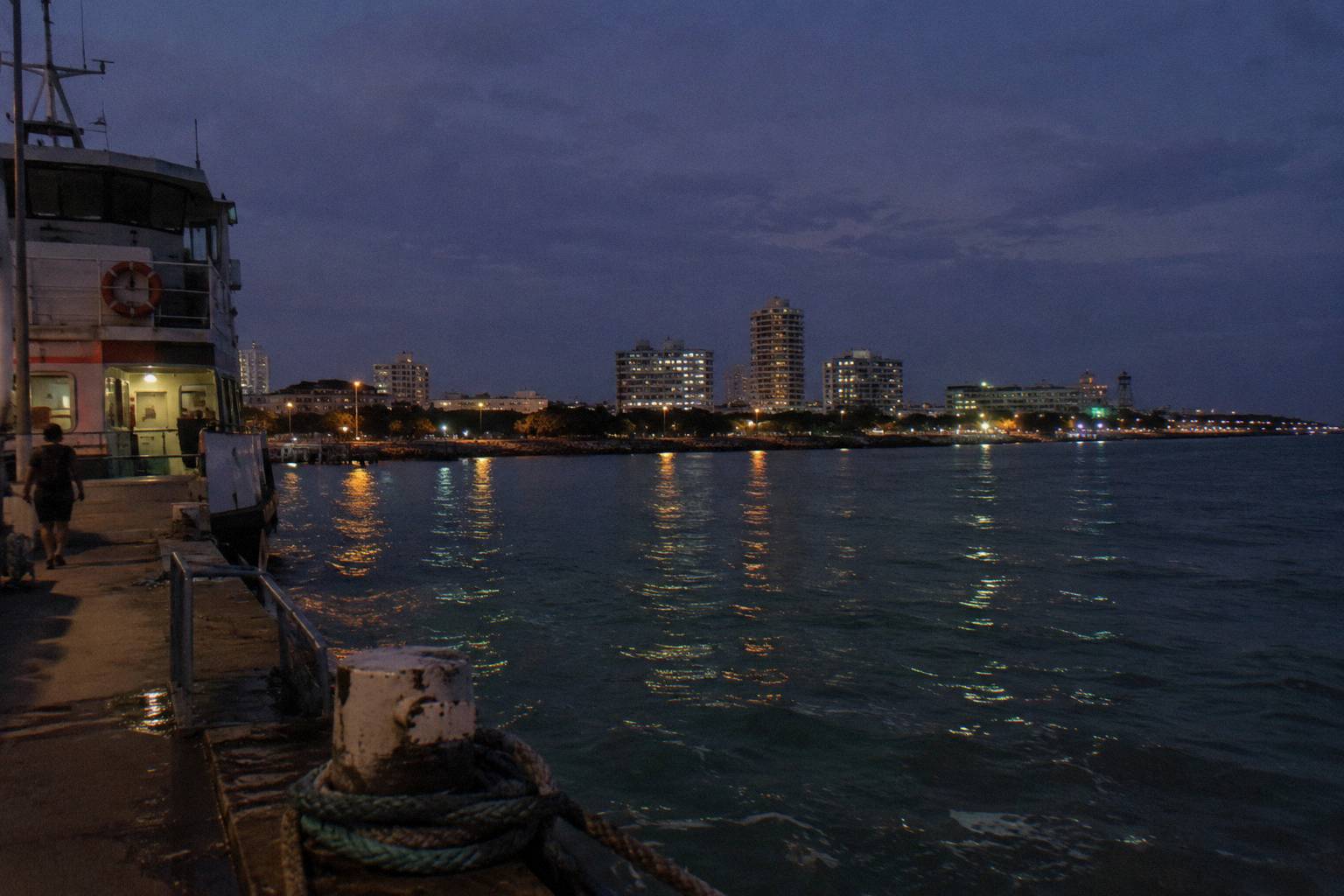
Phone versus camera comes down to handling, not image quality. A phone you can hold one-handed and steady against a rail wins on convenience; a camera with a strap and two hands wins on control, provided you keep it braced. Whichever you carry, take a few test frames early in the trip while the light is still workable, so you learn how your device renders the water and the sky before the moment you actually care about.
The ketch option suits this section well, since rigging gives your steady hands something worth framing. Cape Adieu's four-course dinner cruise, from A$226 per person in the operator's own pricing, runs about 2.5 hours through the Dry season April to October, and dietary requests need at least 48 hours' notice if dinner and photography have to share the evening.
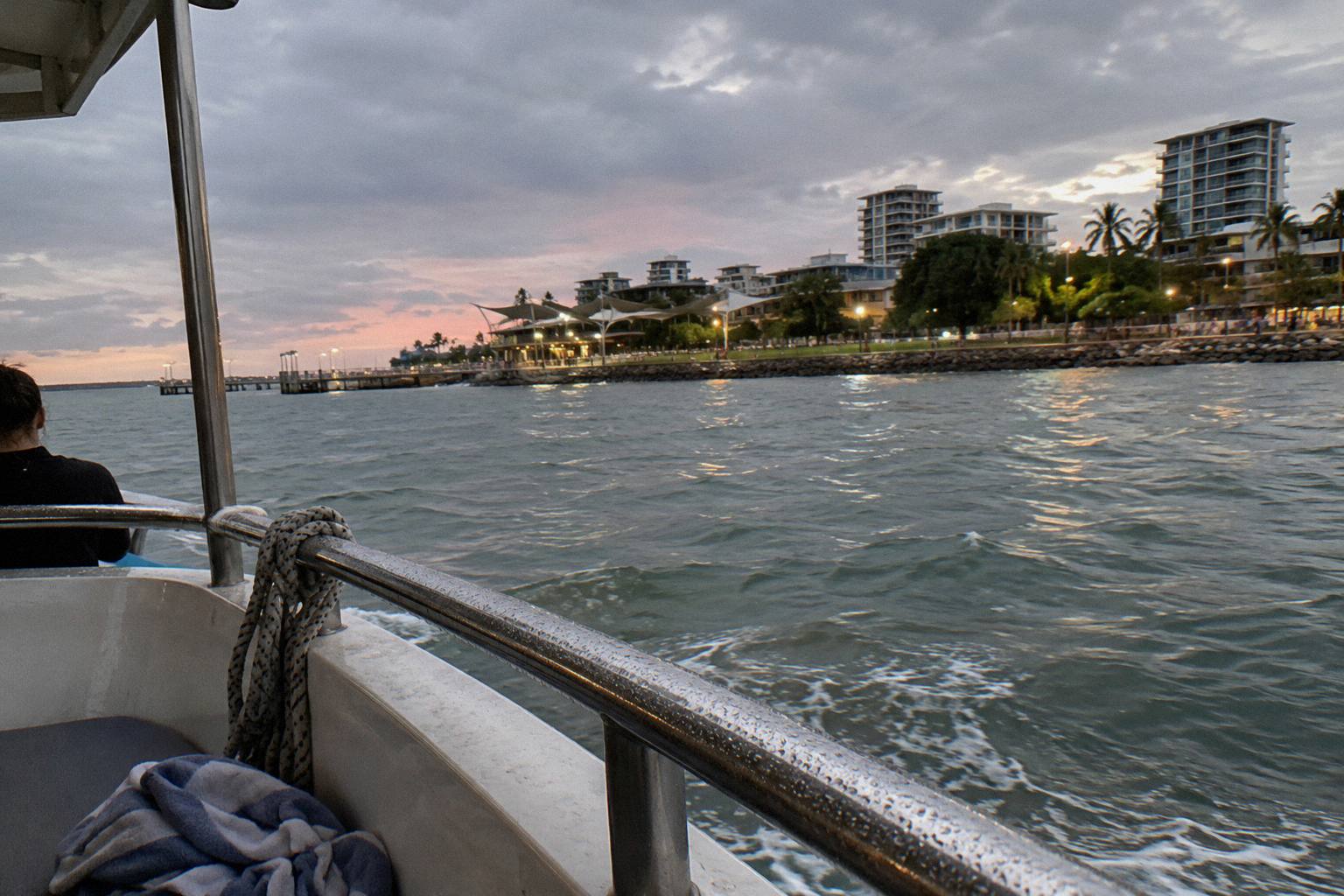
What Should You Bring For A Photo Evening On The Water?
Darwin Harbour Cruises' own FAQ lists the essentials: hat, camera, ticket or voucher, and a light cardigan, because the operator describes the harbour at about 25 degrees at night. Ginger tablets are suggested for sea sickness, and the Charles Darwin vessel is cashless, EFTPOS and Visa or Mastercard only. Cape Adieu and Sail Darwin publish no dress code.
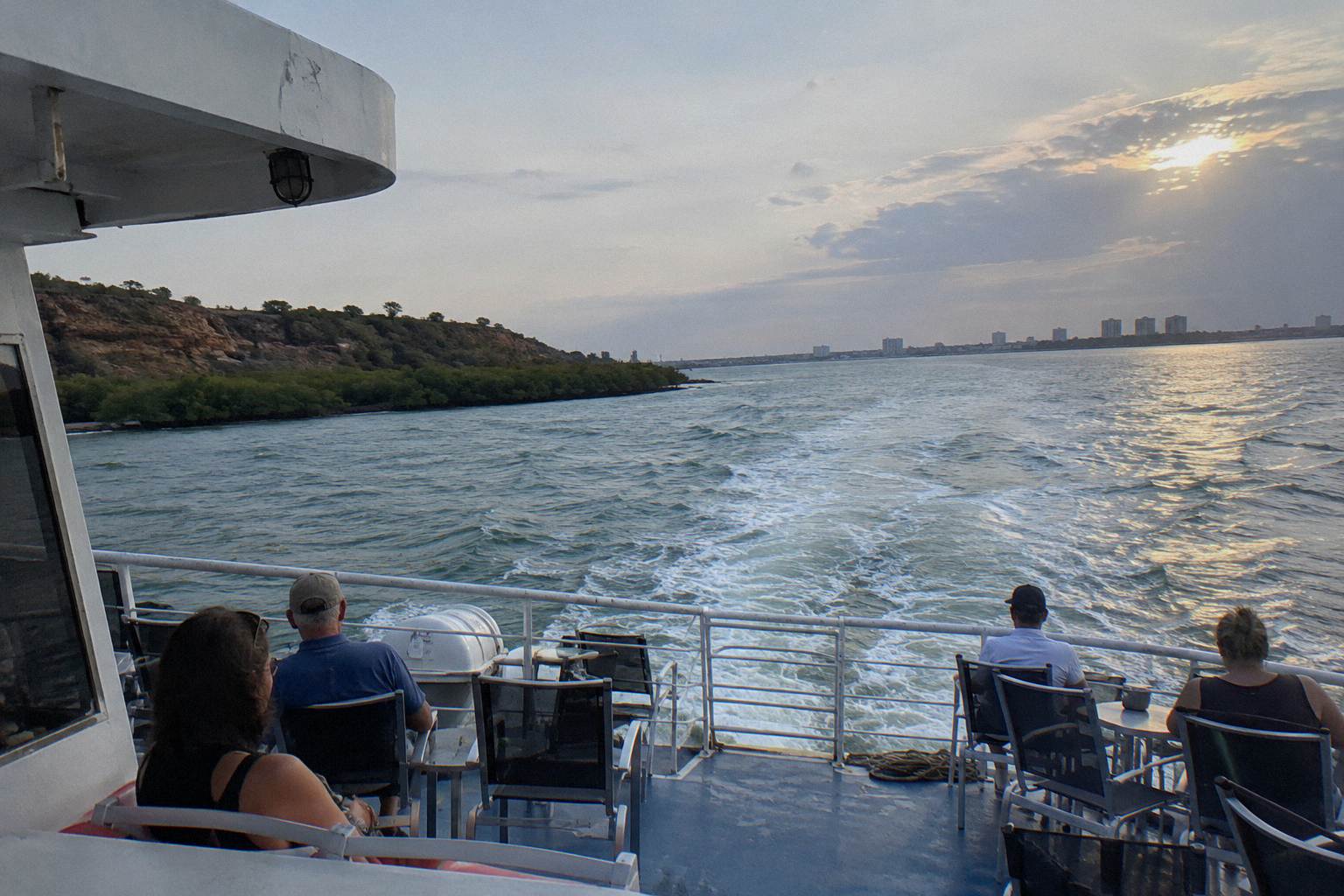
The camera on that list is the only photography-specific item any operator names, which is itself useful: none of the three operators publishes photography rules, restrictions or tripod policies anywhere on their pages. Treat that as "no stated limits, use common sense": small gear you can hold, nothing that blocks other guests, and a question to the crew before you set up anything larger than a phone.
The cardigan matters more than photographers expect. On an open deck at 25 degrees with a boat moving through its own breeze, arms cool quickly, and cold hands are unsteady hands. The operator's suggestion is light layers, not a parka, but take it. A hat does double duty before sunset and keeps stray light off your viewfinder afterwards.
| Item | Source | Why it matters for photos |
|---|---|---|
| Camera or phone | Darwin Harbour Cruises FAQ | The one photography item any operator names |
| Clean cloth | Evergreen advice | Salt air and fingerprints smear dusk shots |
| Light cardigan | Darwin Harbour Cruises FAQ | Harbour runs about 25 degrees at night, per the operator |
| Hat | Darwin Harbour Cruises FAQ | Shade before sunset, less flare after |
| Ticket or voucher | Darwin Harbour Cruises FAQ | Boarding runs smooth, you shoot calm |
| Ginger tablets | Darwin Harbour Cruises FAQ | Operator suggests them for sea sickness |
Our fuller what to bring on a sunset boat guide covers the non-photographic half of the packing list. For a buffet evening with photographic ambitions, the Charles Darwin cruise pairs the Sun Deck with a Territory-style buffet, the FAQ calls it a three-course buffet with fresh local produce, beverages for purchase, and it caters for vegetarians and gluten-free guests per the operator FAQ.
Where Should You Stand On The Boat For The Best Frames?
Work the boat rather than one spot: shoot the shoreline from the side facing it, shoot the sun from the open deck, and shoot the boat itself from bow or stern where you can see rigging or rails against the sky. On the Charles Darwin, the open-air Sun Deck is the operator-named open space; on Cape Adieu and Sail Darwin, deck layouts are not published, so look around when you board.
Sun direction is the one piece of planning that pays off immediately. Using the monthly sunset table above, you know roughly where the sun will drop: roughly west, over the water, all year in Darwin. What you cannot know in advance is the boat's heading, since the skipper may change route for tides on the published Charles Darwin run and Sail Darwin's sailing is subject to tides and weather. So walk the deck early, find the side or end with a clear western view, and be generous about sharing it, because everyone on board wants the same quadrant for ten minutes.
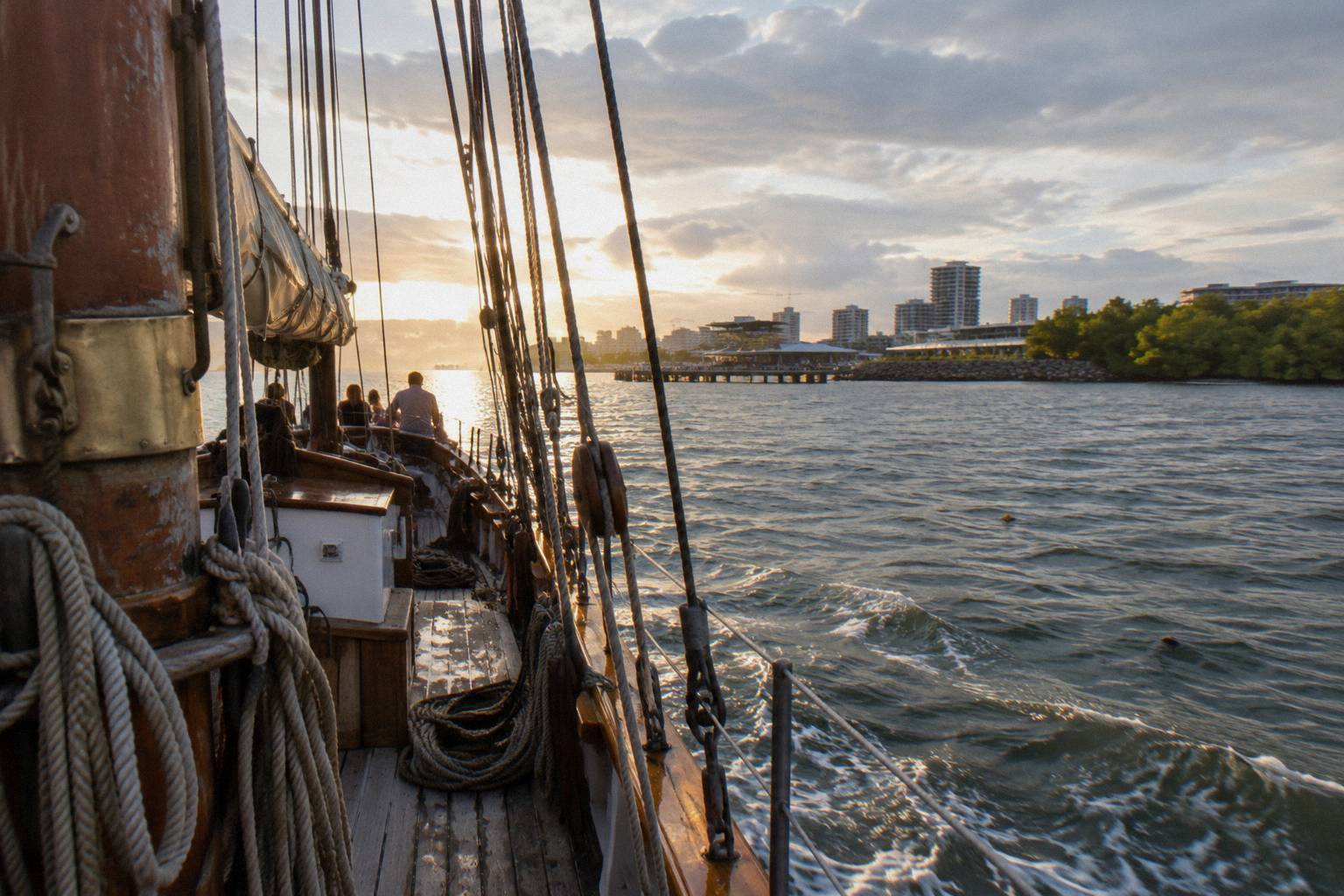
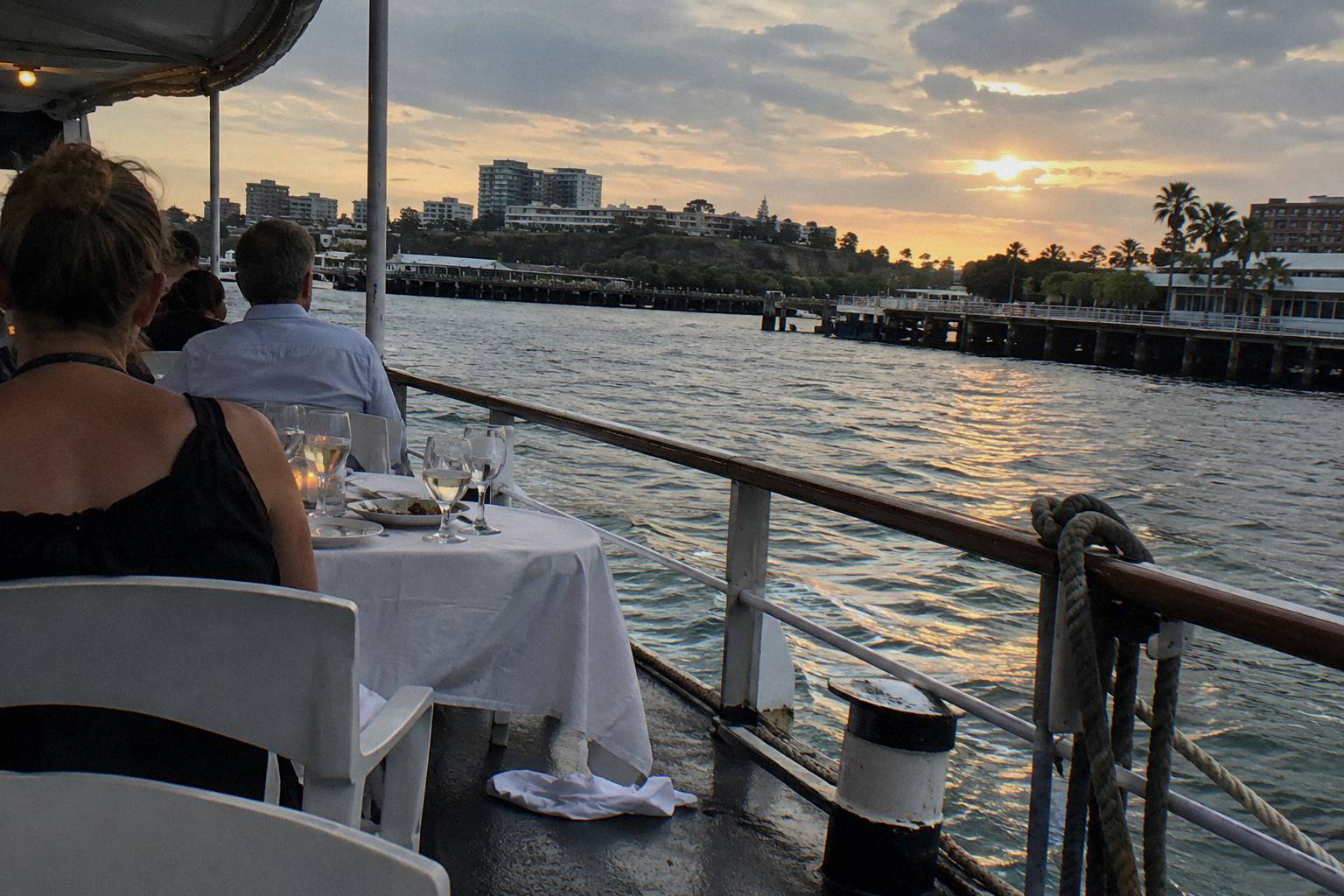
The boat's own structures are your composition tools. Rails give you leading lines, rigging on the ketch gives you foreground geometry, cabin lights and other guests give you scale and story once the sky dims. Frames that include people silhouetted against the water usually outlast pure skyline shots, and on a dinner cruise the table settings, platters and glasses are part of the evening's record.
Movement between decks is worth planning too. On a vessel with air-conditioned indoor levels, a cooling-off indoors between shooting bursts keeps you out on deck for the moments that count. Just respect the dinner service: on a buffet cruise the queue and the sunset can collide, so eat early or late if the sky is the priority.
Sail Darwin's three-hour window is the longest of the three evenings for this kind of wandering, and its terms are worth knowing before you commit: tickets are refundable or transferable but there are absolutely no changes or cancellations within 48 hours of departure, the captain decides weather calls with a reschedule or 100 percent refund, and under 18s must be accompanied by an adult. Its price is on the live listing.
Are There Any Rules For Photography On The Cruises?
None of the three operators publishes any photography rule, restriction or policy, so there is nothing to comply with beyond ordinary courtesy. Ask the crew if you plan to use anything beyond a handheld phone or camera, keep gear out of walkways, and avoid photographing other guests without their ok, particularly around dinner tables.
That absence of rules is worth stating once and clearly, because some harbours and vessels elsewhere do restrict tripods, drones or flash, and travellers sometimes assume Darwin does too. Nothing in the operators' published pages for these four cruises mentions photography at all. Drones are a separate question with airspace rules of their own and no operator statement either way, so leave them ashore unless you have asked first.
Courtesy rules fill the gap. A Sun Deck at sunset is crowded by design; a tripod in that crowd is a trip hazard and a conversation you do not want. Long lenses pointed at other tables on a dinner cruise are unwelcome anywhere. The simplest standard is to shoot what the boat gives you, the sky, the water, the vessel and your own party, and to ask before including strangers.
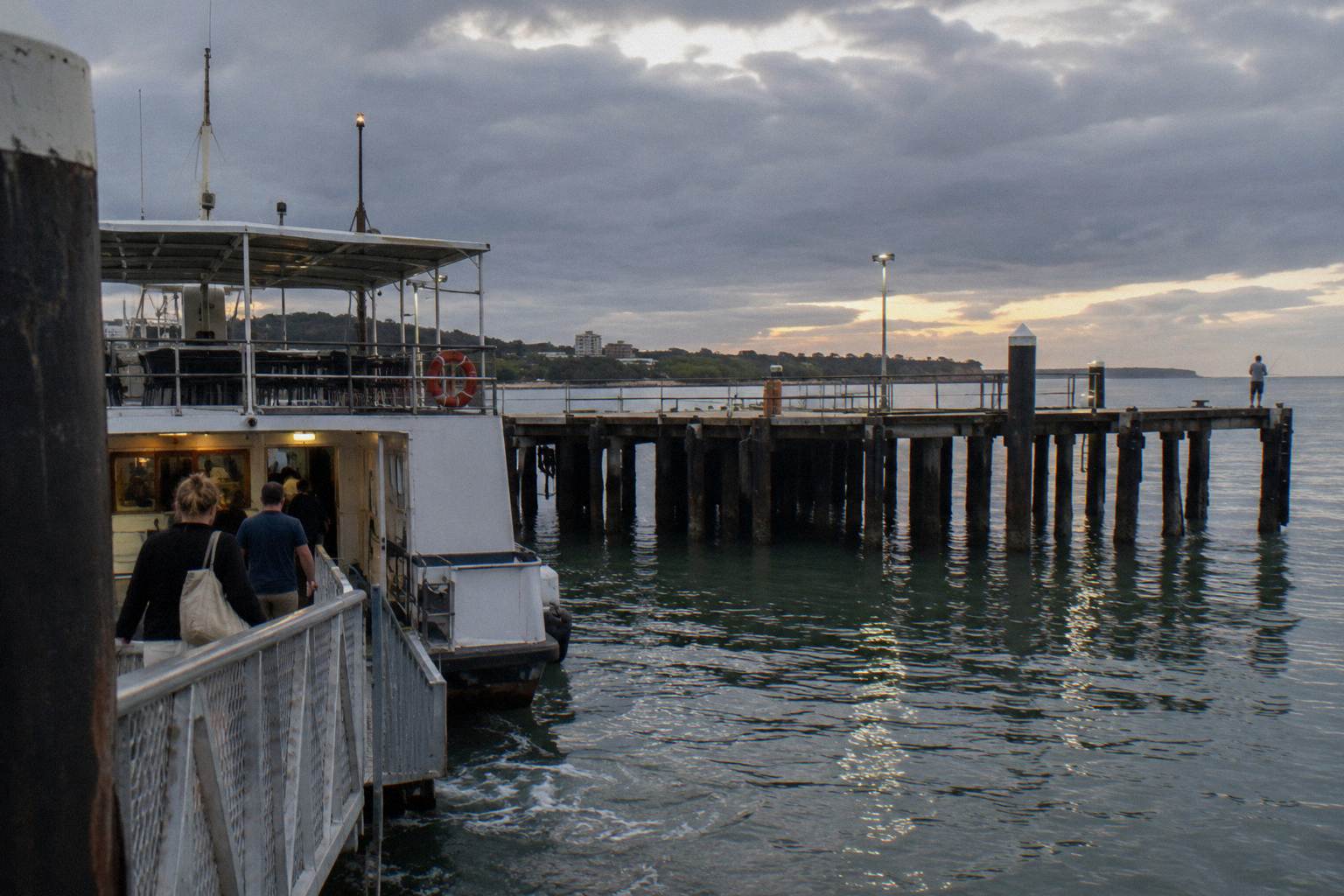
One safety note belongs here too, because dusk photography draws people to rails. None of these cruises includes swimming, and NT Government advice is to swim only in signposted areas, since Darwin Harbour is managed as a no-tolerance area for crocodiles and box jellyfish are more likely in Territory waters from 1 October to 1 June. Lean, shoot, step back. Our page on stingers and crocodiles in Darwin Harbour covers the detail.
What If The Sky Is Cloudy On The Night?
A cloudy Darwin evening is not a lost photo night: cloud holds colour after the sun is gone, and the boat, the water and the wharf lights remain subjects regardless of sky. Reading the Bureau of Meteorology's long-term figures, Darwin's driest, clearest months run June to September, with mean clear days peaking at 19.0 in August against 0.6 in January, so odds favour you most in the middle of the year.
The climate record is the photographer's friend here. Reading the BOM figures for Darwin Airport, a station with 85 years of records from 1941 to 2026, mean rainfall stays under about 25 mm a month from May to September while the wet months run roughly November to April, with January averaging 432.1 mm. Mean daily sunshine hours run 10.4 in August against 5.7 in January. The BOM page prints no wet-season definition, so this is a reading of the table, not an official season boundary, and the full detail is on the Bureau of Meteorology's Darwin Airport climate averages.
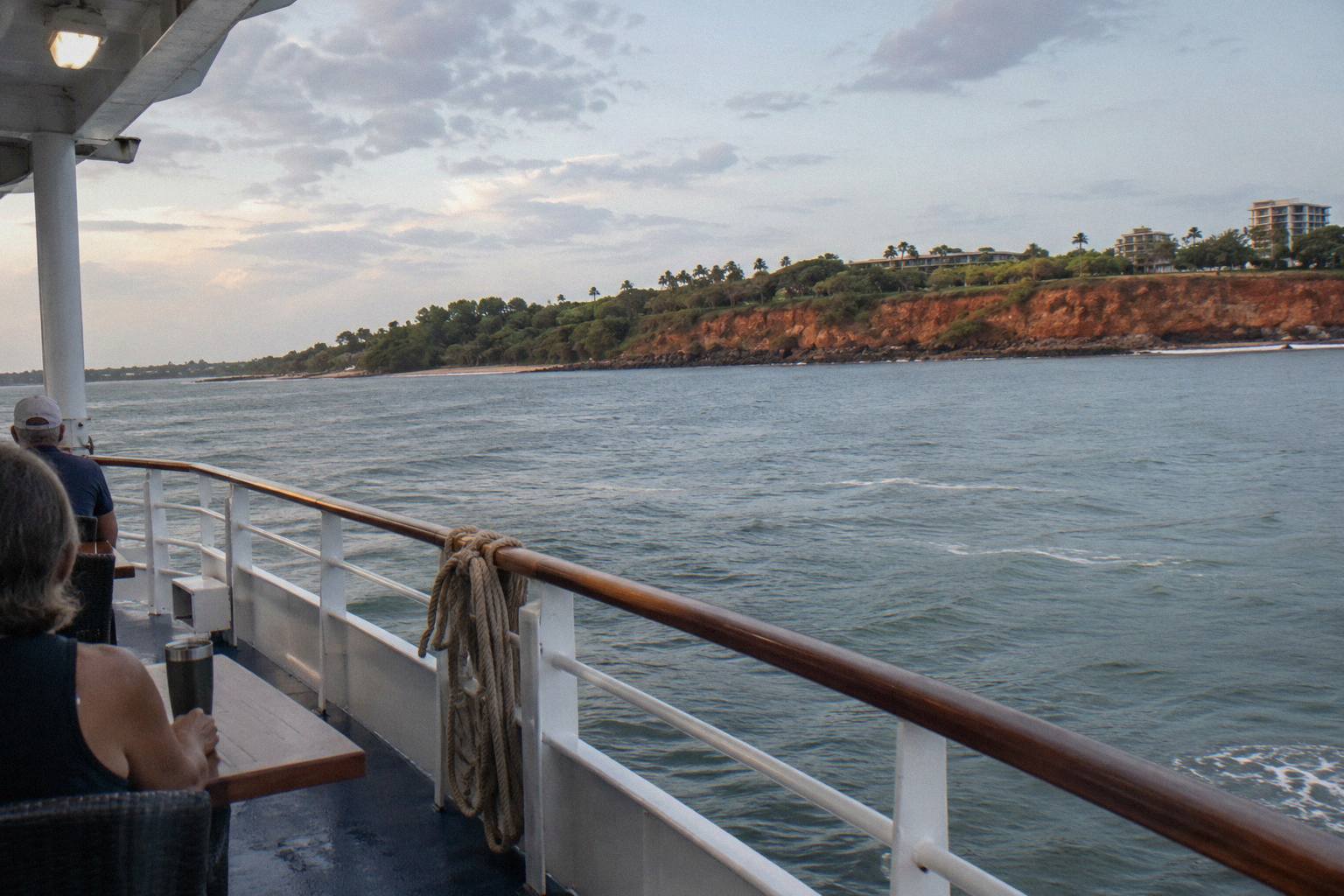
Cloud technique is evergreen. Broken cloud near the horizon often produces the most dramatic dusk colour, and the minutes after the sun disappears are when that colour develops, so stay out on deck rather than packing up at the moment of sunset. Heavy overcast kills the sky but hands you a different portfolio: reflections of wharf lights on black water, the boat's interior glow, silhouettes of rigging and rails, and the working harbour itself. Some evenings the best frames never point west at all.
Weather also decides whether you sail. Sail Darwin's terms put the call with the captain, with a reschedule or a 100 percent refund if sailing is cancelled; Cape Adieu and Darwin Harbour Cruises do not publish their cancellation terms, so check the booking page. If you want the longer philosophical take on overcast evenings, our post on what happens when the sun is hidden by cloud goes deeper, and Darwin Sunset Dinner Cruise covers the full range of harbour evenings across this site.
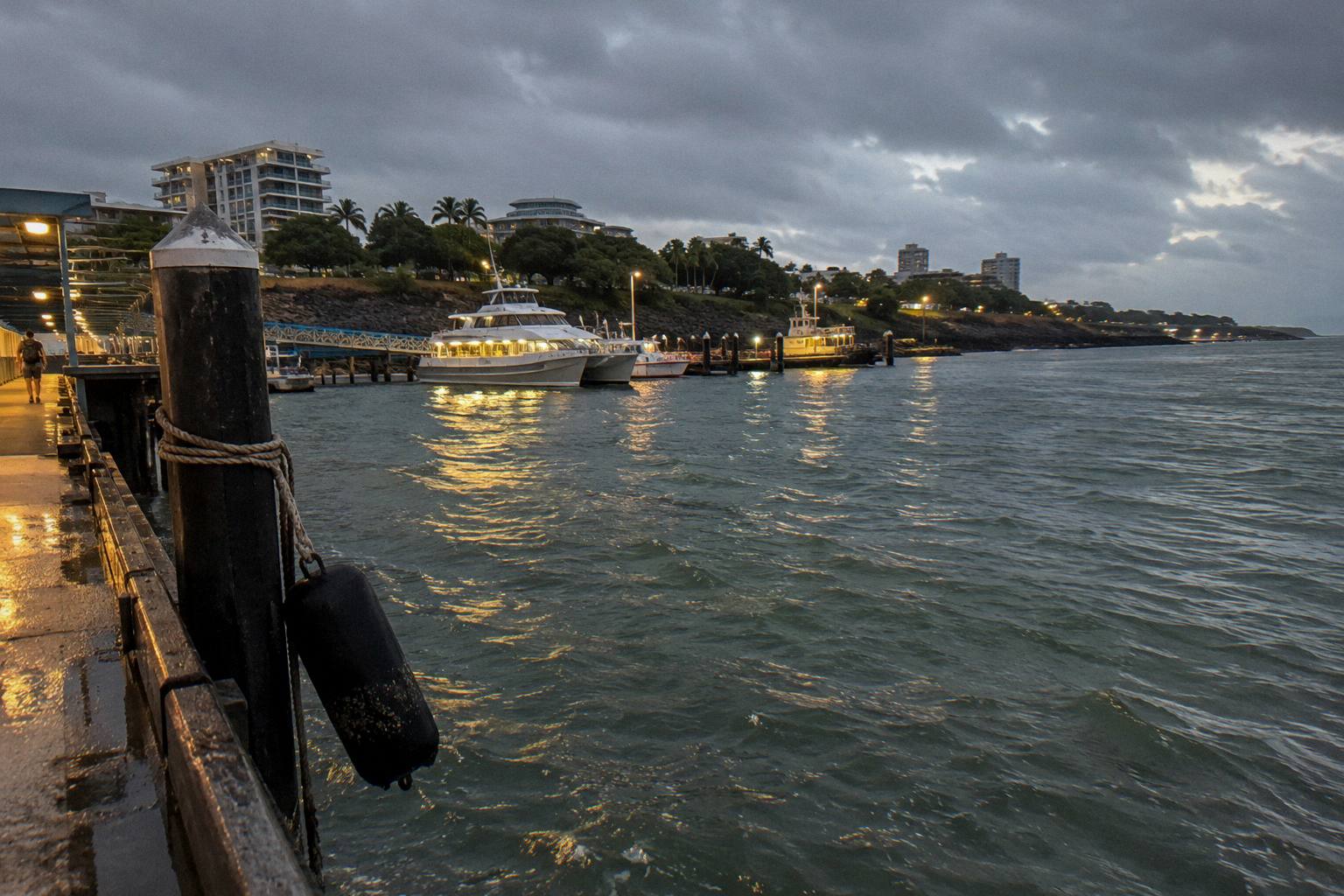
Whatever the sky does, the planning order stays the same: check the approximate sunset time for your month, check the boarding time on your confirmation, wipe the lens, and give yourself the whole sailing rather than one frantic minute. Darwin's stubborn, barely-moving sunset means the odds are unusually on your side.
Common Questions About Darwin Sunset Cruise Photos
What Time Is Sunset In Darwin?
A solar calculation puts Darwin's sunset at about 6:29 pm from late May to early July and about 7:19 pm in December and January, a swing of only about 50 minutes all year. The figures are approximate and are not boat times; check your booking confirmation for boarding.
Can You Take Good Sunset Photos On A Phone?
Yes. Steady hands braced against a rail, a wiped lens and watching the sky beat any setting formula. Take test frames early and use burst mode when the light drops.
Do Any Darwin Cruise Operators Restrict Photography?
None of the three operators publishes a photography rule. Use common sense: handheld gear, nothing blocking walkways, and ask before photographing other guests.
Which Cruise Gives The Most Time For Photos?
The Sail Darwin sunset sail runs about 3 hours, the longest of the three. The Cape Adieu ketch cruise runs about 2.5 hours and the Charles Darwin buffet cruise about 2 hours.
Where Do The Sunset Cruises Leave From?
All three cruises board at Stokes Hill Wharf on the Darwin Waterfront: Cape Adieu and Darwin Harbour Cruises at Dock 3, Sail Darwin at Dock 1.
What If It Is Cloudy On The Night?
Cloud often holds the best colour after sunset, so stay on deck past the moment the sun drops. For the clearest odds, the BOM record favours June to September, with a mean of 19.0 clear days in August.