
Darwin Sunset Times By Month, And When To Board
Darwin sits close enough to the equator that its sunset barely moves all year, from about 6:29 pm in the Dry season to about 7:19 pm at the height of summer. Every sunset cruise on the harbour is timed against that clock, so knowing the month you are travelling tells you roughly when you will be boarding.
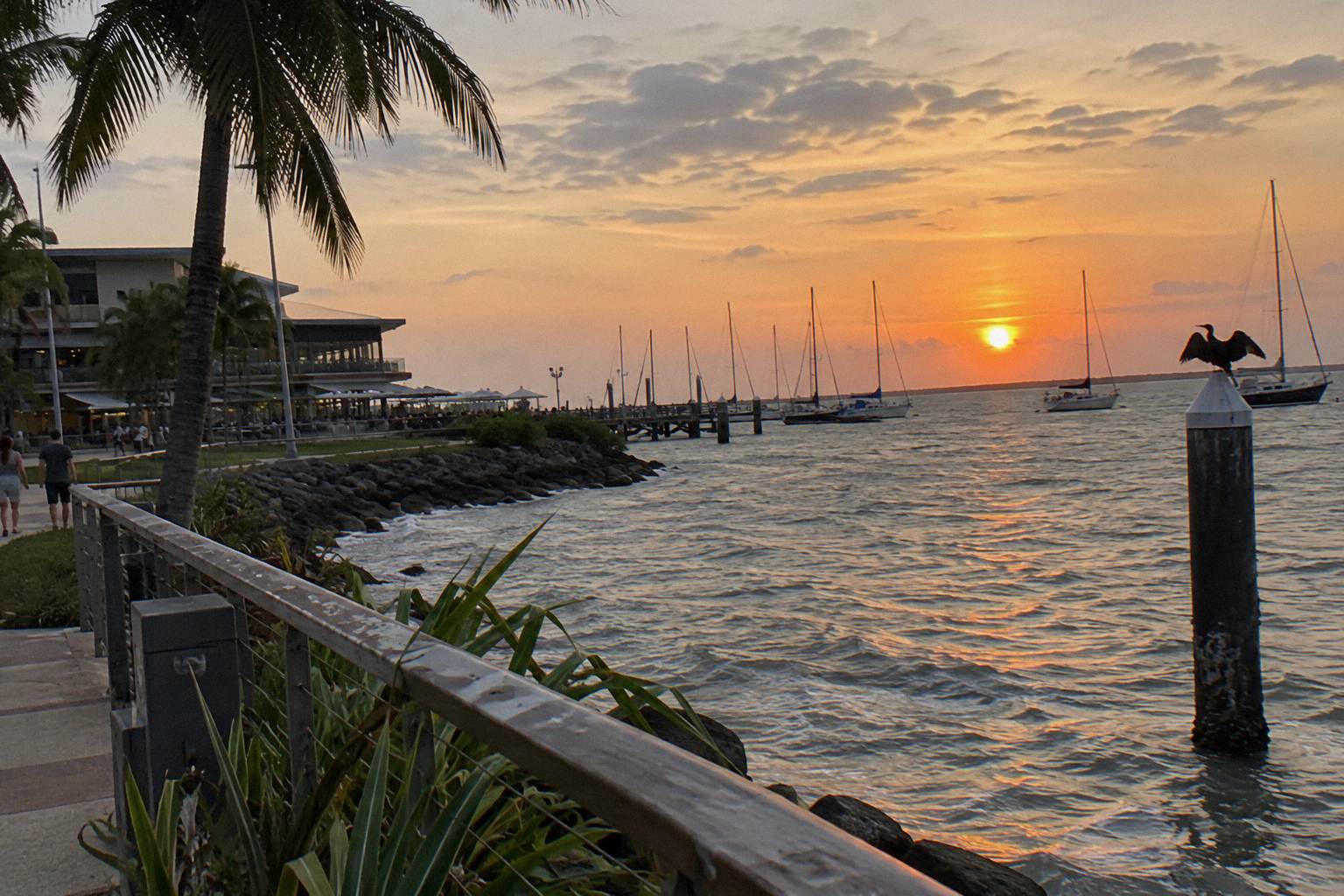
Short answer
A solar calculation puts Darwin's sunset between about 6:29 pm in late May to early July and about 7:19 pm in December and January, a swing of only about 50 minutes across the whole year. Cruises board ahead of sunset at Stokes Hill Wharf, and operators move their departure times with the season, so the time on your booking confirmation is the one that counts.
Darwin is close to the equator, at latitude -12.4634, and that single geographic fact explains almost everything about its evenings. In most Australian cities the sunset lurches by hours between winter and summer. Here it drifts through a window of roughly 50 minutes, from about 6:29 pm at the depth of the Dry season to about 7:19 pm in the weeks around the new year. Anyone planning a dinner cruise, a photography evening or even just a drink at the wharf is working with a clock that barely changes, which makes Darwin one of the easiest cities in the country to plan an evening around.
That stability shapes the cruise timetable too. Every sunset cruise on this harbour boards at Stokes Hill Wharf and departs ahead of sunset, and the operators nudge their departure times as the year turns rather than rebuilding the schedule. This guide sets out the month-by-month sunset figures, explains where they come from, and connects them to the practical decisions: when to arrive at the wharf, which months give you the clearest evenings, and how the Dry season changes what is actually bookable. If you are weighing the broader weather picture first, our guide to Darwin weather by month for boat evenings covers the rainfall side in more depth.
What Time Does The Sun Set In Darwin Each Month?
A solar calculation for Darwin puts sunset on the 15th of each month between about 6:29 pm and about 7:19 pm Australian Central Standard Time. The earliest evenings fall late May to early July at about 6:29 pm, and the latest in December and January at about 7:19 pm. The day-to-day change is under a minute, so any date in a given month sits within minutes of that month's figure.
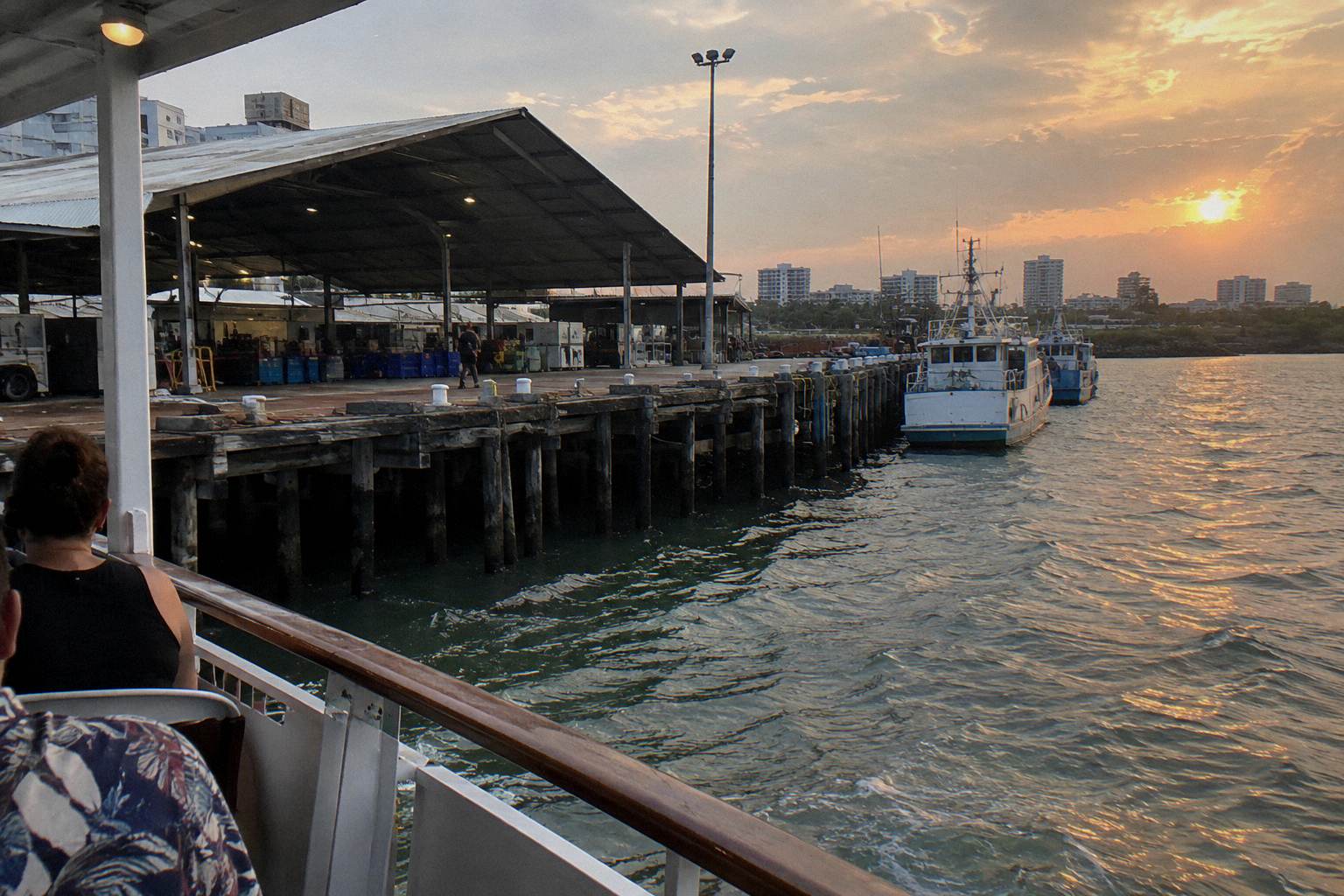
These numbers come from a NOAA solar algorithm run for Darwin's exact coordinates, latitude -12.4634 and longitude 130.8456, in Australian Central Standard Time, which is UTC+9:30. The Northern Territory does not use daylight saving, so unlike Sydney or Melbourne there is no October clock jump to track: the figure for a month is the figure for the whole month, all year, every year. Accuracy is about plus or minus two minutes.
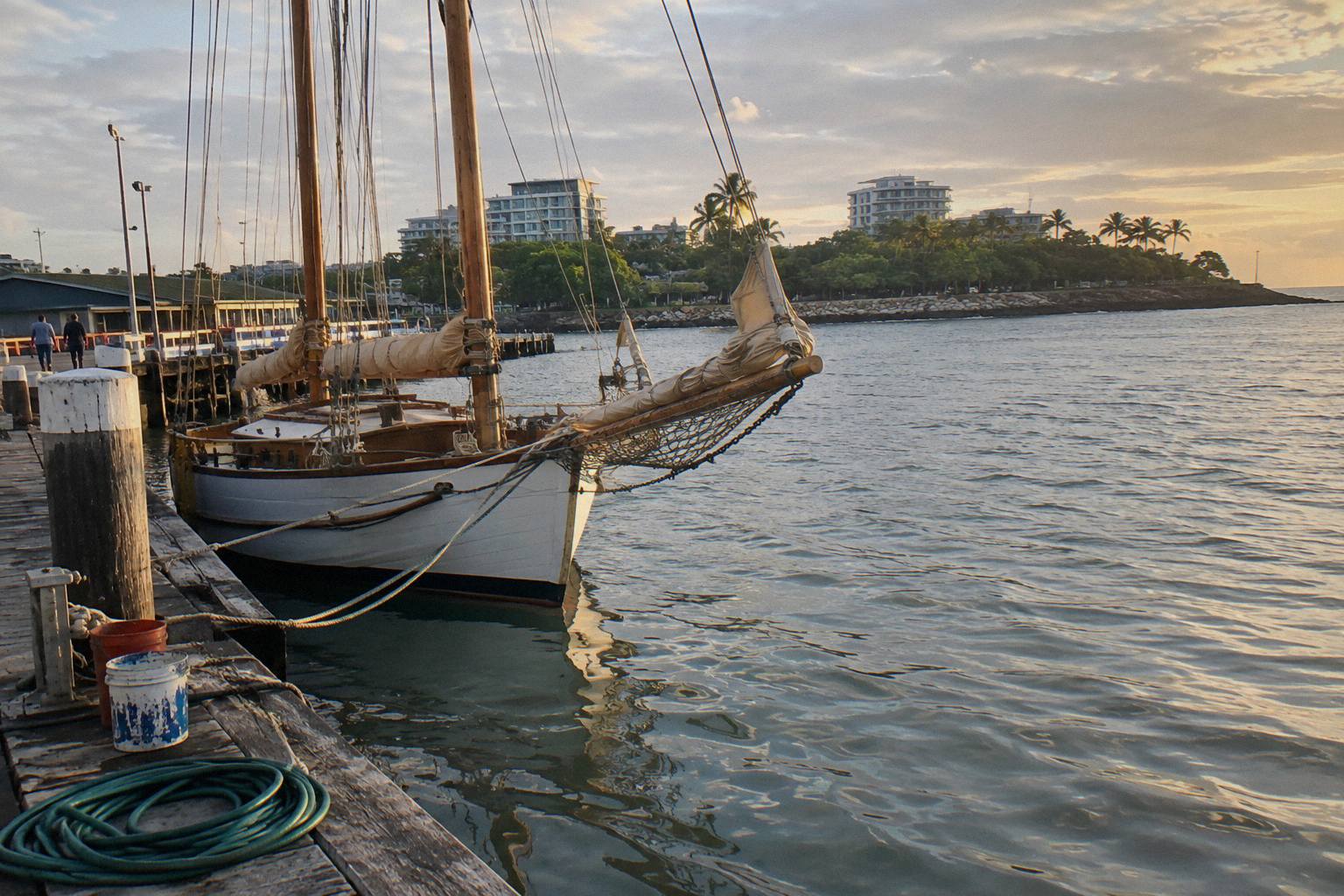
One caution before the table. This is a calculation, not an official table, and it is a solar time, not a boat time. Cruise departure and boarding times are set by each operator, differ between their pages, and move with the season. Treat the figures below as a planning guide for when the light will go, nothing more.
| Month | Sunset (approximate, a calculation) |
|---|---|
| January | about 7:19 pm |
| February | about 7:16 pm |
| March | about 7:02 pm |
| April | about 6:42 pm |
| May | about 6:29 pm |
| June | about 6:29 pm |
| July | about 6:36 pm |
| August | about 6:42 pm |
| September | about 6:42 pm |
| October | about 6:43 pm |
| November | about 6:52 pm |
| December | about 7:07 pm |
Read the table as a shallow U. Sunset eases earlier through the first half of the year, bottoms out at about 6:29 pm across late May, June and early July, then climbs slowly back to about 7:19 pm in the deepest part of the southern summer. February and January sit almost level with each other. If you have booked a two-hour dinner cruise, the difference between the extreme months is real but modest: you will eat the first course in daylight in June and under a darker sky in January, and that is about the size of it.
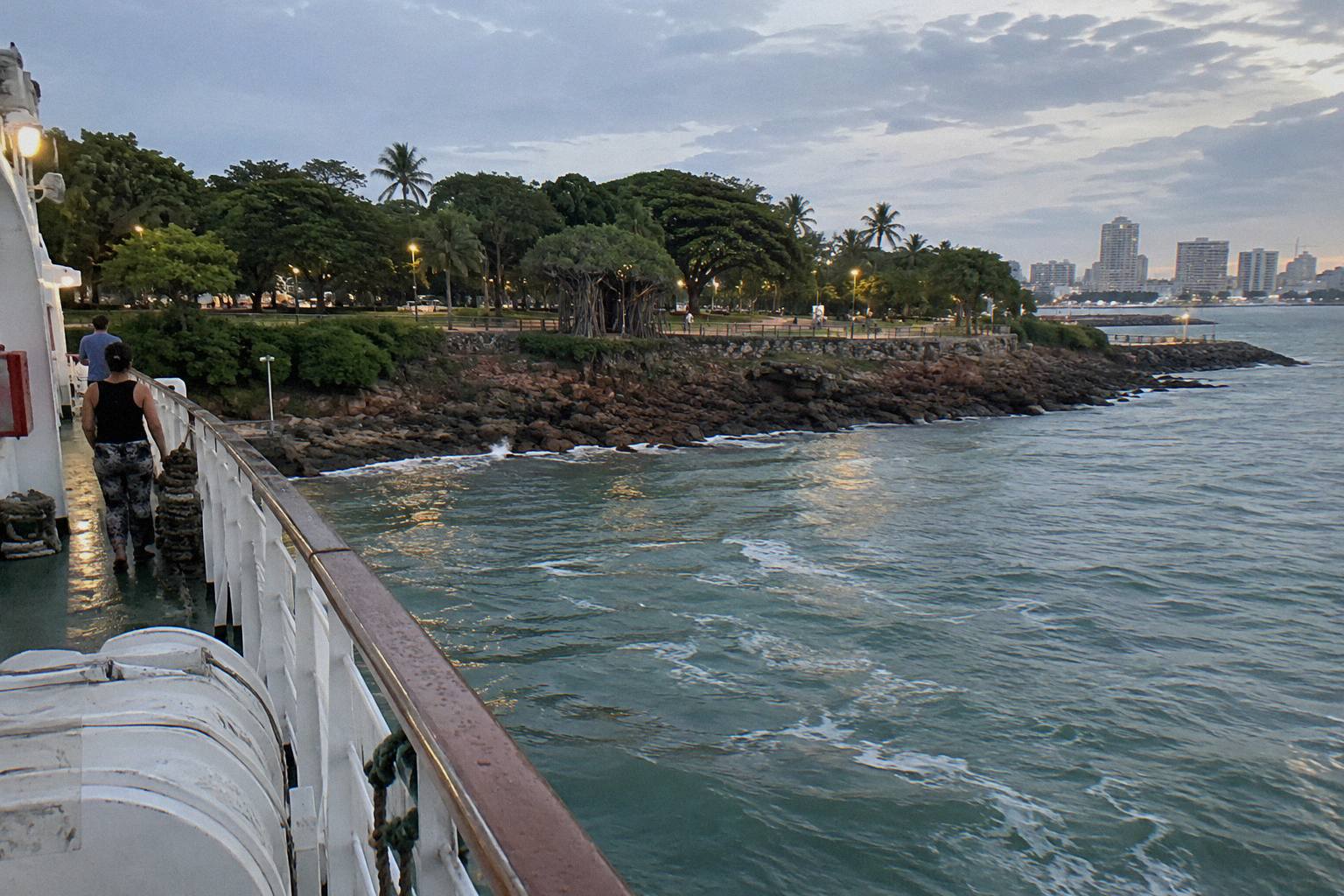
Why Does Darwin's Sunset Barely Move All Year?
Sunset times swing with latitude, and Darwin sits at latitude -12.4634, close to the tropics, so the sun's path over the year changes far less than in cities further from the equator. The result is a total swing of about 50 minutes between the shortest and longest evenings, compared with hours in Melbourne or Hobart. Day length stays near twelve hours all year.
The mechanics are simple. Earth's tilted axis makes the sun appear to travel further north in the middle of the year and further south at the ends of it. Near the equator that annual migration barely changes the angle of the sun's rise and set, so the day length hovers around the twelve-hour mark and sunset parks in a narrow band. At southern latitudes the same tilt produces the long summer evenings and early winter dark that Australians in the southern capitals know well.
For a Darwin visitor this has a pleasant practical effect. A sunset cruise booked in June starts in the low 6:30 pm range; the same cruise in December starts near 7:19 pm. Neither feels drastically different, because neither is. You can plan a dinner reservation after a cruise, or a phone call to family overseas, around sunset times that you can predict from the table above without checking a calendar app.
The sunrise side behaves the same way, which matters if your trip includes early starts. The same solar calculation puts sunrise at about 6:32 am in January, about 7:05 am in June, about 7:09 am in July and about 6:16 am in December. That is a swing of under an hour. Darwin mornings in the middle of the year start in comparative darkness, which surprises visitors from cities where June dawn arrives before 6 am.
Choosing among the sunset options is easier once the timing question is settled. The three experiences below cover the range of what the harbour offers: a four-course dinner on a traditional ketch, a buffet on a three-level catamaran, and a three-hour sailing trip with sparkling wine. Each is timed against the same sun, so the month-by-month figures above apply to all of them equally, and each boards from a different berth at the same wharf.
When Do The Cruises Board, And When Should You Arrive?
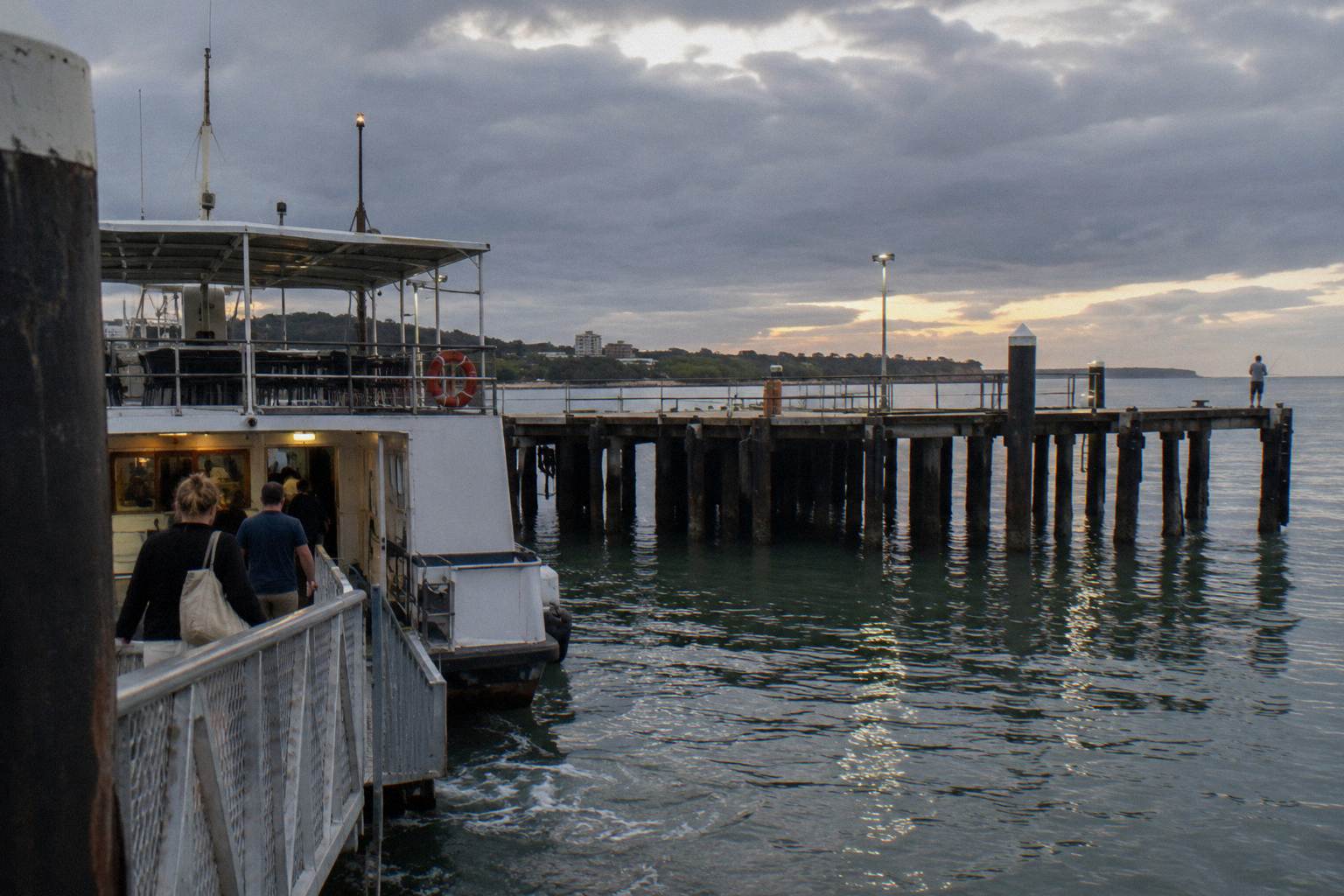
Every sunset cruise boards at Stokes Hill Wharf on the Darwin Waterfront: Cape Adieu and Darwin Harbour Cruises at Dock 3, Sail Darwin at Dock 1. Boarding happens ahead of sunset, and the exact clock time moves with the season, so the time printed on your booking confirmation is the only one to trust. Sail Darwin asks guests to arrive at least 15 minutes before departure.
None of the operators publishes a single fixed departure time, and that is deliberate rather than evasive. A cruise that needs to be on the water for sunset has to leave earlier in June than in December, and pages within the same operator's site can show different times for different products and seasons. The consistent pattern across all four cruises is boarding ahead of sunset, with the boarding time set by the sunset calculation for the date.
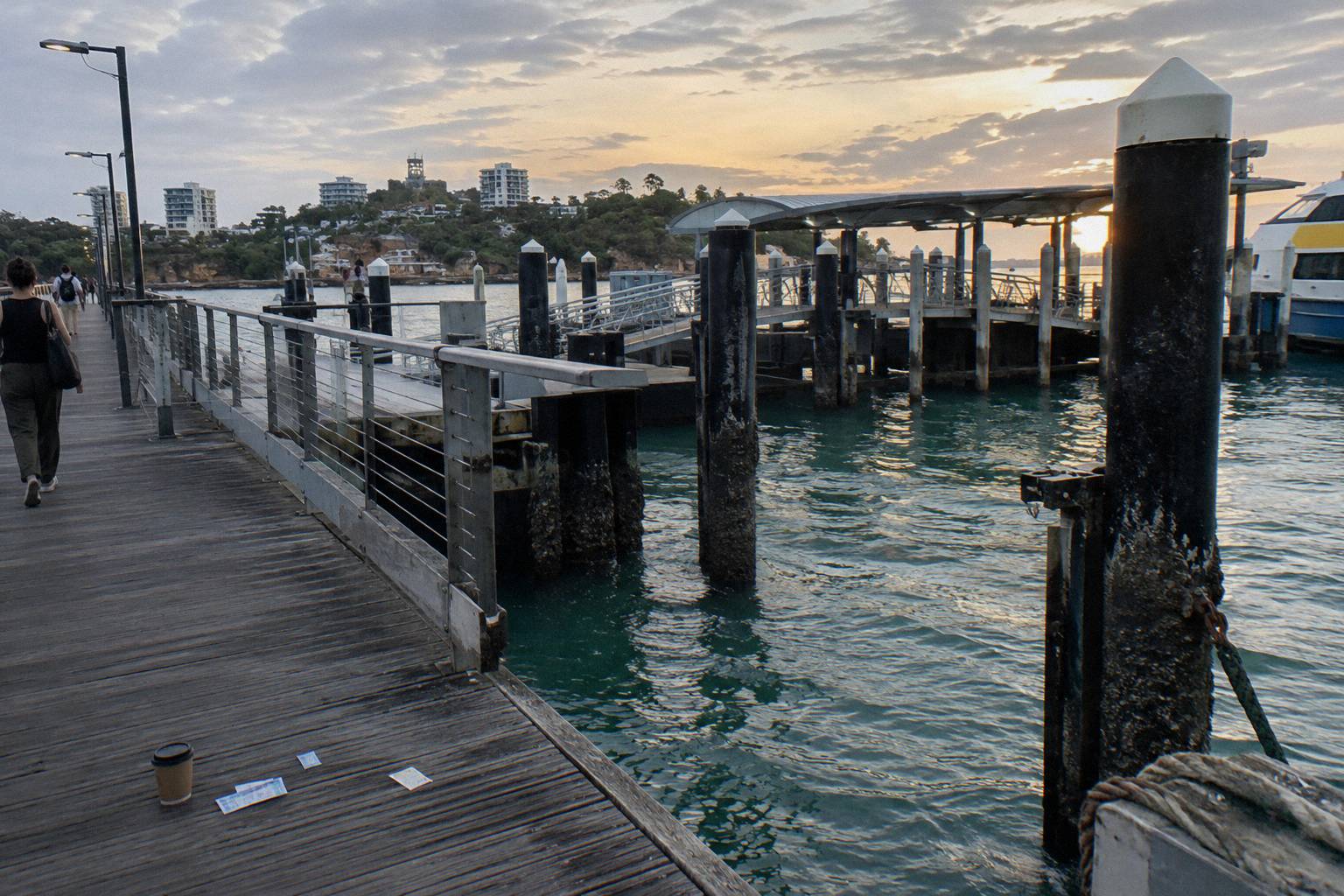
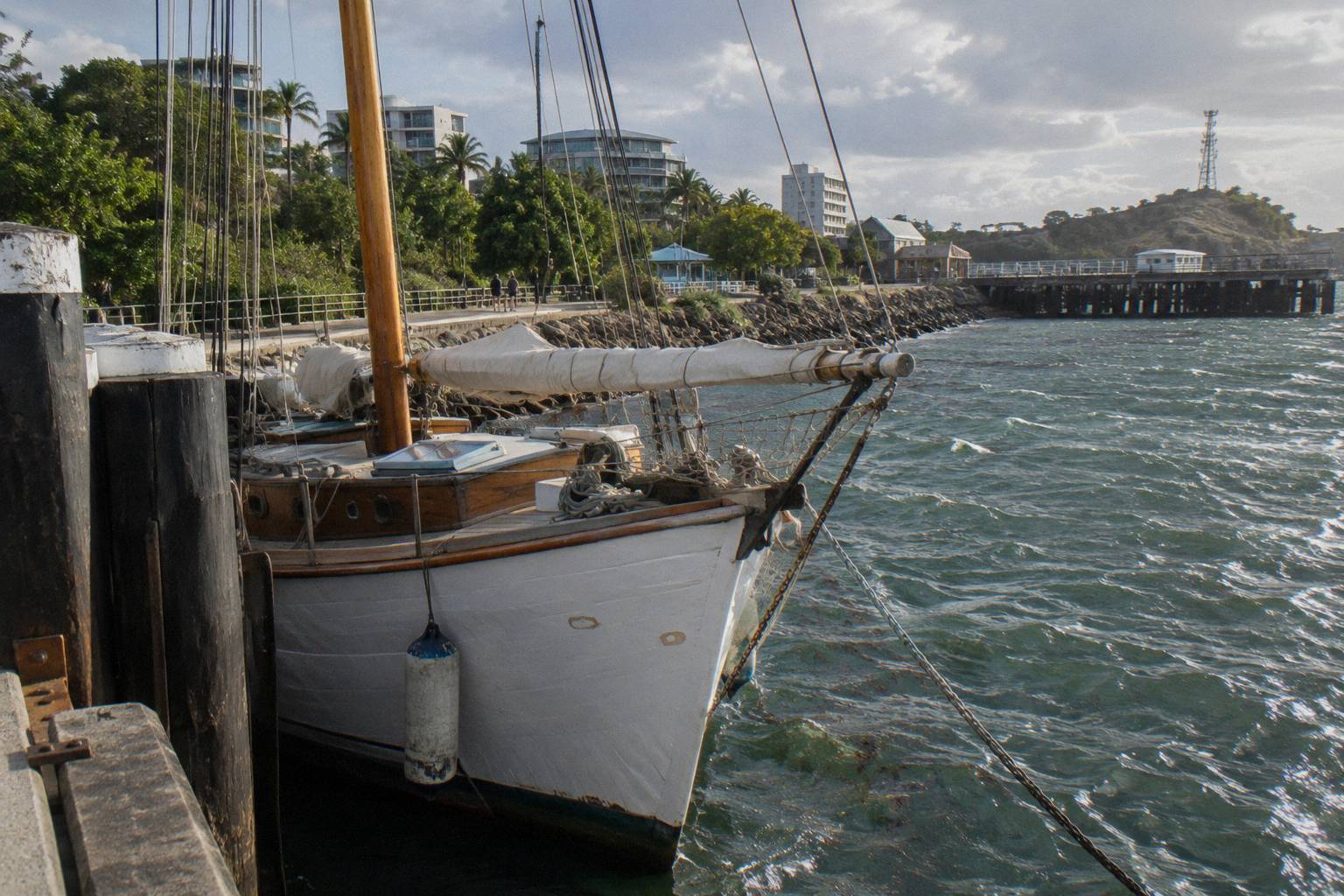
Sail Darwin's terms are the most explicit of the three operators about punctuality: the boat departs promptly, guests should arrive at least 15 minutes before, and there is no refund for missing the boat. Its sailing catamaran Sundancer NT boards at Dock 1. Darwin Harbour Cruises boards its two harbour products at Dock 3, where the operator sits at Tenancy 13, and Cape Adieu's ketch also boards at Dock 3. Our guide to Stokes Hill Wharf departures walks through the wharf itself.
Two practical notes belong here and nowhere else in this guide. No operator offers a hotel pickup, so do not plan around transfers. If you are driving, allow time to find a parking spot at Stokes Hill Wharf rather than assuming a car park at the gate.
Because the departure slot follows the sun, the ketch dinner cruise in June will call you to the wharf noticeably earlier than the same cruise in October, even though the experience on board is identical. That is the practical payoff of the sunset table above: you can estimate your evening before you book, then confirm it the moment your voucher arrives. If the timing works for your dates, the next step is a single click.
Which Months Give You The Clearest Sunset Evenings?
Reading the Bureau of Meteorology figures for Darwin Airport, the clearest months are July and August, with about 19 clear days in August and 17.6 in July and mean daily sunshine of 10.2 and 10.4 hours respectively. Rainfall stays under about 25 mm a month from May to September, while the wet months run roughly November to April, with January averaging 432.1 mm.
The Bureau's long-term monthly means, drawn from 85 years of records at Darwin Airport station 014015, tell a consistent story. January averages 19 days of rain of 1 mm or more and 0.6 clear days in the month; July averages 0.2 rain days and 17.6 clear days. Mean daily sunshine runs from 5.7 hours in January to 10.2 in July and 10.4 in August. If the goal is a sunset you can actually see rather than a sunset you can hear through cloud, the middle of the year is where the odds sit.
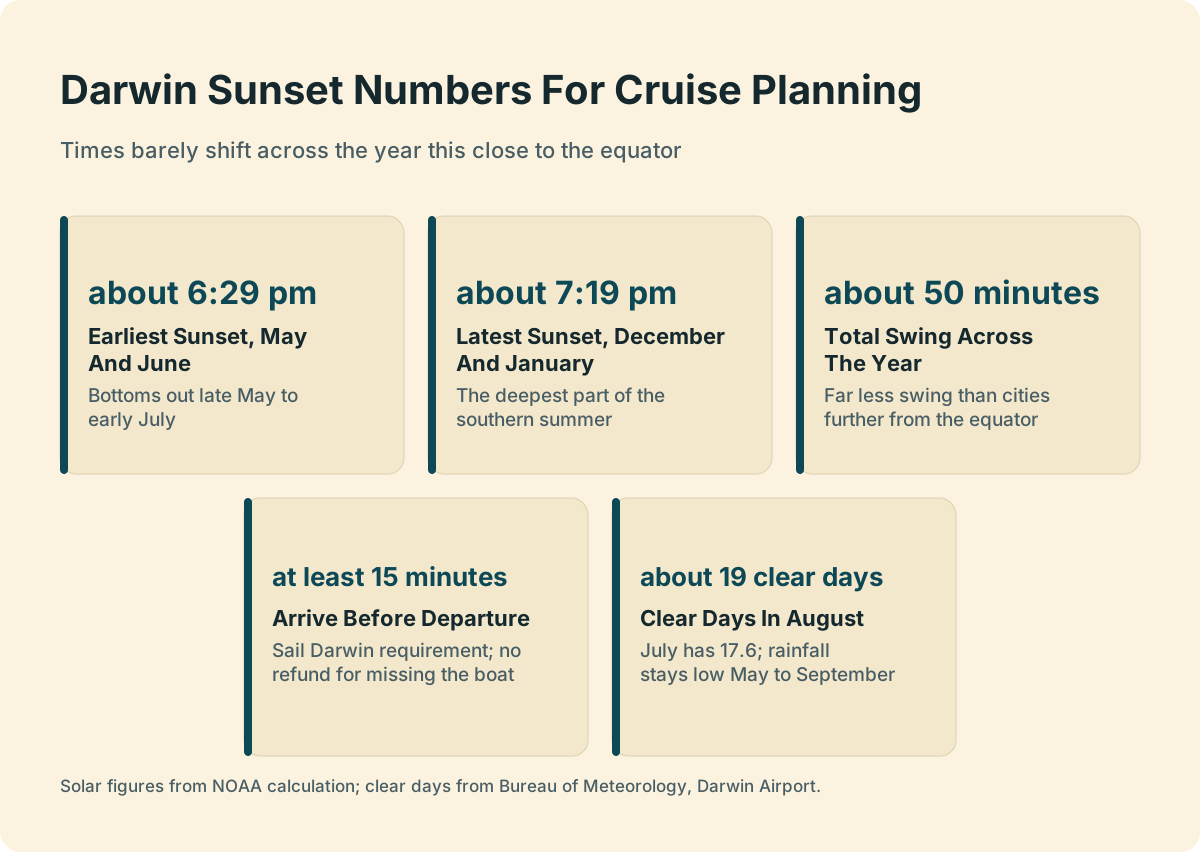
The BOM page prints no wet-season definition, so it would be wrong to call any of this an official boundary. It is a reading of the figures. Two things stand out when you put the rainfall numbers next to the sunset table: the driest months, June to September, are also the months with the earliest sunsets, roughly 6:29 pm to 6:42 pm, and the clearest months are July and August. A July or August evening cruise departs earliest, in the most reliable weather, under the sunniest skies the city offers.
| Month | Mean rain days (1 mm or more) | Mean rainfall (mm) | Mean daily sunshine (hours) |
|---|---|---|---|
| January | 19.0 | 432.1 | 5.7 |
| February | 17.8 | 372.4 | n/a |
| July | 0.2 | 1.0 | 10.2 |
| August | 0.3 | 4.4 | 10.4 |
The fuller climate picture, including temperatures month by month, sits in our Darwin weather by month guide for boat evenings, and the official numbers come straight from the Bureau of Meteorology's Darwin Airport climate averages.
Temperatures barely enter the decision. Mean daily maximums run from 30.7 degrees in July to 33.4 in October and November, and Darwin Harbour Cruises describes harbour nights at about 25 degrees, suggesting a light cardigan rather than a jacket. The variable that actually changes your evening is cloud, and cloud is a wet-season phenomenon here.
Does The Dry Season Change What Cruises Are Available?
Yes. Cape Adieu states its cruises run through the Dry season, April to October, with only private charters by enquiry outside those months. Darwin Harbour Cruises and Sail Darwin state no season for their sunset cruises, so check the booking page. The BOM table supports June to September as the driest months.
This is the one place where the season genuinely changes the booking rather than just the departure time. The ketch dinner cruise, a chef-prepared four-course dinner from Dock 3, is a Dry-season product, priced from A$226 per person for the season it runs. In the months outside April to October, the same vessel is available for exclusive hire up to 60 guests by enquiry, and no charter price is published, so that is an ask-the-operator conversation. The wider set of guides lives on Darwin Sunset Dinner Cruise.
There is no single official dry season, and it is worth being precise about that. Cape Adieu says April to October. City of Darwin Cruises, a context operator based at Cullen Bay marina, states 1 May to 30 September for a group rate. The BOM table supports June to September as the driest months. Three sources, three windows, all pointing at the same stretch of the calendar from different starting points. The Bureau's own long-term climate averages for Darwin are the underlying data for the driest-months reading.
The two Darwin Harbour Cruises products and the Sail Darwin sunset sail are different: no season stated, so the booking page is the authority on whether a given date is running. Sail Darwin's terms add one more layer that fits the seasonal theme: all sailing is subject to suitable tides and weather, with the captain deciding on the day and a reschedule or 100 percent refund if the trip cannot run.
If the choice between a catamaran and a ketch is what you are weighing, the discussion in dinner cruise or sunset sail is the natural next read.
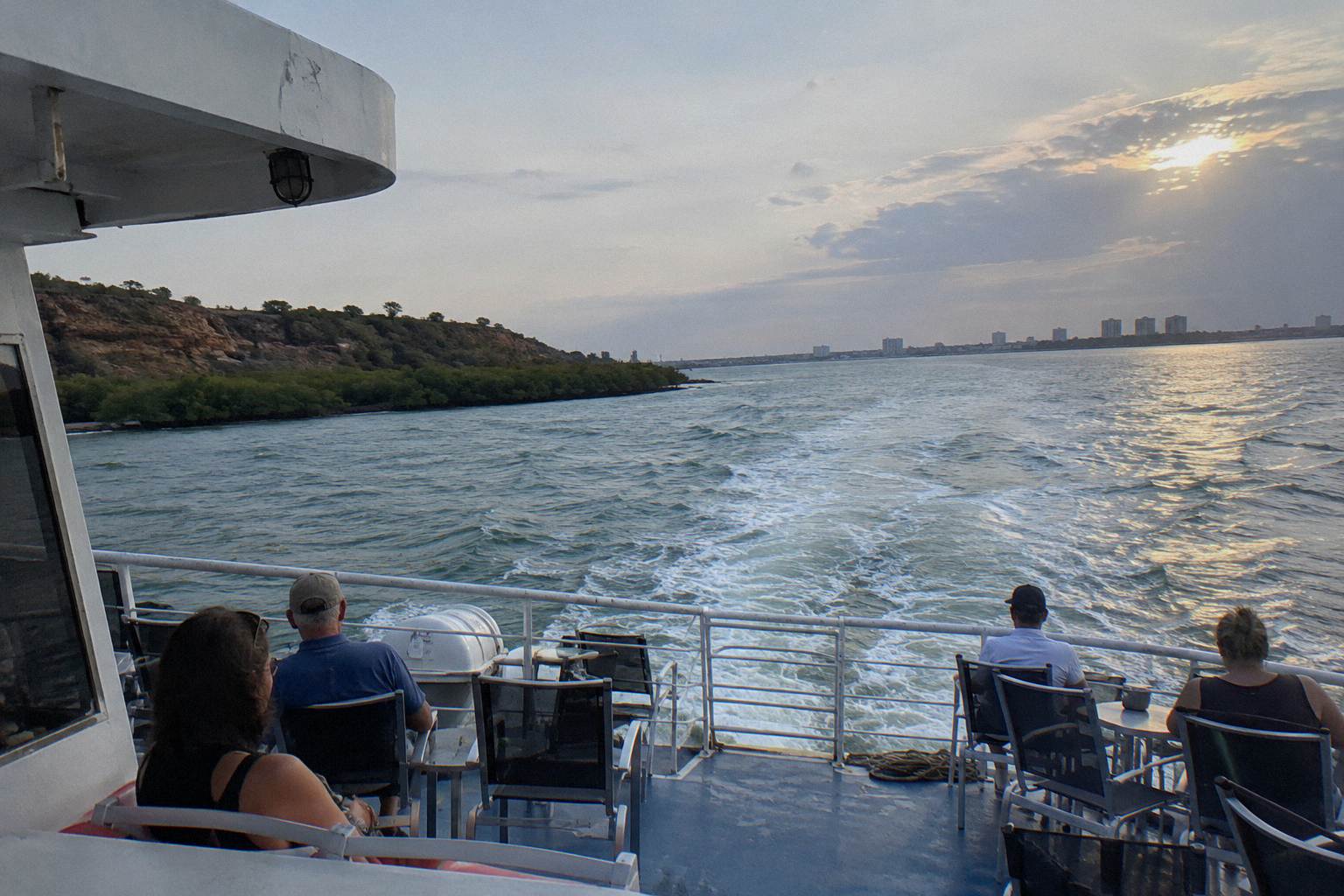
The Charles Darwin catamaran, a three-level vessel with an open-air Sun Deck and two air-conditioned indoor levels, runs its buffet dinner cruise with the operator's adult fare from A$149 online, youth from A$89 for ages 4 to 17 and infants free. The operator says booking online saves up to 9 percent compared with walk-up.
How Long Is An Evening On The Water?
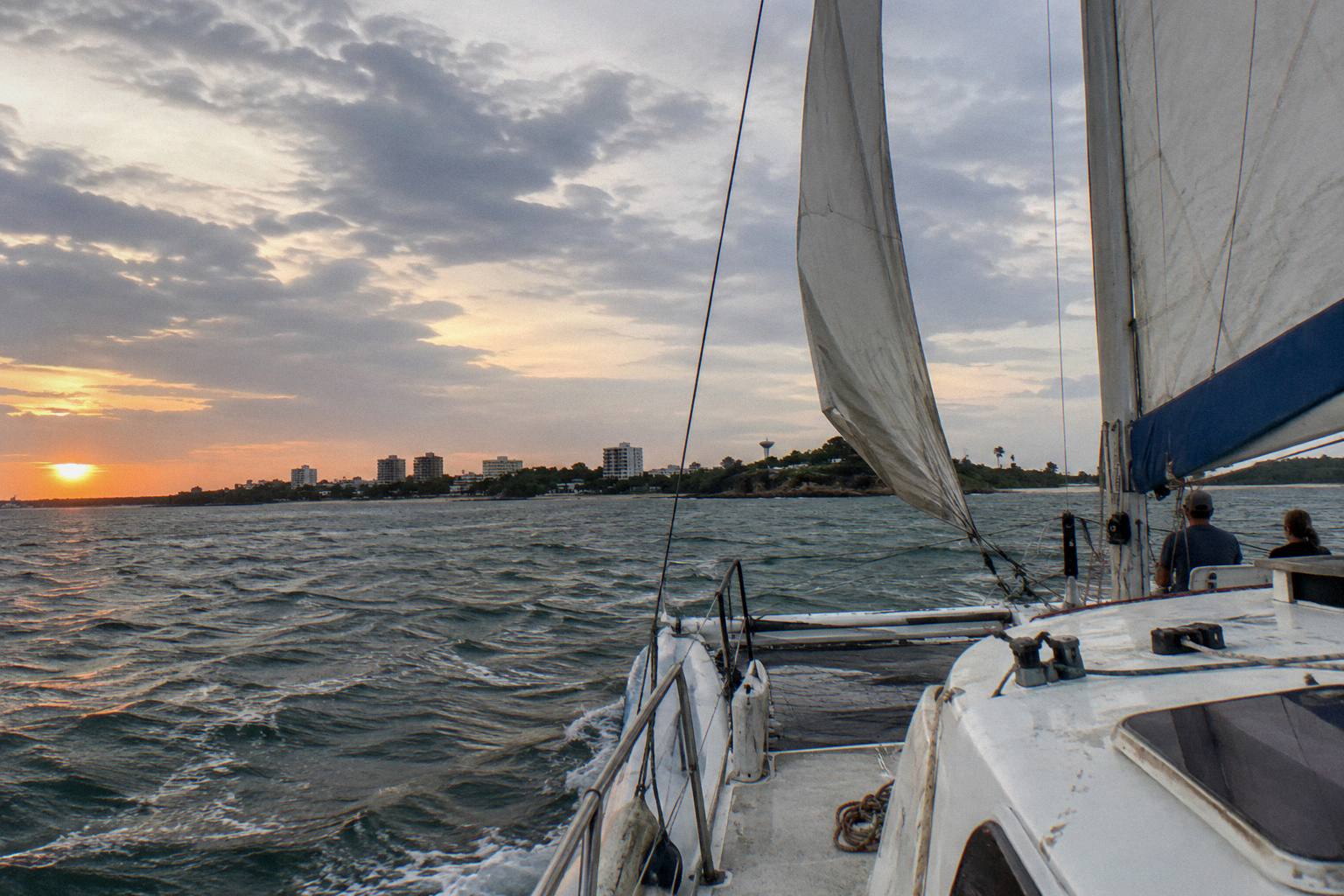
The four cruises run about 2 to about 3 hours: the ketch dinner cruise about 2.5 hours, both Darwin Harbour Cruises products about 2 hours each, and the Sail Darwin sunset sail about 3 hours. Boarding sits ahead of sunset, so a June cruise finishes earlier in the evening than a December one with the same duration.
Duration is the number that connects the sunset table to your plans for the rest of the night. A two-hour cruise boarding ahead of a 6:29 pm June sunset is done before 9 pm. The same cruise against a 7:19 pm January sunset runs closer to 10 pm. Nothing about the cruise itself has changed; the sun has. Anyone booking a babysitter, a second dinner reservation or an early Friday should read their month off the table first and then do the arithmetic.
| Cruise | Duration (per booking page) | Boards at |
|---|---|---|
| Four-Course Ketch Sunset Dinner Cruise | About 2.5 hours | Dock 3, Stokes Hill Wharf |
| Charles Darwin Sunset Buffet Dinner Cruise | About 2 hours | Dock 3, Stokes Hill Wharf |
| Gaze And Graze Sunset Cruise | About 2 hours | Dock 3, Stokes Hill Wharf |
| Sunset Sail With Dinner And Sparkling Wine | About 3 hours | Dock 1, Stokes Hill Wharf |
The longest of the four is Sail Darwin's product, a roughly three-hour sail on Sundancer NT, a 15 m, 50 ft, aluminium sailing catamaran carrying up to 30 passengers in-shore. The live listing is the place for the current fare. Its terms also carry the strictest timing rule of the three operators: no changes or cancellations within 48 hours of departure, though tickets are otherwise refundable or transferable, and if fewer than 10 guests book, the operator reschedules or refunds in full.
For readers digging into the question of length in its own right, how long an evening harbour cruise runs treats it directly.
What About Cloud, Tides And The Evening Itself?
Cloud is the main risk to a visible sunset and it is a wet-season phenomenon; tides can change the route rather than the time. Darwin Harbour Cruises says tides decide how close to the coast the vessel goes and that the skipper may change route, and Sail Darwin's terms make all sailing subject to suitable tides and weather. Neither changes the sunset time itself.
The plan for a clouded evening is worth a sentence here even though it has its own guide. If the sky closes over, the cruise still runs, the dinner still arrives and the harbour lights still come on, but the sunset itself may be a sound rather than a sight. What happens then is covered in full in what happens if the sun is hidden by cloud, and the clearest-months table above tells you which dates carry the least risk.
Tides are Darwin's other great rhythm. The harbour has very large tides, and the Bureau of Meteorology publishes NT tide tables for Darwin covering 2026 and 2027. The operators are clear that tides shape the route on the night, and for Darwin Harbour Cruises they also affect gangway access at the wharf.
Wildlife deserves one honest line: no operator promises a wildlife sighting on its cruises. The harbour is managed as a no-tolerance area for crocodiles, and the cruises include no swimming; follow NT Government advice and stay out of the water from the boat or the foreshore.
How To Plan Your Booking Around The Sunset
Pick your month, read the sunset figure off the table, and expect a boarding time ahead of it, with the exact time confirmed on your booking voucher. Book Dry-season dates for the ketch dinner cruise, check the live listing for the catamaran and sailing products, and arrive at the wharf at least 15 minutes early, per Sail Darwin's stated terms.
The whole method compresses into four steps. First, fix your travel month and take the approximate sunset time from the table; it will not have moved by more than a couple of minutes since the calculation was run. Second, expect any cruise you book to board ahead of that time, and treat the confirmation email as the sole authority on the clock. Third, weigh the seasonal availability: the ketch runs April to October by the operator's statement, and the other products state no season, so their booking pages are the check. Fourth, for the clearest sky, aim for July or August, which hold the best sunshine and clear-day numbers in the Bureau's long-term figures.
For a shorter evening with a grazing platter rather than a sit-down dinner, the Gaze And Graze Sunset Cruise runs about 2 hours from Dock 3, with allocated Sundeck seating, a gourmet grazing platter and locally made mango ice cream. The live listing carries the current fare, and the operator confirms any seasonal details.
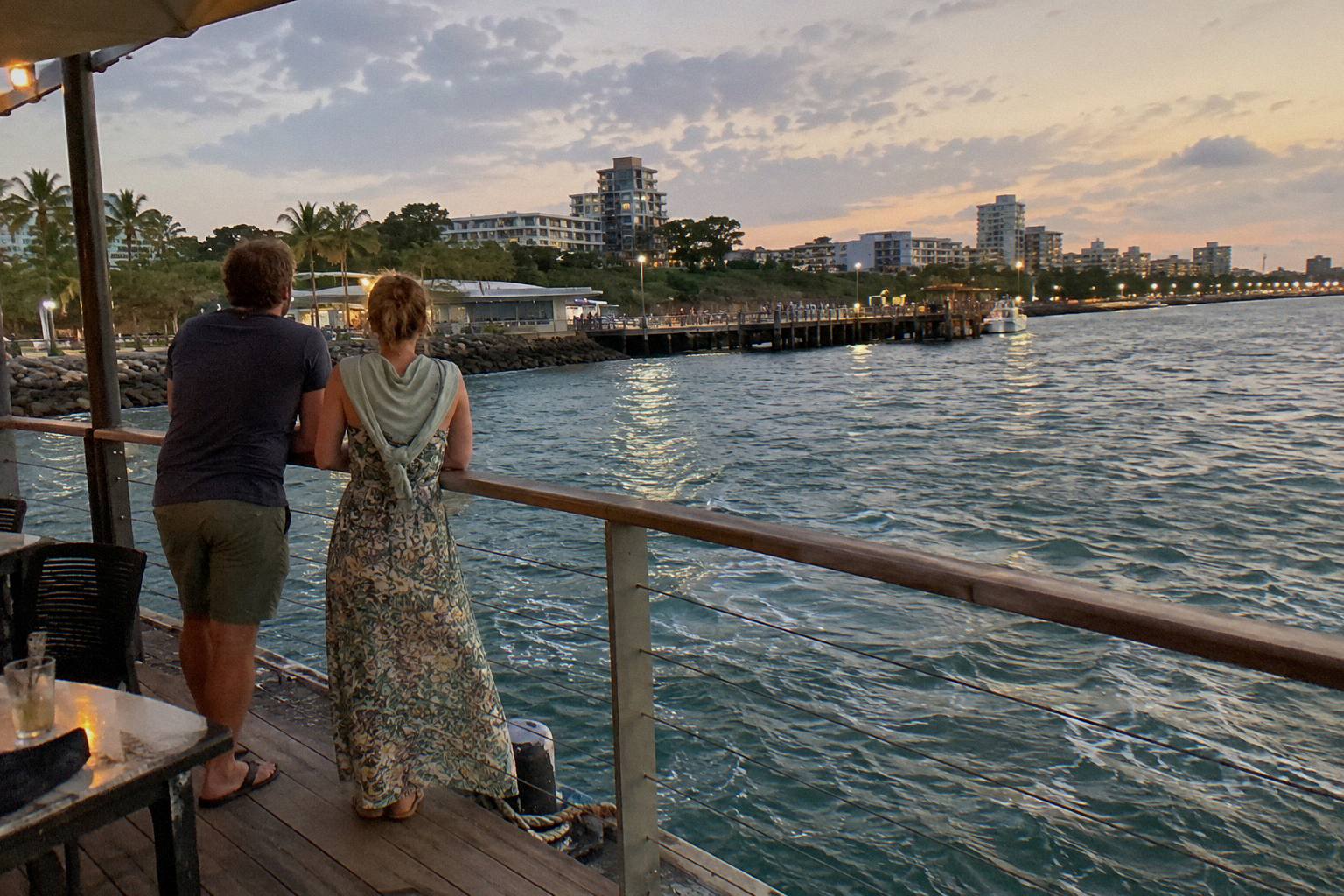
A last word on timing nerves. The sunset does not rush in the tropics, the day-to-day change is under a minute, and the Northern Territory never shifts its clocks. Between the calculation, the operator's confirmation and the Bureau's climate record, you have every timing fact you need before you ever reach the wharf.
Common Questions About Darwin Sunset Times
What Time Does The Sun Set In Darwin Each Month?
A solar calculation puts sunset on the 15th of each month between about 6:29 pm in late May to early July and about 7:19 pm in December and January. The full month-by-month table is above; the day-to-day change stays under a minute and accuracy is about plus or minus two minutes.
Does Darwin Use Daylight Saving?
No. The Northern Territory runs on Australian Central Standard Time, UTC+9:30, all year, so sunset times never shift with a clock change.
When Do Sunset Cruises Board In Darwin?
Ahead of sunset. Every cruise boards at Stokes Hill Wharf, Dock 3 for Cape Adieu and Darwin Harbour Cruises, Dock 1 for Sail Darwin, and operators move departure times with the season. The time on your booking confirmation is the one that counts, and no boarding clock time is printed here because none is fixed.
Which Month Has The Latest Sunset In Darwin?
January, at about 7:19 pm, with February close behind at about 7:16 pm and December at about 7:07 pm.
Does The Sunset Time Change My Cruise Booking?
It changes the departure slot and the length of daylight you sail in, not the duration of the cruise. A two-hour cruise boarding ahead of a June sunset finishes earlier in the evening than the same cruise against a January sunset.
Are The Sunset Times An Official Table?
No. They are a calculation from a NOAA solar algorithm for Darwin's coordinates, accurate to about plus or minus two minutes, and should never be read as a boat time. Your booking confirmation is the authority for departure.