
When Not To Visit Darwin?
Reading the Bureau of Meteorology long-term figures, the wettest months to avoid in Darwin run roughly November to April, and the dinner cruises that only sail the Dry season confirm it.
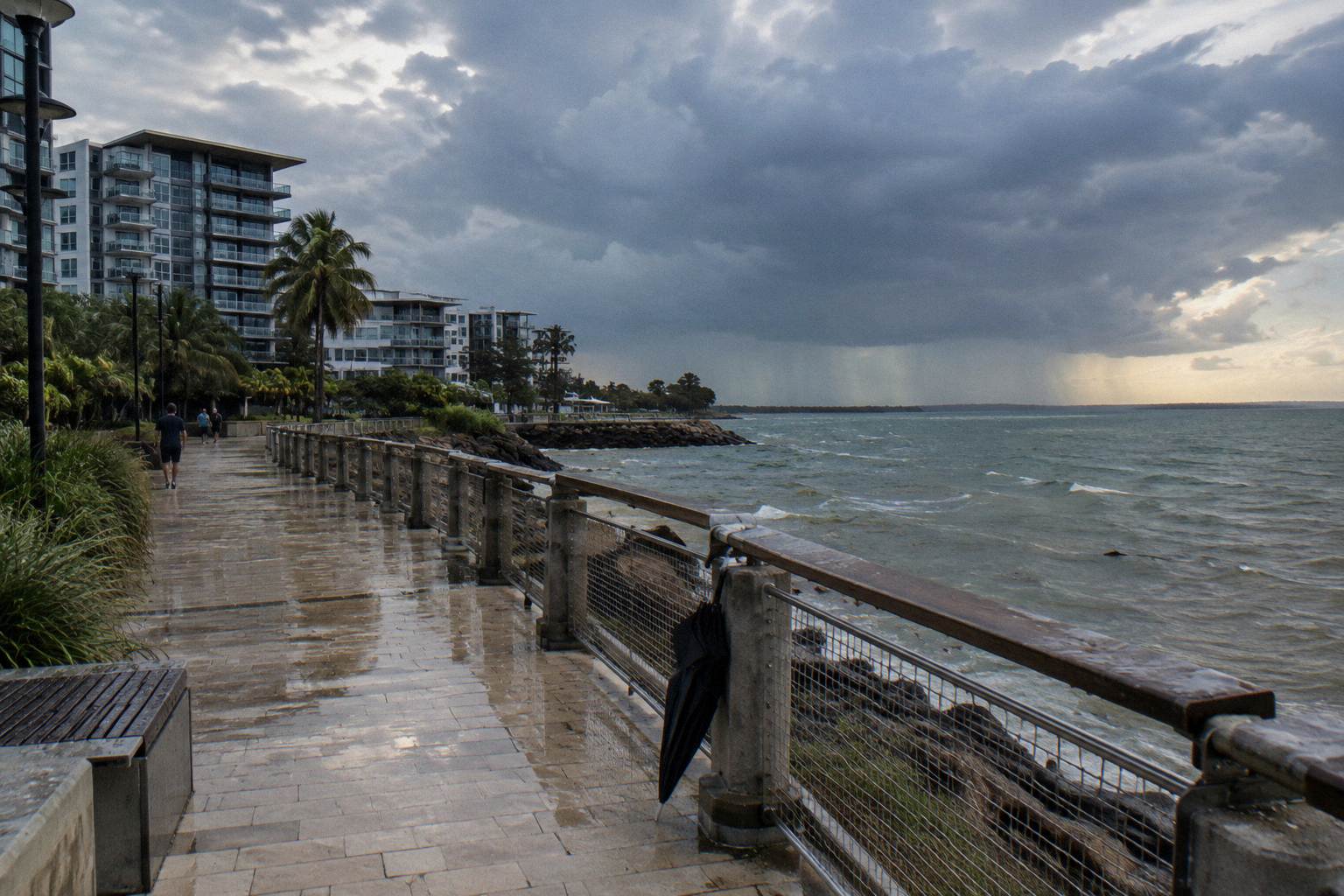
The months to think twice about are roughly November through April, a reading of the Bureau of Meteorology long-term table rather than any official wet-season definition. Mean rainfall at Darwin Airport runs 432.1 mm in January, 372.4 mm in February and 313.1 mm in March, against 1.0 mm in July. The same record shows 19.0 rain days of a millimetre or more in January against 0.2 in July. If a harbour dinner cruise is the point of the trip, note that one operator, Cape Adieu, sails its four-course dinner cruise only through the Dry season, April to October.
That opening paragraph is the whole answer compressed, but the reasoning behind it deserves a proper walk-through, because "when not to visit" means different things to different travellers. A backpacker chasing waterfalls reads the wet months one way. A family planning a five-night stopover with a sunset boat booked for one of those nights reads them very differently. This article leans toward the second reader, the one whose Darwin plan includes an evening on the water.
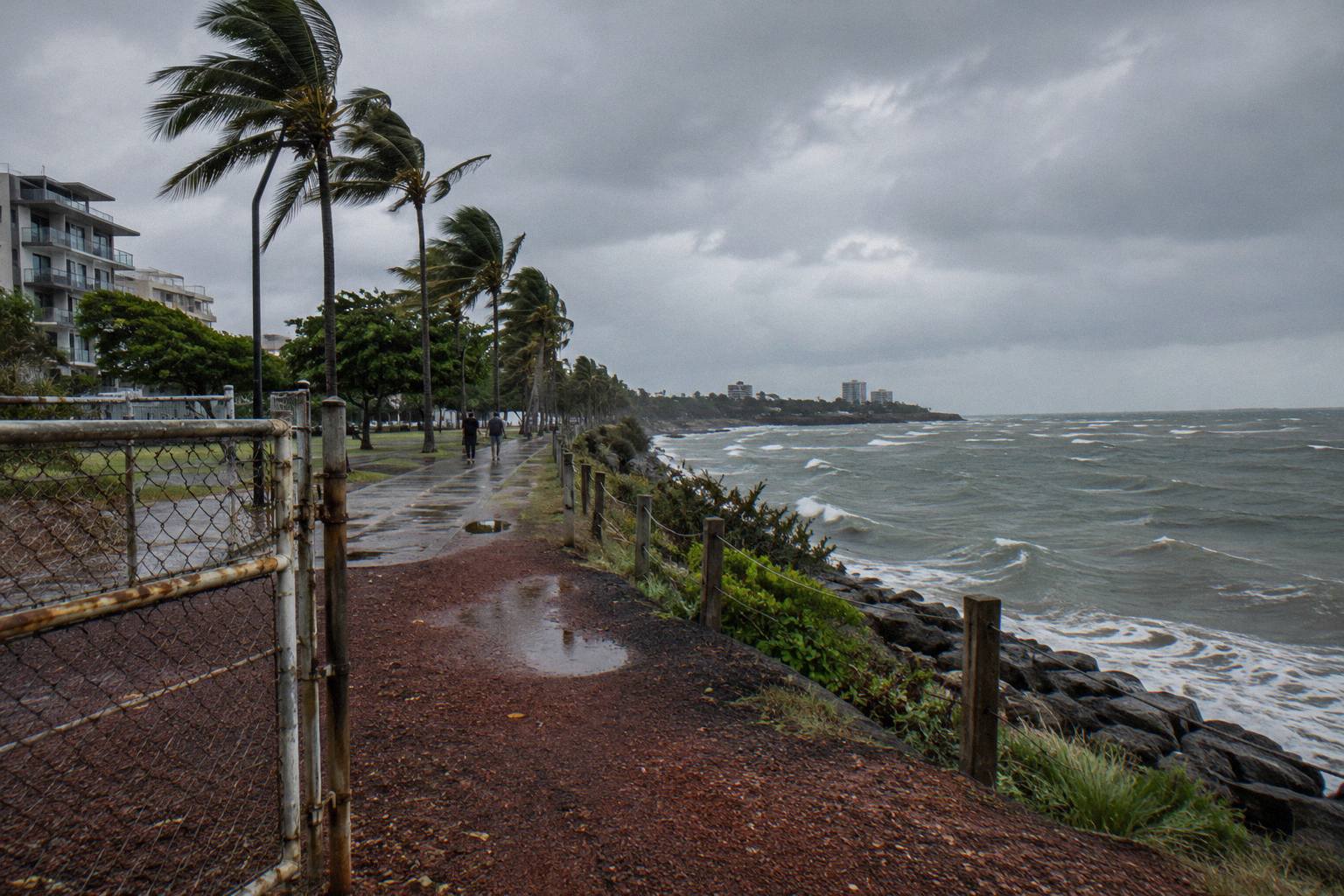
The site's name is Darwin Sunset Dinner Cruise, so the perspective here is deliberately narrow: what does the climate record say about evenings on Darwin Harbour, and when do the boats actually sail? For the broader timing question, the companion guide on the best month to visit Darwin covers the planning side from the traveller's angle.
Why Does The Bureau Of Meteorology Table Point At November To April?
Reading the BOM figures for Darwin Airport, station 014015, 85 years of monthly means from 1941 to 2026, mean monthly rainfall stays under about 25 mm from May to September and climbs steeply outside that window, while rain days, sunshine hours and clear days all repeat the same shape. The full run, January to December, reads 432.1, 372.4, 313.1, 102.4, 20.0, 1.8, 1.0, 4.4, 16.7, 69.3, 146.5 and 255.5 mm, an annual mean of 1732.4 mm. October and November are the turn: 69.3 mm becomes 146.5 mm, and by January the mean is more than twenty times the July figure.
The BOM page prints no wet-season definition, so calling November to April "the wet months" is an interpretation of the table, not an official label. It is, however, a very clean interpretation. Count days of rain of 1 mm or more and the same shape appears: 19.0 days in January, 17.8 in February, 16.7 in March, then 1.6 or fewer from May through August. A visitor in February should simply expect rain on more than half the days. A visitor in July should expect close to none.
Sunshine tells the same story from the other direction. Mean daily sunshine runs 5.7 hours in January against 10.2 in July and 10.4 in August, and mean clear days run 0.6 in January against 17.6 in July and 19.0 in August. For a sunset specifically, a January visitor is drawing from a very small pool of clear evenings, while a July or August visitor almost cannot avoid one. The full month-by-month picture, including what it means for the time the sun actually sets, is laid out in Darwin sunset times by month.
It is worth pausing on what a long-term mean actually promises, because travellers routinely misread these tables in both directions. A mean of 432.1 mm in January does not mean it rains all day every day; tropical rain often arrives in heavy bursts, and plenty of wet-season afternoons are bright. Equally, a July mean of 1.0 mm does not guarantee a dry fortnight in any particular year. What the means do establish, with 85 years behind them, is where the probability sits. The chance of a rained-out harbour evening in February is a routine planning risk; the same chance in July is close to negligible. Anyone whose itinerary has exactly one free evening for a cruise should weight that difference heavily.
There is also a compounding effect the monthly tables hide. Every one of the four columns in the table below, rainfall, rain days, sunshine and clear days where stated, moves together. A wet-month visitor is not trading one poor indicator against several good ones; every signal that matters for an outdoor dinner points the same way at once. That alignment is the strongest argument the table makes.
| Month | Mean rainfall (mm) | Rain days of 1 mm+ | Mean daily sunshine (hours) |
|---|---|---|---|
| January | 432.1 | 19.0 | 5.7 |
| February | 372.4 | 17.8 | Not stated |
| March | 313.1 | 16.7 | Not stated |
| April | 102.4 | 7.3 | Not stated |
| May | 20.0 | 1.6 | Not stated |
| June | 1.8 | 0.3 | Not stated |
| July | 1.0 | 0.2 | 10.2 |
| August | 4.4 | 0.3 | 10.4 |
| September | 16.7 | 1.7 | Not stated |
| October | 69.3 | 5.1 | Not stated |
| November | 146.5 | 10.1 | Not stated |
| December | 255.5 | 14.2 | Not stated |
The source is the Bureau of Meteorology's long-term averages for Darwin Airport, published at station 014015's climate table. Two cautions apply. These are long-term means, not a forecast for any particular year, and the BOM table alone says nothing about wind, swell, humidity or storms at any given hour, so none of those figures appear here.
What About Heat: Is Any Dry Month Also Worth Avoiding?
Mean maximum temperatures sit in a narrow band all year, 30.7 to 33.4 degrees, so heat alone does not rule out any month, and October and November are actually the warmest of the means at 33.4 degrees each. The full run of mean maxima, January to December, is 31.8, 31.5, 32.0, 32.8, 32.1, 30.8, 30.7, 31.6, 32.7, 33.4, 33.4 and 32.8. Unlike southern capitals, Darwin does not have a month that is uncomfortable purely for heat reasons, and it does not have a cold month either.
This is worth stating plainly because visitors from southern Australia sometimes assume the tropical summer is the hottest time. On the long-term means it is not. The build-up months of October and November carry the highest mean maxima, and they also sit inside the rain ramp described above, which is exactly why the reading of the table points at late October through March as the stretch where a trip combines the most heat with the most rain and the fewest clear evenings.
For an evening on the water the operator picture helps too. Darwin Harbour Cruises describes harbour nights at about 25 degrees and suggests a light cardigan on its own FAQ page, advice passed on in what to wear on a sunset boat in Darwin. The other operators publish no dress code, so that guidance should not be generalised to their vessels.
| Month | Mean maximum temperature (C) | Month | Mean maximum temperature (C) |
|---|---|---|---|
| January | 31.8 | July | 30.7 |
| February | 31.5 | August | 31.6 |
| March | 32.0 | September | 32.7 |
| April | 32.8 | October | 33.4 |
| May | 32.1 | November | 33.4 |
| June | 30.8 | December | 32.8 |
One more nuance from the same BOM table: June and July, the driest months, are also the coolest of the means at 30.8 and 30.7 degrees. If the goal is a dry, warm, reliably clear evening with the latest possible sunset window, mid-year is the period the numbers keep endorsing from every angle.
A note on how to use this band rather than obsess over it. The gap between the warmest and coolest monthly means is under three degrees, which is smaller than the difference between a sunny and a cloudy afternoon in most Australian cities. Choosing June over November for temperature reasons alone would be a mistake; choosing June over November because November combines peak heat with ten rain days and 5.7-hour sunshine means, well beyond what the temperature column shows, is where the real decision lives. Heat in Darwin is a constant that every visitor adapts to with shade, water and evening timing, and the harbour dinner cruise is itself one of the better adaptations, since it puts the day's peak comfortably behind you.
When Do The Darwin Dinner Cruises Actually Sail?
Cape Adieu states its cruises run through the Dry season, April to October, with private charters only by enquiry outside those months, while Darwin Harbour Cruises and Sail Darwin state no season at all for their sunset cruises, so check the booking page for each. That asymmetry matters for anyone timing a trip: the operator with the clearest published season, and the four-course dinner cruise it runs, does not sail in the wet months at all.
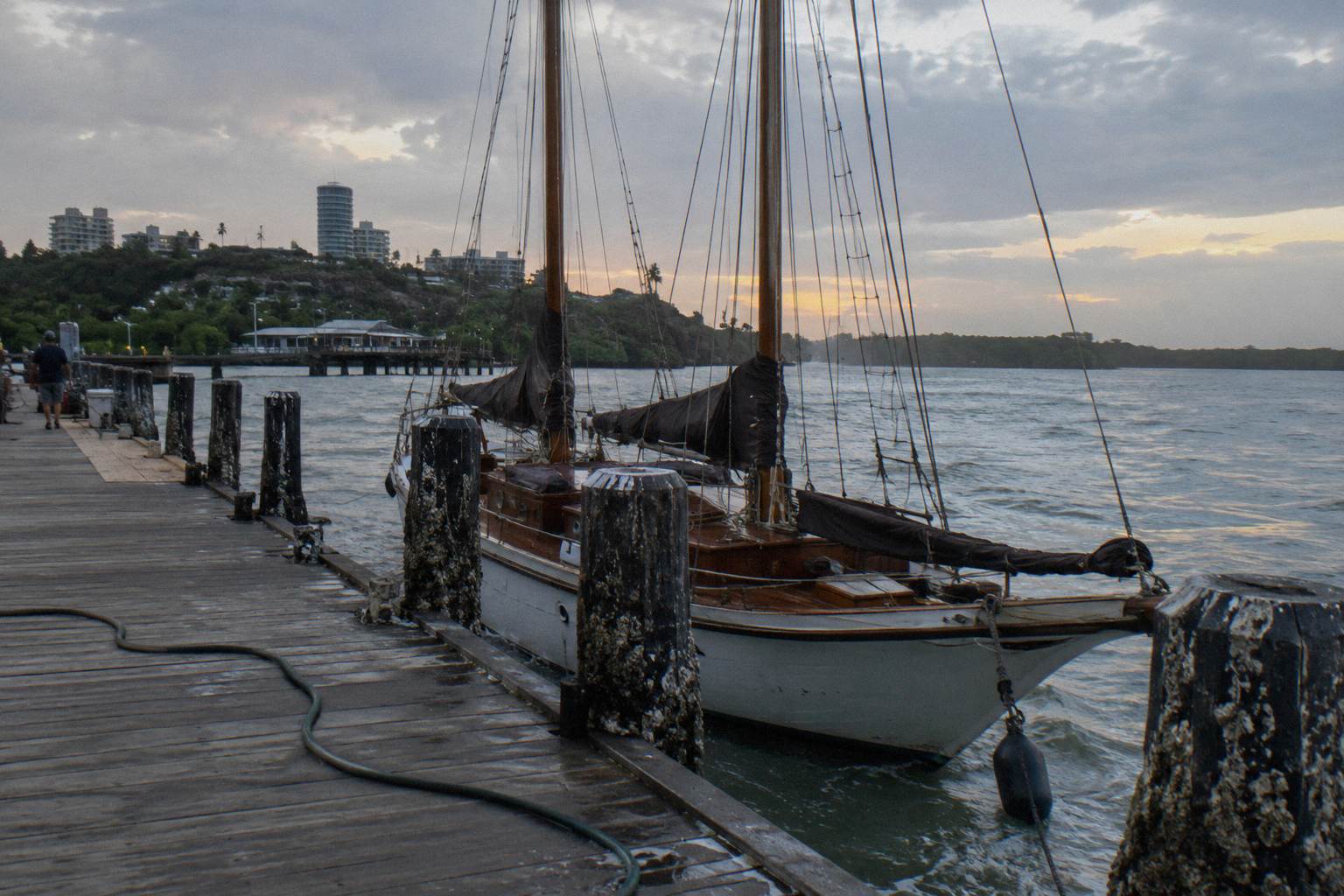
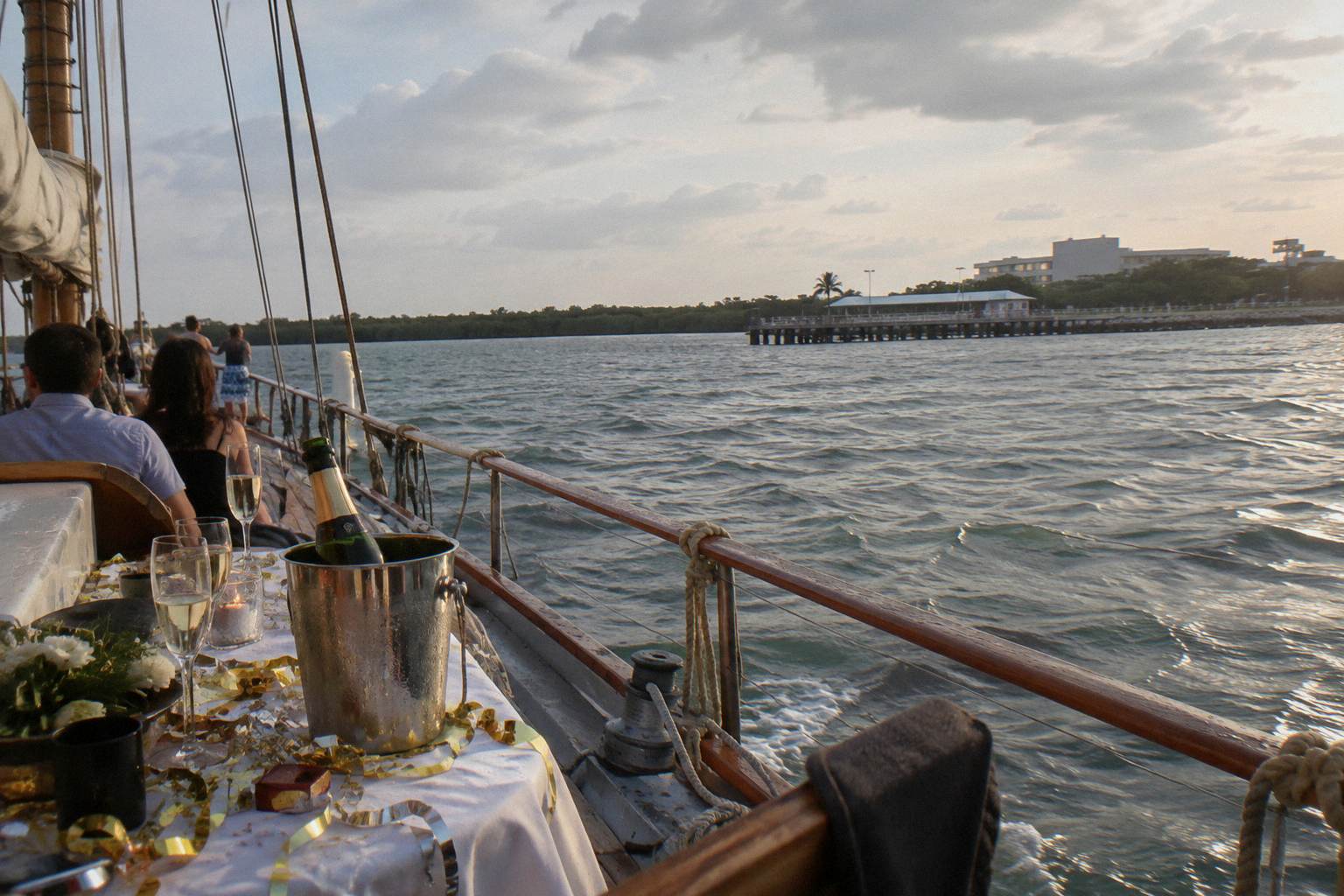
The Cape Adieu product in detail: the Signature Four-Course Sunset Dinner Cruise aboard the Cape Adieu, a traditional ketch and the operator's only vessel, boarding at Dock 3, Stokes Hill Wharf, about 2.5 hours, with a chef-prepared four-course dinner built on local produce, a fully licensed bar and no BYO alcohol. The operator's price is from A$226 per person. The operator also offers exclusive hire up to 60 guests, and private charters by enquiry in the months outside its April-to-October cruise season. Its season statement appears on the operator's own cruises page at capeadieu.com.au/cruises.
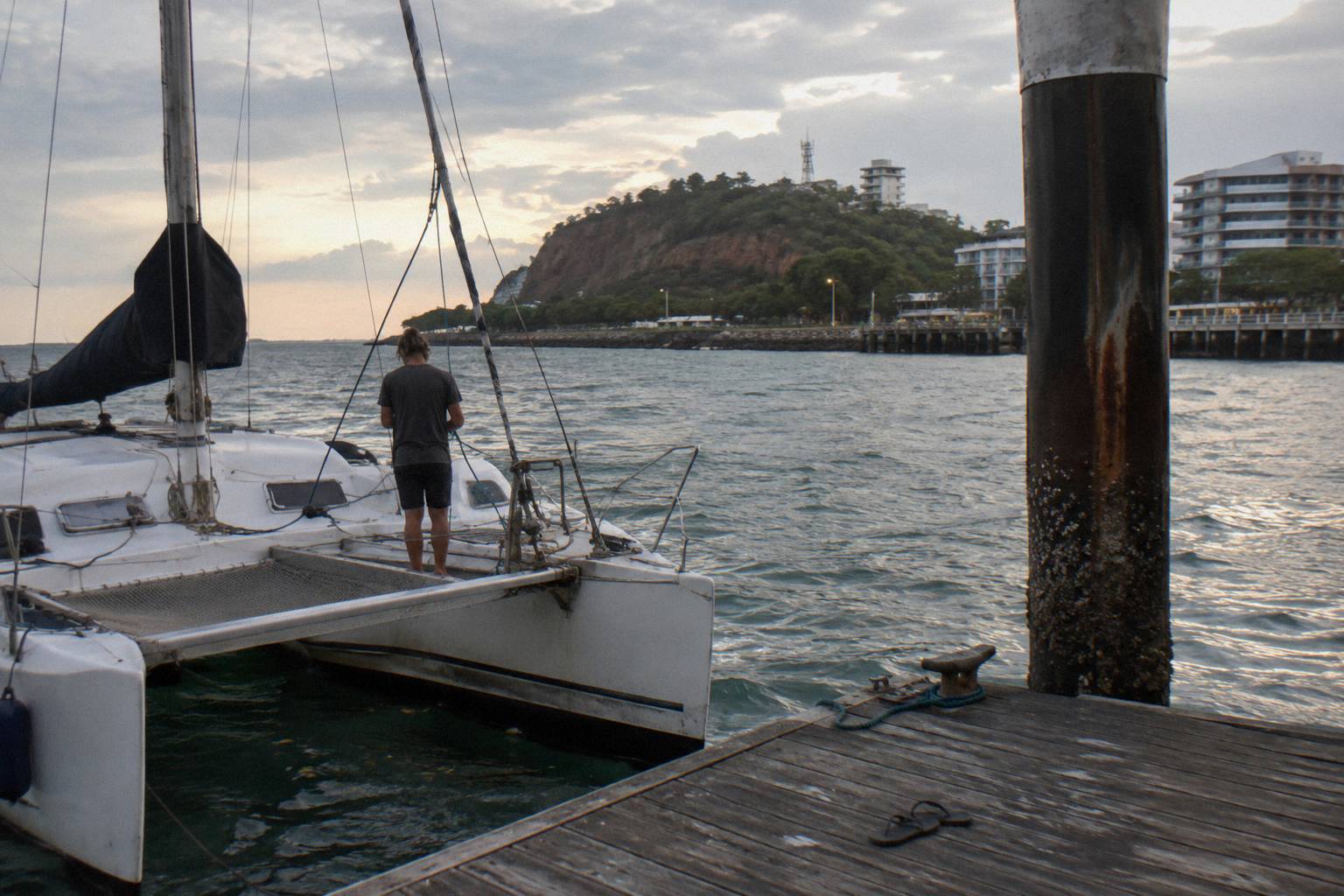
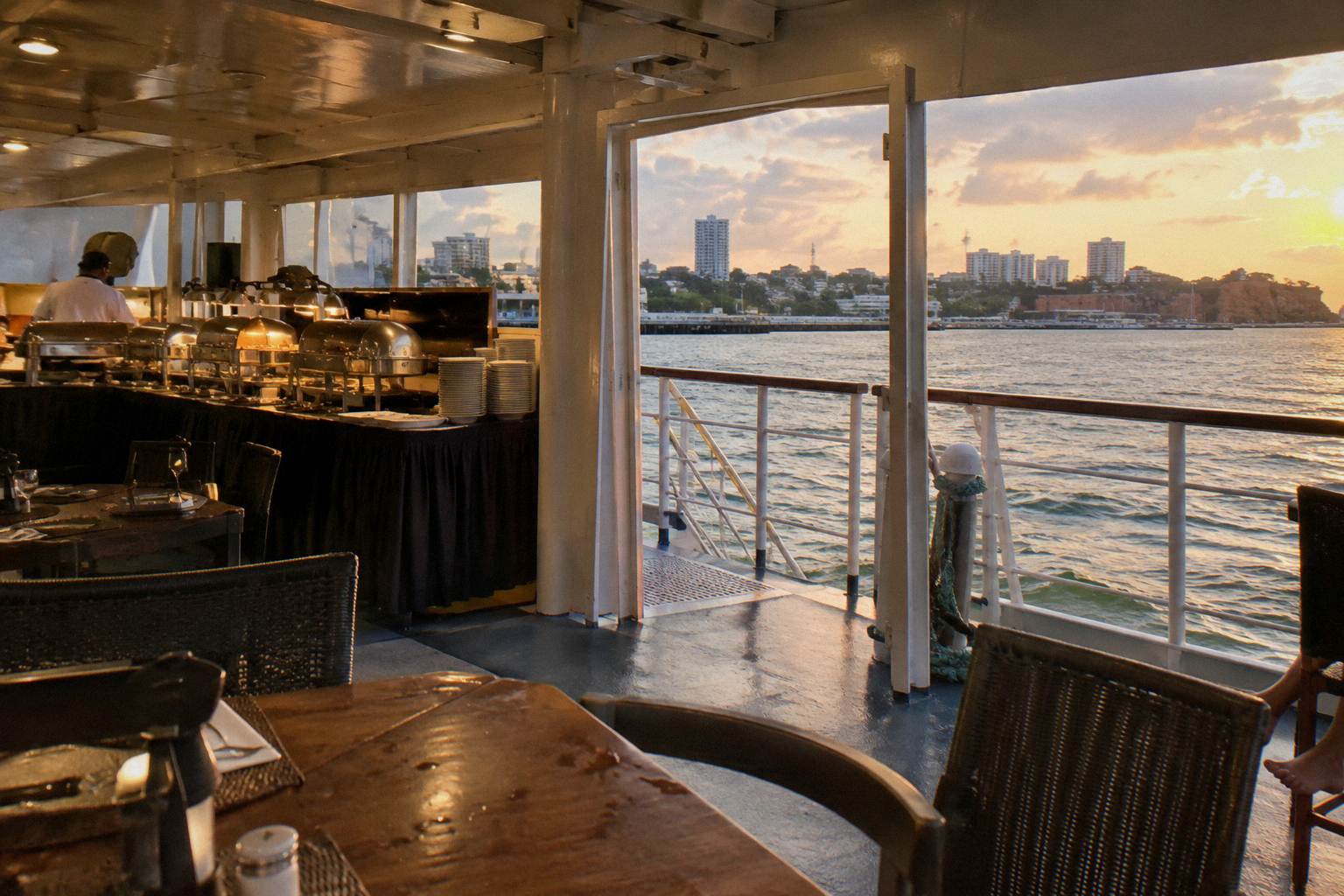
The contrast is a three-level catamaran rather than a ketch, and a buffet rather than a plated four courses: the Charles Darwin Sunset Buffet Dinner Cruise, about 2 hours, Territory-style buffet with fresh local produce, beverages for purchase, background music, boarding at Dock 3, Stokes Hill Wharf. The operator's online prices are from A$149 adult and from A$89 for youth aged 4 to 17, with infants 0 to 3 free. The Gaze And Graze Sunset Cruise from the same operator serves a gourmet grazing platter and locally made mango ice cream on the Sundeck, also about 2 hours. The third format is Sail Darwin's Sunset 3-Hour Cruise from Darwin with Dinner and Sparkling Wine aboard Sundancer NT, a 15 m aluminium sailing catamaran, boarding at Dock 1, Stokes Hill Wharf, with a minimum of 10 guests except sole charters. Neither of those operators publishes a season statement, so the wet-month question for them is a matter of checking the live listing, not assuming.
There is a practical consequence worth spelling out. A traveller who takes the "visit in the wet, dodge the crowds" advice and books a February trip will find the featured ketch dinner simply not running, with charters by enquiry only. The alternative harbour evenings may still run, subject to weather and tides, but anyone whose heart is set on a particular boat should verify its season before locking flights. Sail Darwin's own terms note that all sailing is subject to suitable tides and weather, published at saildarwin.com.au/terms-conditions, and its cancellation rules are strict within 48 hours of departure.
Booking policy differences sharpen that point. Sail Darwin tickets are refundable or transferable in normal circumstances, but the operator allows absolutely no changes or cancellations within 48 hours of departure, and a trip that fails to meet its 10-guest minimum is rescheduled or refunded in full rather than sailed half-empty. Darwin Harbour Cruises and Cape Adieu do not publish their cancellation windows, so the booking page is the authority for each ticket. Dietary requests on the Cape Adieu dinner need at least 48 hours' notice, which pairs with the booking window neatly: both deadlines fall two days out.
Is The Shoulder Edge Of The Wet A Smart Compromise?
April and October look like compromise months on the means, 102.4 mm and 69.3 mm of rain respectively, but they are not equal: April sits on the falling side of the wet and October on the rising side, and Cape Adieu's April-to-October season deliberately includes both. October's 5.1 rain days of a millimetre or more are a real jump from September's 1.7, and November's 10.1 doubles that again. The climb is steeper than the fall.
What that means for planning is that early-season travel, April and May, carries less rain risk on the long-term means than late-season travel at the same distance from the wet, September and October. Someone choosing between an April trip and an October trip with identical budgets should know the October mean carries roughly three times the April rainfall and two-thirds more rain days. Neither month is a bad bet the way January is, but they are not symmetrical shoulders either.
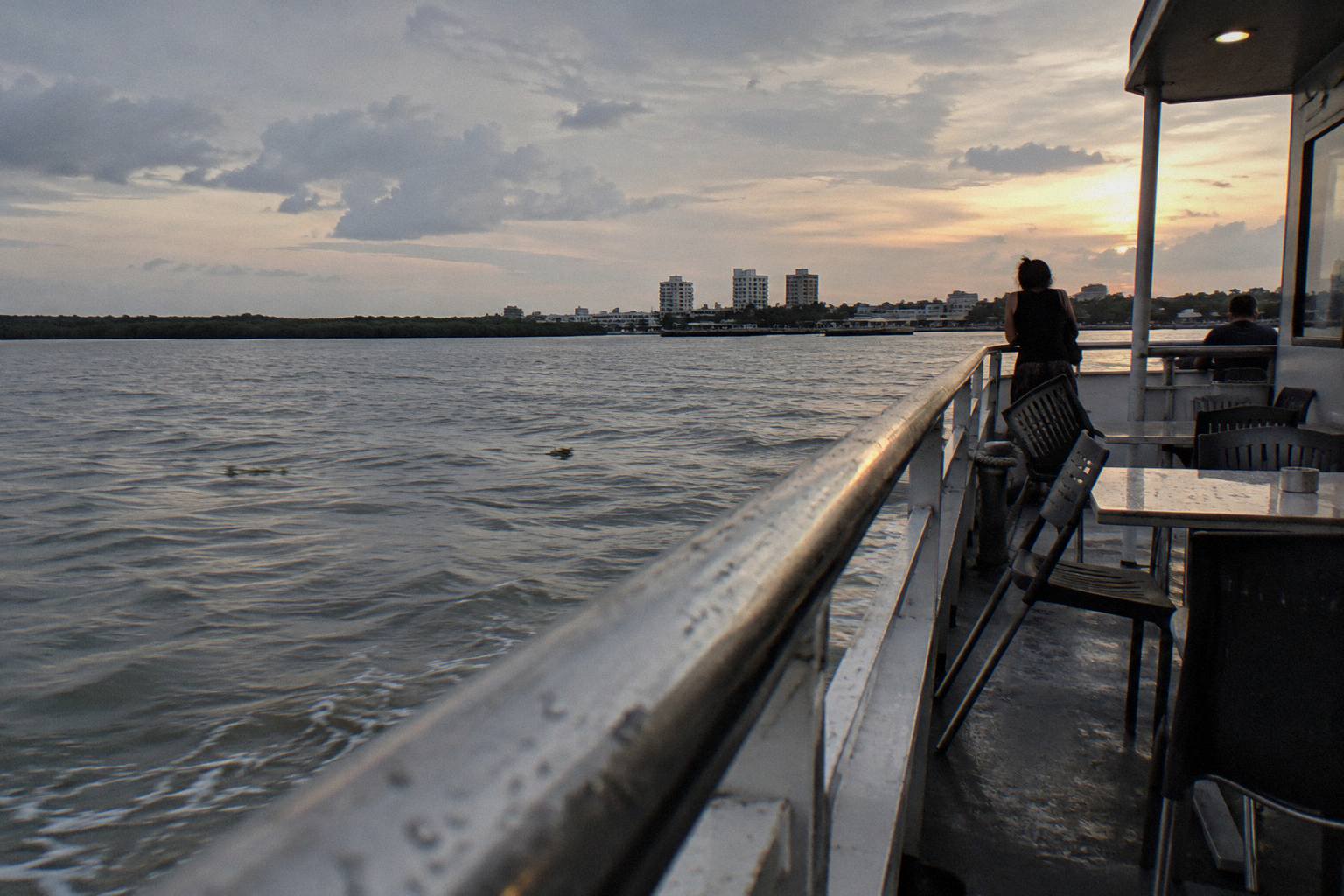
The sunset timing adds a small consideration. A calculation of sunset times for Darwin, computed for latitude -12.4634 and longitude 130.8456 in Australian Central Standard Time, puts the sun down about 6:42 pm in April, 6:42 pm in September and 6:43 pm in October, against about 6:29 pm in the June trough and about 7:19 pm in January. Across the whole year sunset in Darwin moves only about 50 minutes, so an evening cruise starts in daylight in every month, and the day-to-day change is under a minute. Timing the boat around the sunset is easy in any season; timing it around the rain is the hard part.
| Month | Mean rainfall (mm) | Rain days of 1 mm+ | Approximate sunset on the 15th |
|---|---|---|---|
| April | 102.4 | 7.3 | about 6:42 pm |
| May | 20.0 | 1.6 | about 6:29 pm |
| June | 1.8 | 0.3 | about 6:29 pm |
| July | 1.0 | 0.2 | about 6:36 pm |
| August | 4.4 | 0.3 | about 6:42 pm |
| September | 16.7 | 1.7 | about 6:42 pm |
| October | 69.3 | 5.1 | about 6:43 pm |
The sunset column is a calculation, approximate to about plus or minus two minutes, not an official table and never a boat time. Boarding happens ahead of sunset on all these cruises, and operators publish clock times that move with the season, so the time on the booking confirmation is the only one to trust.
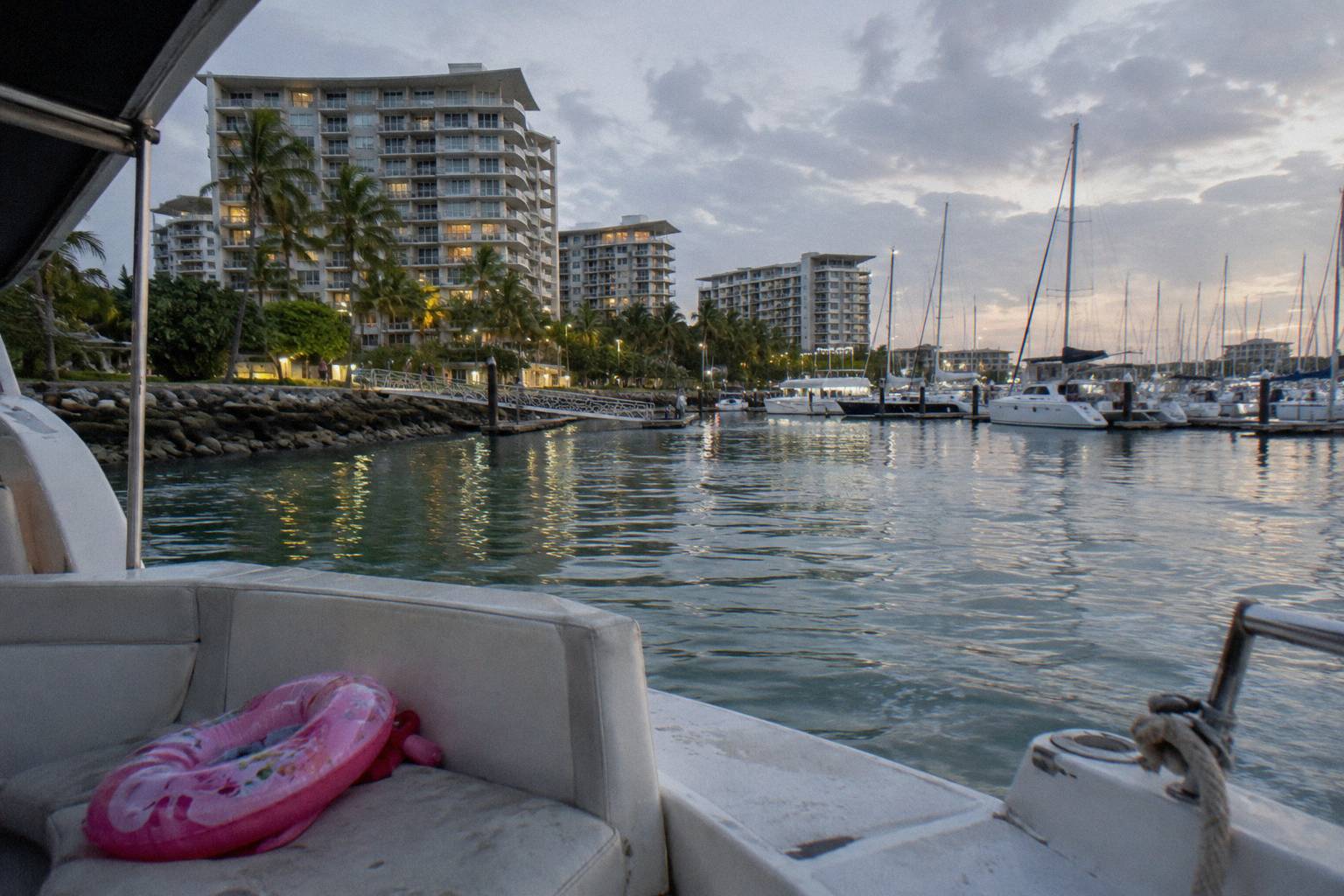
Does The Wet Season Change What A Harbour Evening Is Like?
Yes, in three specific ways: fewer clear evenings to draw from, no Cape Adieu ketch dinner cruise running, and a stinger season in Northern Territory waters from 1 October to 1 June per NT Government advice, though none of these cruises includes swimming. The stinger point is about foreshore plans around the cruise, not the boat itself. NT Government advice says box jellyfish are more likely in Territory waters during stinger season, though stings have been recorded in every month, and Darwin Harbour is managed as a no-tolerance area for crocodiles, with the advice to swim only in signposted areas. Do not swim from the boat or the foreshore, in any month.
Wildlife is often the hoped-for upside of a wet-month trip, and honesty requires a caveat here. None of the sunset dinner cruises promises a wildlife sighting of any kind, so nothing can be promised. Even other Darwin operators are careful in their own wording: City of Darwin Cruises, a Cullen Bay operator with no bookable listing on this site, describes dolphins, turtles and dugong as an opportunity to see with no guarantee, and Spirit of Darwin Cruises says batfish feed at the bow of its own cruises. Those are their statements about their boats, not a claim about the sunset dinners featured here.
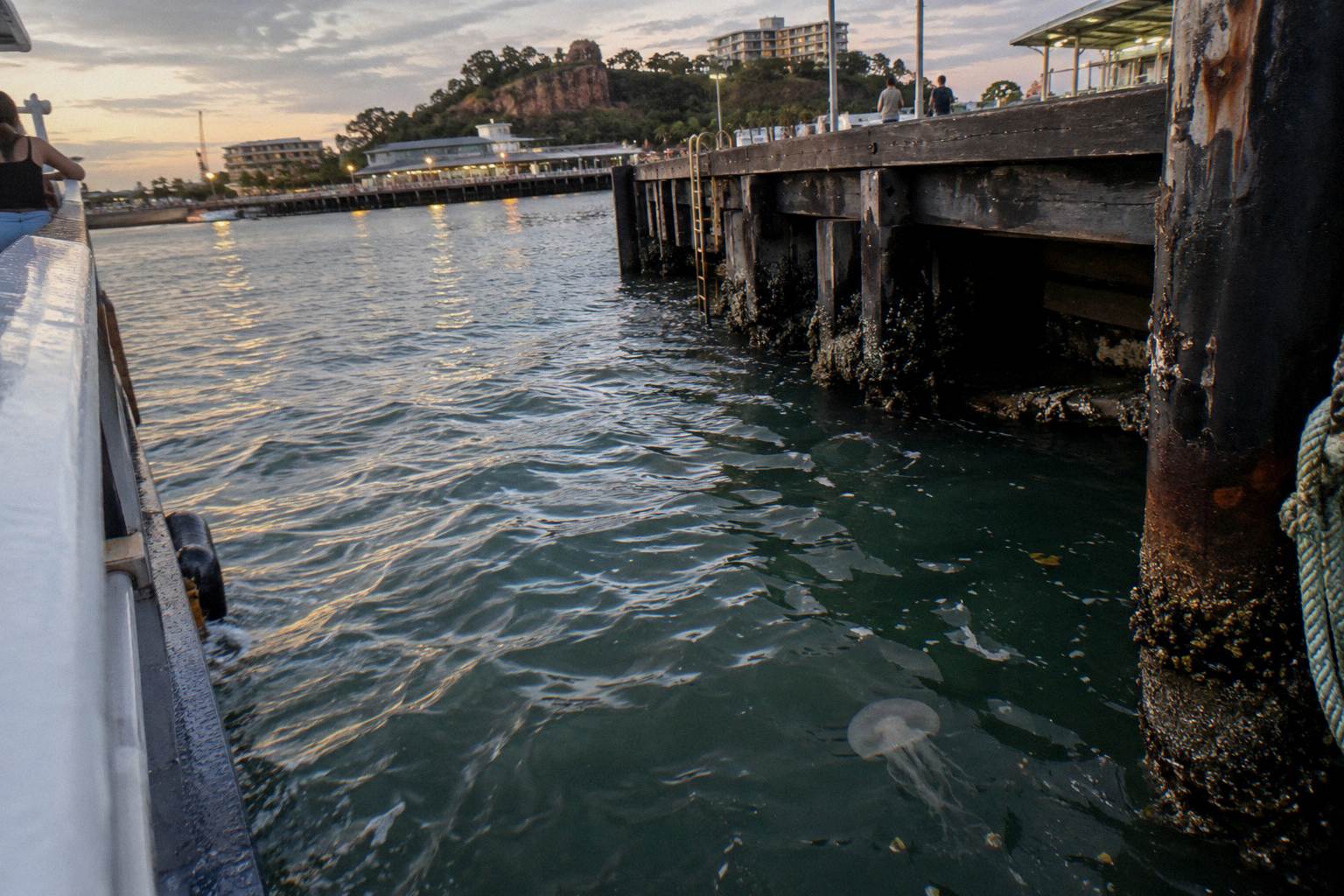
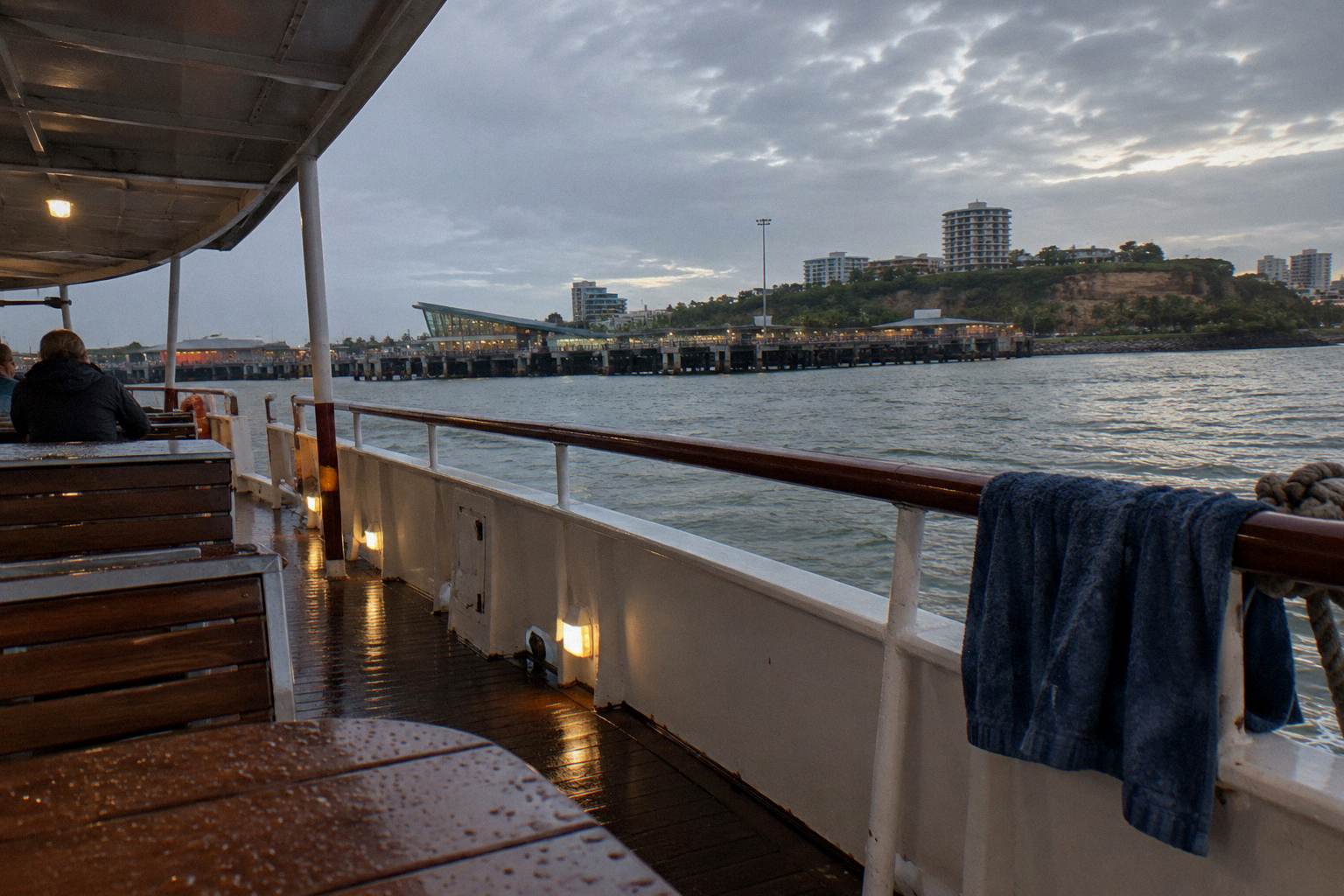
The third difference is quieter but just as real: what a rain-affected evening on the water actually is. The boats handle it differently. The Charles Darwin catamaran has two air-conditioned indoor levels alongside its open Sun Deck, so a passing shower costs a view for a few minutes rather than the whole cruise. The Gaze And Graze cruise, by contrast, has allocated seating on the Sundeck, which is part of its appeal in clear weather and a consideration in uncertain weather. A ketch such as the Cape Adieu is open to the elements by design, and it stops sailing in those months anyway, so the question never arises. Reading the sunset boat reviews guide for Darwin before booking in any marginal month is time well spent.
None of this makes the wet months a bad time to be in Darwin for every traveller. The rain in the tropics arrives hard and often briefly, the landscape changes colour, and there are travellers who choose it deliberately. The honest framing is narrower: if the trip's centrepiece is a dinner cruise on a clear evening, the long-term numbers and the one published operator season both point the same way, away from November through April. A reader weighing that trade directly can compare the two formats in dinner cruise or sunset sail for Darwin.
Common Questions About When Not To Visit Darwin
When Not To Visit Darwin?
Roughly November through April, a reading of the Bureau of Meteorology long-term table rather than an official wet-season definition. Mean rainfall runs 432.1 mm in January against 1.0 mm in July, and rain days of 1 mm or more run 19.0 in January against 0.2 in July. The featured ketch dinner cruise does not sail in those months at all.
Is Darwin Too Hot To Visit At Any Time Of Year?
No month is ruled out by heat on the long-term means. Mean maximum temperatures sit between 30.7 and 33.4 degrees all year, with October and November the warmest means at 33.4 degrees each. The discomfort of the build-up months comes from the combination of that heat with rising rain, not heat alone.
Do The Darwin Dinner Cruises Run In The Wet Season?
Cape Adieu states its cruises run through the Dry season, April to October, with private charters by enquiry outside those months. Darwin Harbour Cruises and Sail Darwin state no season for their sunset cruises, so check the booking page for each. Sail Darwin's terms also note all sailing is subject to suitable tides and weather.
Are Stingers A Reason To Avoid The Wet Months?
NT Government advice says box jellyfish are more likely in Northern Territory waters during stinger season, from 1 October to 1 June, though stings have been recorded in every month. None of these cruises includes swimming, so the practical advice is simply do not swim from the boat or the foreshore and follow NT Government advice.
Does The Sunset Time Change Much Between Seasons?
Barely. A calculation of sunset times for Darwin shows the sun setting about 6:29 pm in the June trough and about 7:19 pm in January, a swing of roughly 50 minutes across the whole year, with day-to-day change under a minute. Every cruise boards ahead of sunset whatever the month.
Are April And October Equally Good Shoulder Months?
Not quite. April carries a mean of 102.4 mm of rain and 7.3 rain days, while October carries 69.3 mm and 5.1 rain days but sits on the rising edge of the wet, with November's means more than doubling October's. Both fall inside Cape Adieu's April-to-October cruise season.