
What Is The Best Month To Go To Darwin?
A data-backed answer to the best month to visit Darwin, using Bureau of Meteorology averages, computed sunset times and the cruise operators' own seasons, so you can plan a harbour evening with real figures.
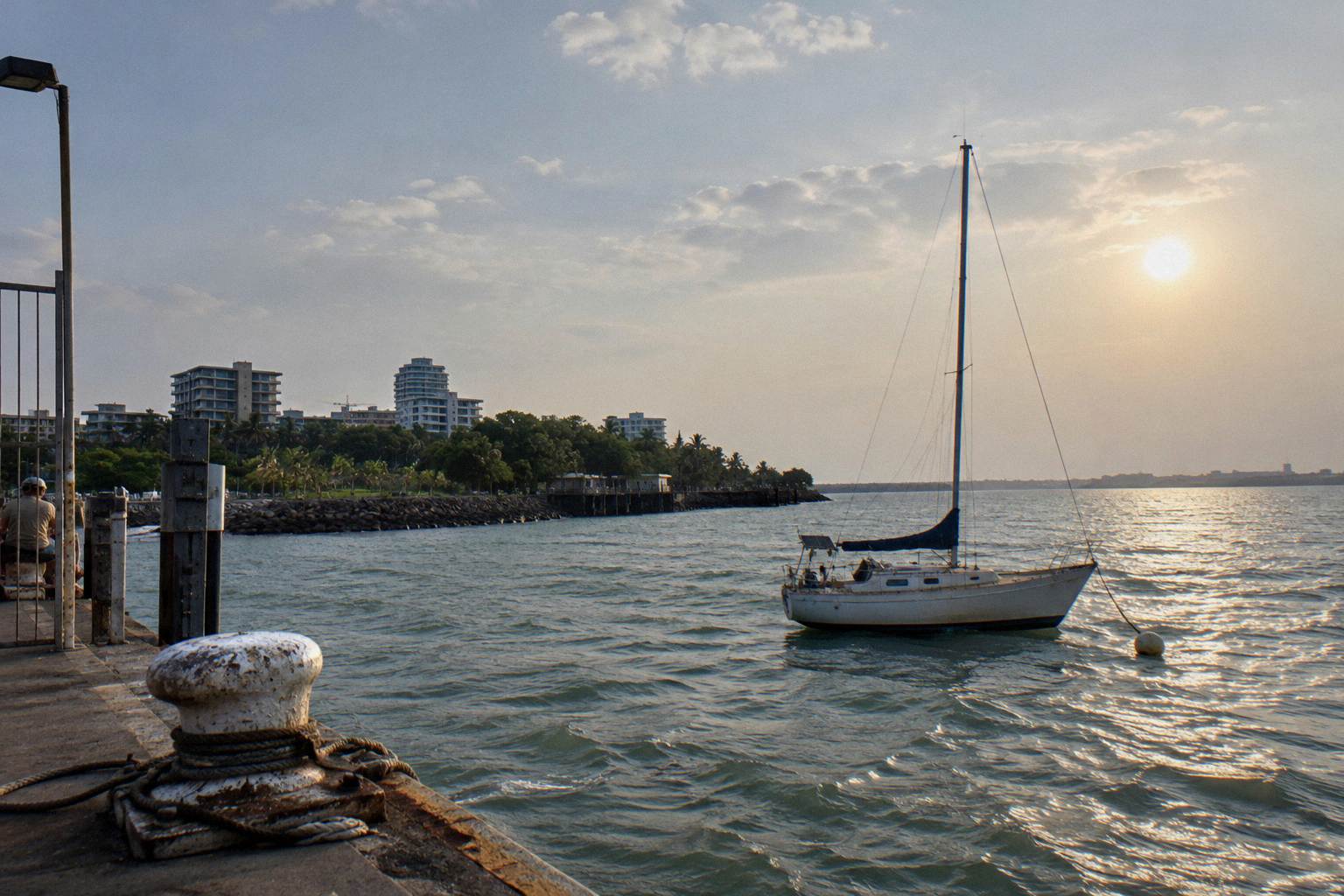
Reading the Bureau of Meteorology figures and the operators' own seasons, the best months for Darwin are roughly June through September: mean rainfall falls to between 1.0 and 16.7 mm, rain days drop to between 0.2 and 1.7 a month, and clear days peak at 17.6 in July and 19.0 in August. No official best month exists, and the Bureau's table prints no dry-season definition at all, so this is a reading of the data rather than a rule.
That single paragraph is the honest core of the answer, and everything else on this page is the evidence behind it. Darwin is unusual among Australian cities because its year splits sharply in two. For roughly half of it, from about November to April, the long-term averages show heavy rain, with January alone averaging 432.1 mm across 19.0 days of rain of 1 mm or more. For the other half, from about May to September, the same station records almost none: June averages 1.8 mm, July 1.0 mm, and August 4.4 mm, over 85 years of records from 1941 to 2026 at Darwin Airport, station 014015.
The reason this matters more in Darwin than almost anywhere else in the country is what people actually come here to do in the evening. The city's harbour is the stage for its sunset cruises, and a sunset you cannot see is a sunset cruise that has to work very hard for its money. If you are planning a trip around an evening on the water, the month you choose is probably the single biggest decision you will make, bigger than which boat, bigger than which dinner, and this page works through the numbers month by month so you can see why.
There is a second layer to the question that pure weather data cannot answer: what the cruise operators themselves do. Cape Adieu Cruises and Charters states on its own page that its cruises run through the Dry season, April to October, with private charters only outside those months. Darwin Harbour Cruises and Sail Darwin state no season for their sunset cruises at all, so for those the answer is no season stated; check the booking page. When the operator with the most explicit seasonal schedule and the clearest weather window overlap, that overlap is where the data and the industry agree, and it is worth understanding before you pick a date.
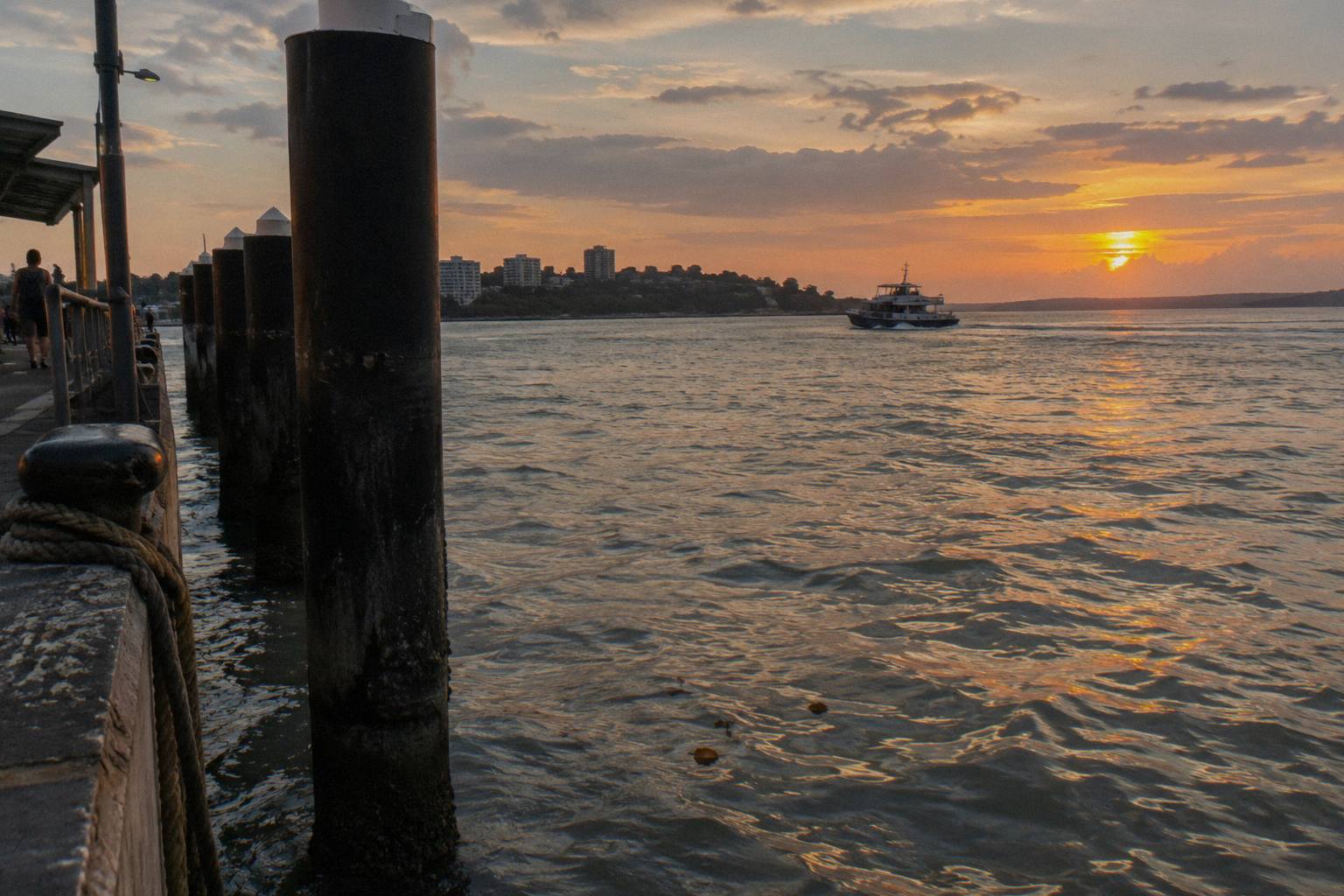
Which Months Does The Bureau Of Meteorology Data Favour?
The Bureau's long-term monthly means favour May through September, with June and July standing out: June averages 1.8 mm of rain and July 1.0 mm, each over barely 0.3 days of measurable rain. Mean daily sunshine reaches 10.2 hours in July and 10.4 in August against just 5.7 in January, and rainfall stays under about 25 mm a month from May to September.
The table below carries the full monthly picture from the Bureau's Darwin Airport station, averaged across 85 years of records from 1941 to 2026. Three measures matter most for an evening on the harbour: how much rain falls, how many days it falls on, and how much sunshine the month delivers. Mean maximum temperature is included too, and its flatness is itself a finding, because Darwin barely cools down even in its driest months.
| Month | Mean rain (mm) | Rain days of 1 mm+ | Mean max temp (C) | Sunshine and clear days |
|---|---|---|---|---|
| January | 432.1 | 19.0 | 31.8 | 5.7 sunshine hours; 0.6 clear days |
| February | 372.4 | 17.8 | 31.5 | Not stated |
| March | 313.1 | 16.7 | 32.0 | Not stated |
| April | 102.4 | 7.3 | 32.8 | Not stated |
| May | 20.0 | 1.6 | 32.1 | Not stated |
| June | 1.8 | 0.3 | 30.8 | Not stated |
| July | 1.0 | 0.2 | 30.7 | 10.2 sunshine hours; 17.6 clear days |
| August | 4.4 | 0.3 | 31.6 | 10.4 sunshine hours; 19.0 clear days |
| September | 16.7 | 1.7 | 32.7 | Not stated |
| October | 69.3 | 5.1 | 33.4 | Not stated |
| November | 146.5 | 10.1 | 33.4 | Not stated |
| December | 255.5 | 14.2 | 32.8 | Not stated |
The Bureau publishes the full table for station 014015 on its own site at Darwin Airport climate averages, and it is worth reading directly if you want the series behind these numbers. Two cautions go with it. First, the Bureau's page prints no wet-season definition, so the May-to-September and November-to-April groupings here are a reading of the figures, not an official boundary. Second, these are 85-year means: any individual month can differ, and a "dry" July can still produce an afternoon shower.
What the table quietly tells you is that Darwin's shoulder months are underrated in the data. April averages 102.4 mm of rain, but over just 7.3 rain days, which leaves well over twenty rain-free days in a typical April. May drops to 20.0 mm over 1.6 days. September mirrors May almost exactly at 16.7 mm over 1.7 days. If your question is really about avoiding rain rather than chasing maximum sunshine, the window is wider than the peak-dry months alone, and the shoulders on either side of June and July buy you most of the benefit.
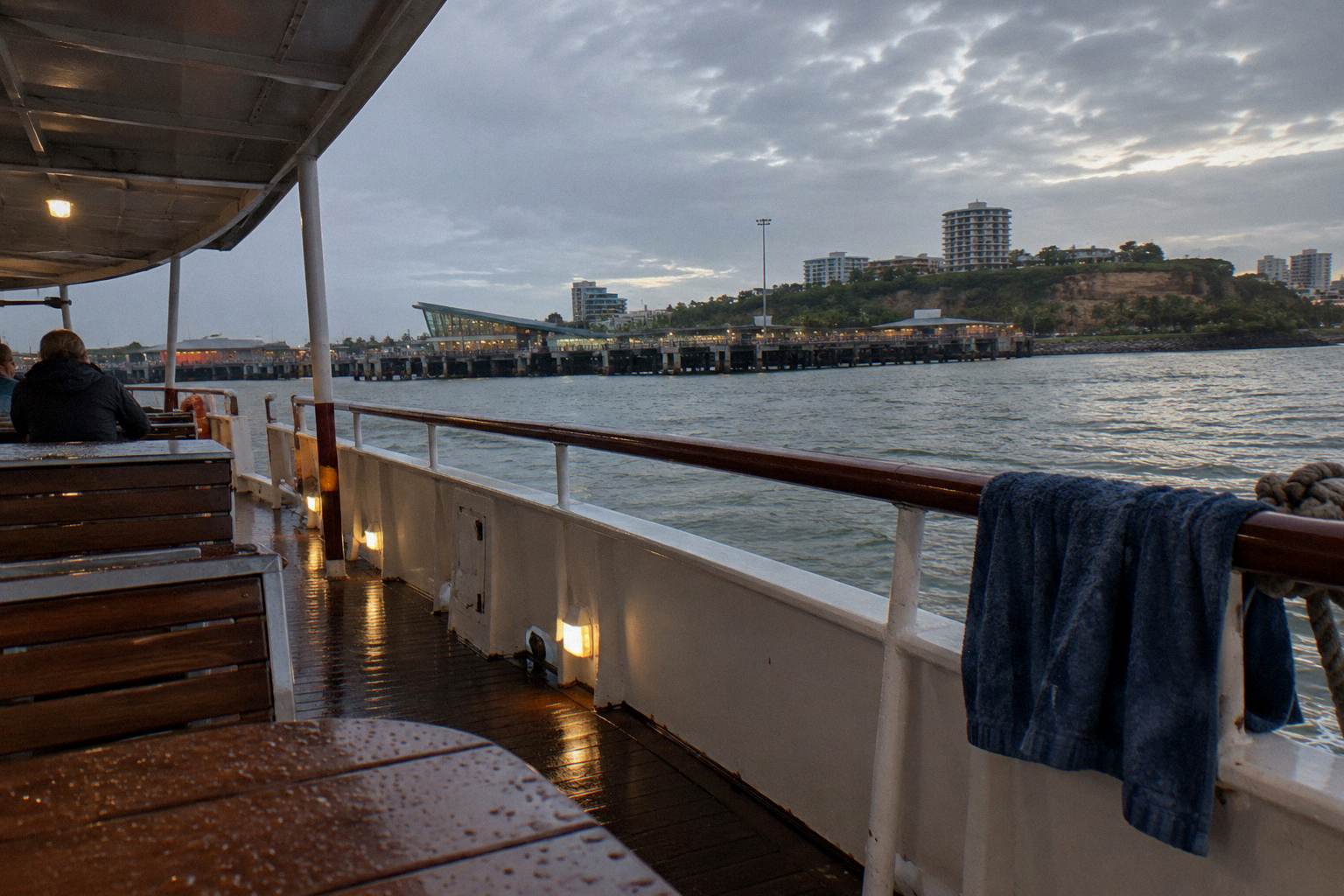
Temperature, by contrast, should not drive your choice much. The mean maximum sits between 30.7 and 33.4 °C in every single month of the year, with the coolest means in June and July and the warmest in October and November. Darwin evenings on the water run warm year-round; Darwin Harbour Cruises describes the harbour at about 25 degrees at night in its own FAQ, which is why the operator suggests a light cardigan rather than a jacket. Whatever month you pick, pack for warmth, not cold, and see our longer rundown of Darwin weather by month for boat evenings for the fuller picture.
Do Sunset Times Change Much Between Months In Darwin?
Less than almost anywhere in Australia: a solar calculation for Darwin puts sunset between about 6:29 pm in late May to early July and about 7:19 pm in December to January, a swing of only about 50 minutes across the whole year. The Northern Territory has no daylight saving, so the clock time you see is the time you get, and the day-to-day change is under a minute.
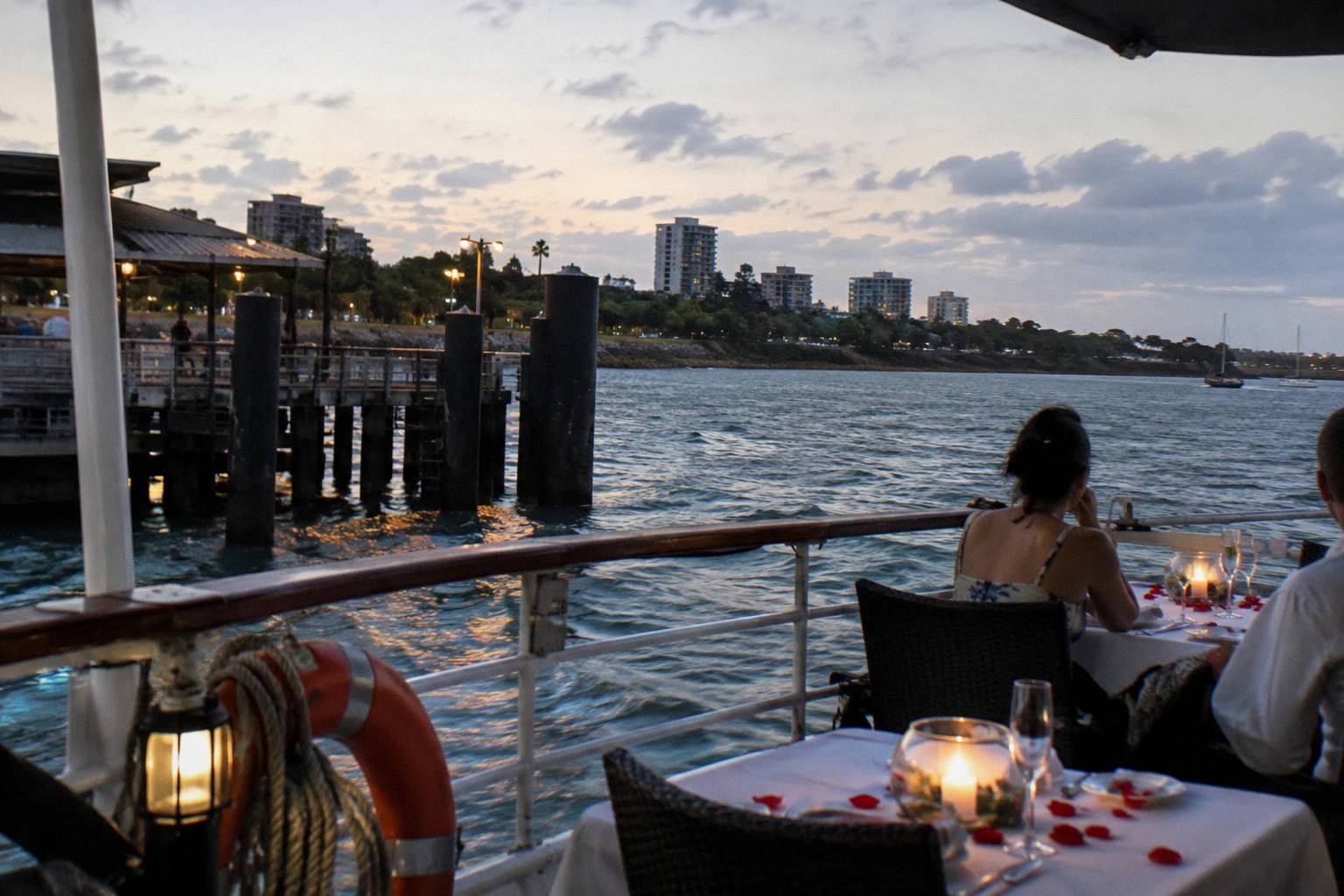
That narrow band is a genuine peculiarity of the tropics, and it works in a visitor's favour. In southern capitals the sunset shifts by hours between winter and summer, which forces tour schedules to move dramatically across the year. In Darwin it barely moves at all, which means an evening cruise in June and an evening cruise in December both happen in roughly the same relation to the dinner hour. These figures come from a calculation using a NOAA solar algorithm for Darwin's coordinates, run for the 15th of each month in Australian Central Standard Time and accurate to about plus or minus 2 minutes; it is not an official table.
| Month | Approximate sunset (15th of month) |
|---|---|
| January | about 7:19 pm |
| February | about 7:16 pm |
| March | about 7:02 pm |
| April | about 6:42 pm |
| May | about 6:29 pm |
| June | about 6:29 pm |
| July | about 6:36 pm |
| August | about 6:42 pm |
| September | about 6:42 pm |
| October | about 6:43 pm |
| November | about 6:52 pm |
| December | about 7:07 pm |
Two practical points follow from this table. The earlier sunsets of the Dry season mean cruises board and sail earlier in the evening in May, June and July, leaving more of your night free afterwards. The later sunsets of the Build-up and Wet season mean a December cruise is a genuinely late evening out, with the sun going down after 7 pm. No operator publishes clock times that stay still: they differ by page and move with the season, so every cruise boards ahead of sunset and the time on your booking confirmation is the one that counts.
The other point is what the sunset calculation cannot tell you: cloud. A 7:19 pm January sunset arrives in a month averaging 5.7 sunshine hours and 0.6 clear days, while a 6:29 pm July sunset arrives in a month of 10.2 sunshine hours and 17.6 clear days. The clock time barely changes, but the odds of an unobstructed horizon change enormously. For a deeper look at the monthly shift, our guide to how Darwin sunset times shift month by month works through the same calculation in detail.
Do The Darwin Sunset Cruises Run All Year?
Not all of them, and not on the same calendar: Cape Adieu states its dinner cruises run through the Dry season, April to October, with private charters by enquiry outside it, while Darwin Harbour Cruises and Sail Darwin state no season for their sunset cruises at all, so for those the honest answer is no season stated; check the booking page. Sail Darwin's terms add that all sailing is subject to suitable tides and weather.
This per-operator patchwork is the part of the "best month" question that catches visitors out, because the answer is not one calendar but three. The table below sets out what each operator actually says, and it is worth checking your dates against it before you commit to flights. Note that these cruises all board at Stokes Hill Wharf on the Darwin Waterfront: Cape Adieu and Darwin Harbour Cruises at Dock 3, Sail Darwin at Dock 1.
| Operator and cruise | Stated season | Duration | Boarding |
|---|---|---|---|
| Cape Adieu, Four-Course Ketch Sunset Dinner Cruise | Dry season, April to October; private charters by enquiry outside it | about 2.5 hours | Dock 3, Stokes Hill Wharf |
| Darwin Harbour Cruises, Charles Darwin Sunset Buffet Dinner Cruise | no season stated; check the booking page | about 2 hours | Dock 3, Stokes Hill Wharf |
| Darwin Harbour Cruises, Gaze And Graze Sunset Cruise | no season stated; check the booking page | about 2 hours | Dock 3, Stokes Hill Wharf |
| Sail Darwin, Sunset Sail With Dinner And Sparkling Wine | no season stated; check the booking page | about 3 hours | Dock 1, Stokes Hill Wharf |
The Cape Adieu season is the most consequential of these, because it is the operator's four-course ketch dinner cruise that anchors many visitors' evening plans. The operator's own cruises page, Cape Adieu Cruises and Charters, states the April-to-October window directly, and the product is a chef-prepared four-course dinner built on local produce, served aboard a traditional ketch with a fully licensed bar and no BYO alcohol, with exclusive hire available up to 60 guests. If your trip falls in November, the only route to that boat is a private charter by enquiry, not a ticketed dinner cruise. The operator's from price is A$226 per adult.
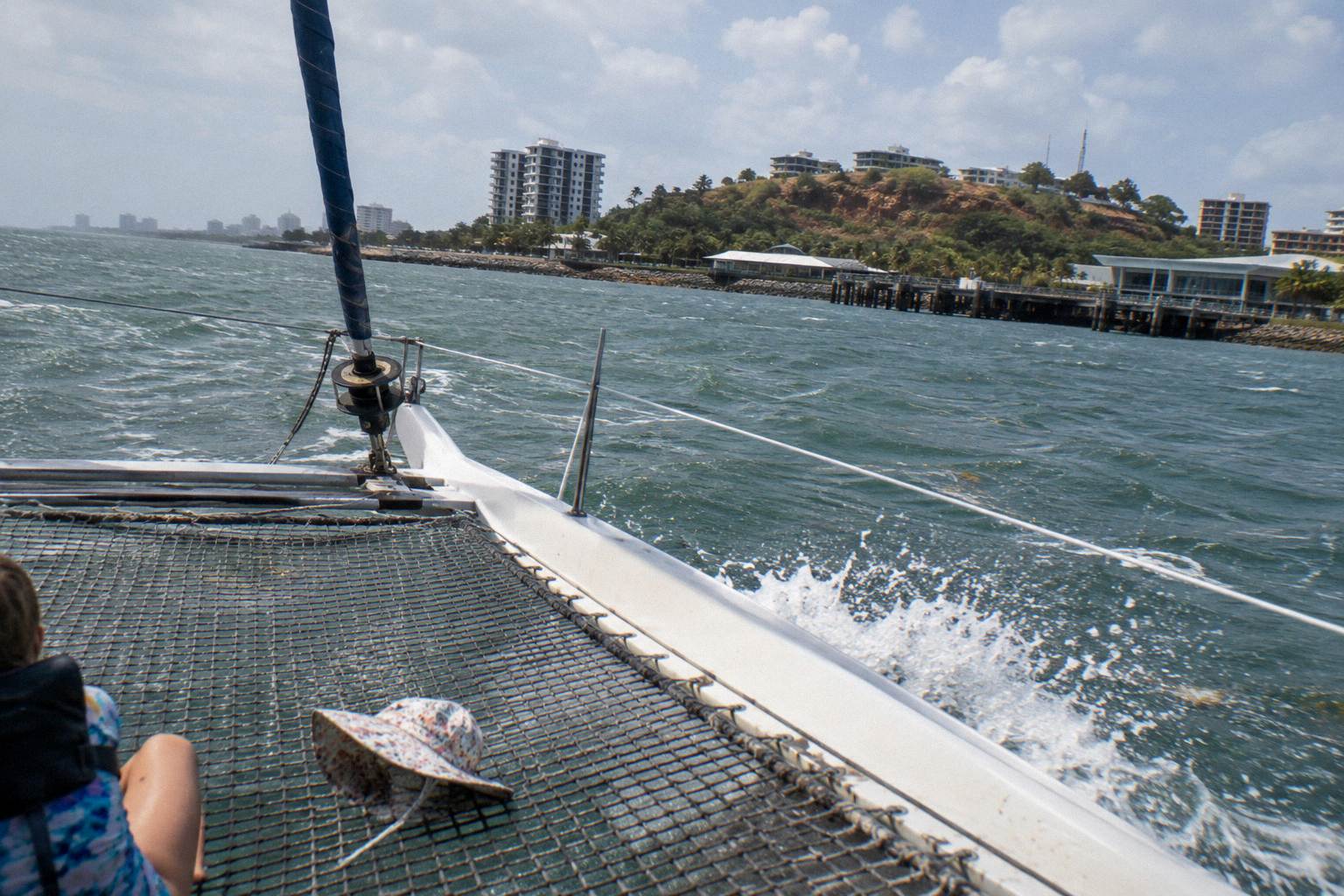
For the other two operators, absence of a stated season is not evidence of a year-round schedule, and it would be wrong to claim these cruises run daily in any month. What is stated is Sail Darwin's operational caveat: all sailing is subject to suitable tides and weather, the minimum is 10 guests per trip except a sole charter, and the captain decides on weather, with a reschedule or a 100 percent refund if the sailing does not proceed. Darwin Harbour Cruises' FAQ says tides decide how close to the coast the vessel can go and that the skipper may change the route, and the Bureau of Meteorology publishes NT tide tables for Darwin if you want the tidal background. None of this is a reason to avoid a month; it is a reason to read the terms that apply to your ticket.
What If You Can Only Visit Darwin In The Wet Months?
You can still have a good harbour evening, but the odds shift: from November to April the monthly rainfall averages run from 102.4 mm in April up to 432.1 mm in January, spread over 7.3 to 19.0 rain days, and January's 0.6 clear days mean an unobstructed sunset is the exception rather than the expectation. The wet months are roughly November to April, and the Bureau prints no official boundary for that either.
None of which makes a Wet-season trip a bad idea in general, and plenty of visitors deliberately choose it: the landscape greens, the storms are dramatic, and the city runs at a different rhythm. But this page is answering a specific question about the best month, and for an evening cruise specifically, the data is unambiguous. A dinner cruise in January is buying a ticket for an evening in which the long-term average delivers rain on 19 of the month's days. Some of those evenings will be fine. The averages say most will not be dry.
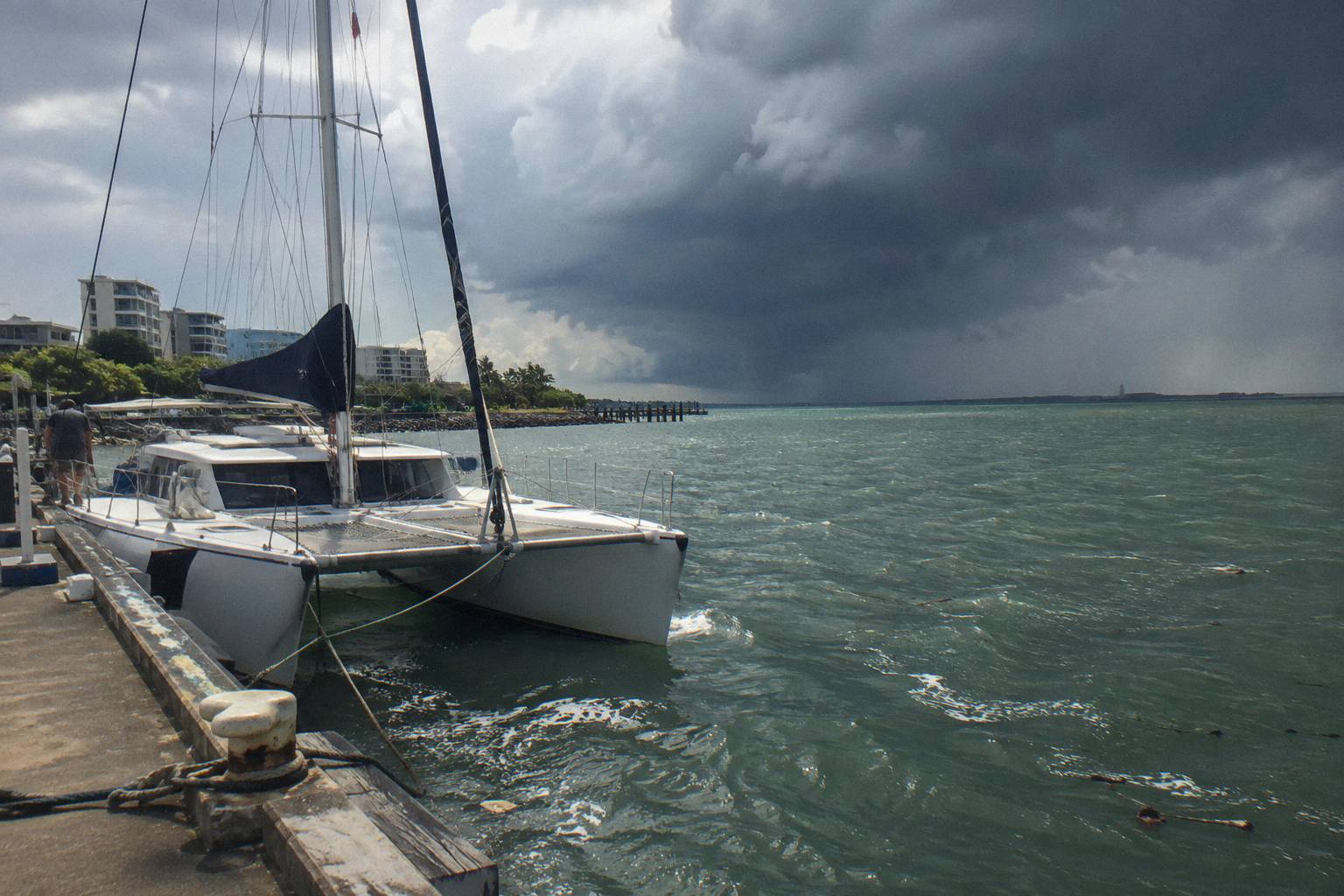
There is a practical mitigation if you are locked into Wet-season dates. Pick a cruise with substantial indoor space and treat the sunset as a bonus rather than the point. The Charles Darwin is a three-level catamaran with an open-air Sun Deck and two air-conditioned indoor levels, which makes its buffet dinner cruise a reasonable proposition when the sky is unreliable: the Territory-style buffet dinner, the operator's FAQ calls it a three-course buffet, is served whatever the sky is doing, and the operator's from prices are A$149 for adults online and A$89 for youth aged 4 to 17, with infants aged 0 to 3 free. The operator also says booking online saves up to 9 percent compared with walk-up. It is a different proposition from an open-deck sail, and in a month of 14 rain days that difference is the whole decision.
The same thinking applies in the shoulder months in reverse. October averages 69.3 mm of rain over 5.1 days, which is a real step up from September's 16.7 mm but still leaves most evenings dry, and October's mean maximum of 33.4 °C is the warmest in the table alongside November. Late in the Dry season, an open-air evening is still a sound bet, and a three-hour sail becomes attractive precisely because the air stays warm well past dark. Sail Darwin's sunset sail with dinner and sparkling wine runs about 3 hours aboard a 15 m, 50 ft, aluminium sailing catamaran carrying a maximum of 30 passengers in-shore; its price is not stated, so check the live listing for the fare. Note the terms: no changes or cancellations within 48 hours of departure, under 18s accompanied by an adult, and the boat departs promptly with guests asked to arrive at least 15 minutes before.
If a wet-month trip is already fixed in your calendar, our piece on an evening cruise in Darwin's wet season goes into what to expect and how to hedge, including what happens when the sky closes in.
How Do You Actually Choose Your Month?
Choose June or July for the highest odds of a clear sunset and the lowest rainfall, August if you want the most clear days in the whole record at 19.0, or the May and September shoulders if you want dry evenings with fewer calendar constraints. The Cape Adieu dinner cruise season spans April to October, which covers all five of those months comfortably.
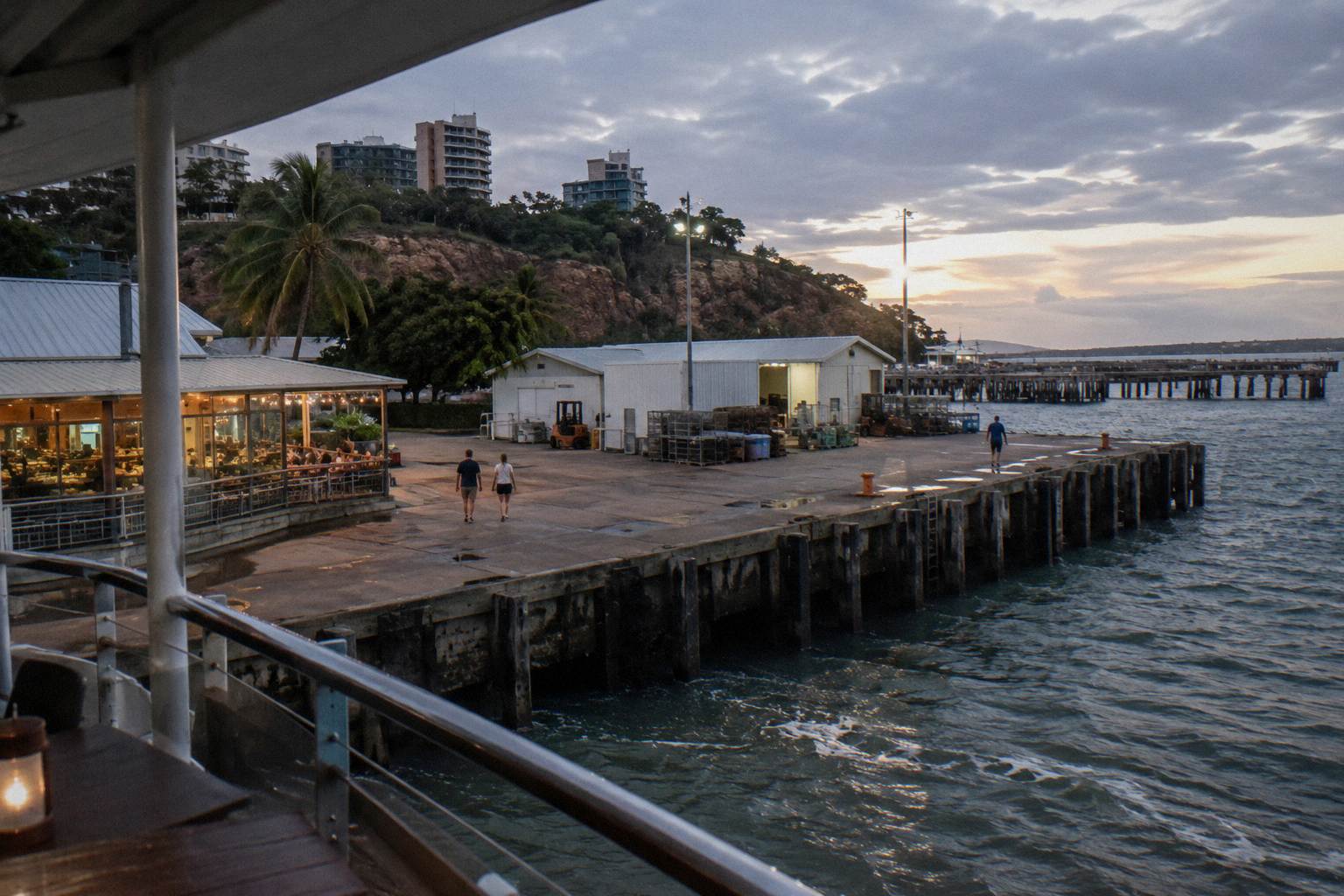
A useful way to finish the decision is to match your month to what you actually want from the evening, and the comparison pages at Darwin Sunset Dinner Cruise lay the boats out side by side. The summary below pairs each realistic window with its trade-off, using only the figures already set out above, and it deliberately avoids festival, crowd and price-season claims because none of those appear in the verified sources. No sell-out or demand figure exists either, so the honest position on booking lead time is that it is not stated.
| If you want | Best months in the data | The trade-off |
|---|---|---|
| Maximum chance of a clear sunset | July and August | peak clear days, though the busiest stretch of the cruise calendar is not published by any operator |
| Dry with a later sunset | September | 16.7 mm of rain, sunset about 6:42 pm, warm 32.7 °C mean maximum |
| The longest evening on the water | Dry-season months for the 3-hour sail | Sail Darwin states no season; check the booking page |
| Fewest calendar constraints | May or September shoulders | marginally more rain than June or July, at 20.0 mm and 16.7 mm |
| A Wet-season trip anyway | pick a vessel with indoor levels | rain days run 10.1 to 19.0 a month from November to January |
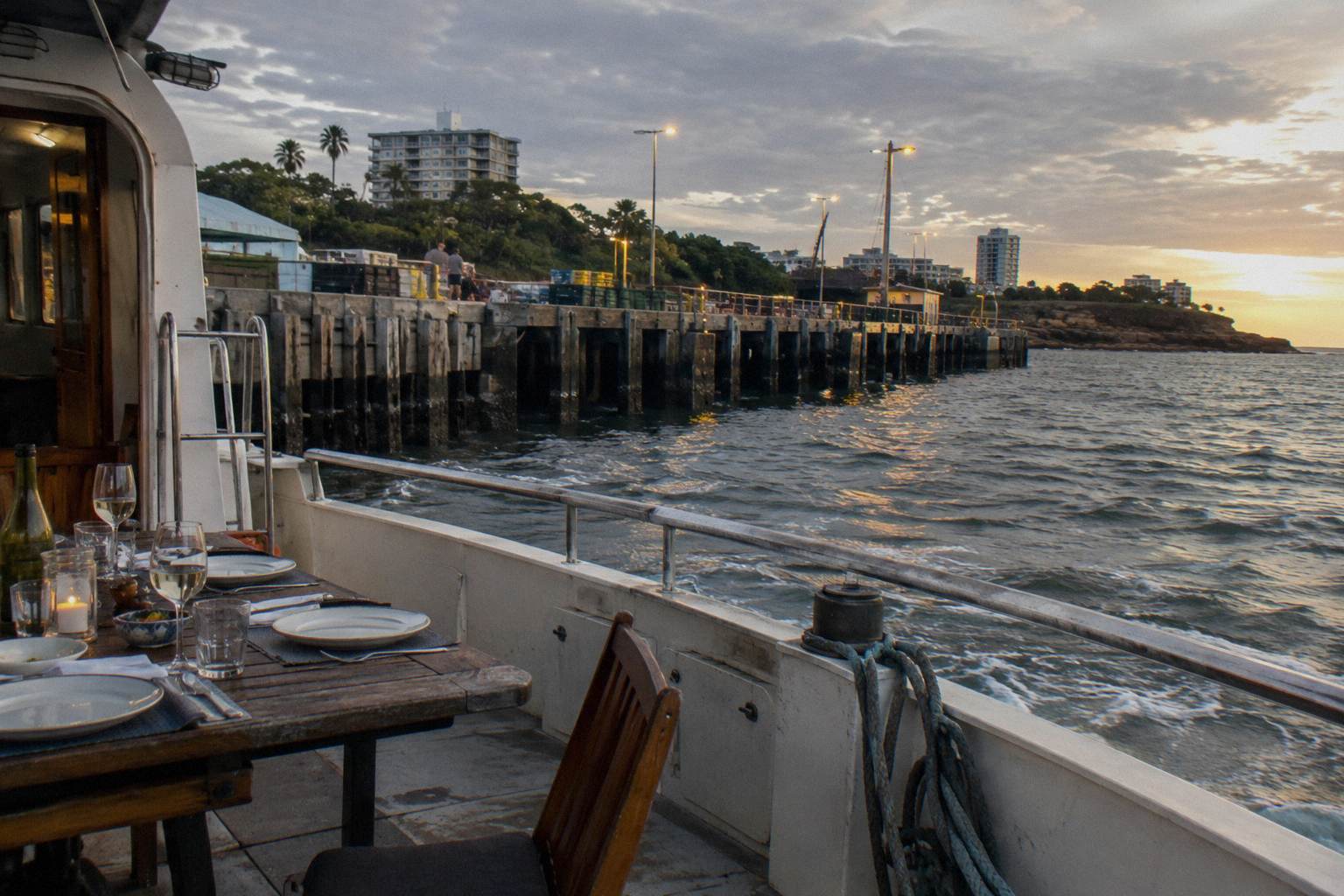
One last framing helps. The question people usually mean is not "which month is best for Darwin" but "which month gives my one harbour evening the best chance of being the evening I imagined". That reframing makes the answer easier, because it separates the city from the cruise. Darwin in January is still Darwin: warm, green, dramatic, worth seeing. A sunset dinner cruise in January is a coin tossed against 19 rain days. The same cruise in July is close to a sure thing on the rainfall averages, and July's sunset, at about 6:36 pm on the calculation, still leaves your whole night ahead of you when the boat returns to Stokes Hill Wharf.
Common Questions About Choosing Your Month
What Is The Best Month To Go To Darwin?
Reading the Bureau of Meteorology averages, the best months are roughly June through September: rainfall averages between 1.0 and 16.7 mm, rain days fall to between 0.2 and 1.7 a month, and clear days peak in July and August. There is no official best month, and the Bureau prints no wet-season definition, so treat this as a reading of 85 years of data rather than a rule.
Does Darwin Have An Official Dry Season?
Not one that the Bureau of Meteorology's table defines. Reading the BOM figures, rainfall stays under about 25 mm a month from May to September and the wet months run roughly November to April, but the page prints no wet-season boundary. Operators state their own seasons: Cape Adieu says its cruises run April to October, while Darwin Harbour Cruises and Sail Darwin state no season for their sunset cruises.
How Much Does Sunset Time Change In Darwin Across The Year?
Only about 50 minutes in total, on a solar calculation for Darwin: sunset runs from about 6:29 pm in late May to early July to about 7:19 pm in December and January, with day-to-day change under a minute. The Northern Territory has no daylight saving, and these figures are approximate calculations, not boat times.
Is Darwin Too Wet For A Sunset Cruise From November To April?
The averages are against you, not the concept. Monthly rainfall in the wet stretch runs from 102.4 mm in April to 432.1 mm in January, spread over 7.3 to 19.0 rain days, and January averages just 0.6 clear days. Some cruises still run; Darwin Harbour Cruises and Sail Darwin state no season for their sunset cruises, so check the booking page for your dates.
Which Month Has The Most Clear Days In Darwin?
August, with a mean of 19.0 clear days across the long-term record, narrowly ahead of July at 17.6. August also delivers 10.4 mean daily sunshine hours against 5.7 in January. Those two months are the statistical heart of the visiting window.
Does It Ever Get Cool In Darwin In The Dry Months?
Not on the mean maximum figures: the warmest months, October and November, average 33.4 °C and the coolest, June and July, still average 30.8 and 30.7 °C. Darwin Harbour Cruises describes the harbour at about 25 degrees at night and suggests a light cardigan, so pack light layers rather than winter gear.