
Can You See Wildlife From A Darwin Harbour Boat At Dusk?
What wildlife you might and might not see from a Darwin Harbour sunset cruise: dolphins, turtles and dugong as an attributed opportunity, crocodiles as NT Government advice frames them, and how to plan around it.
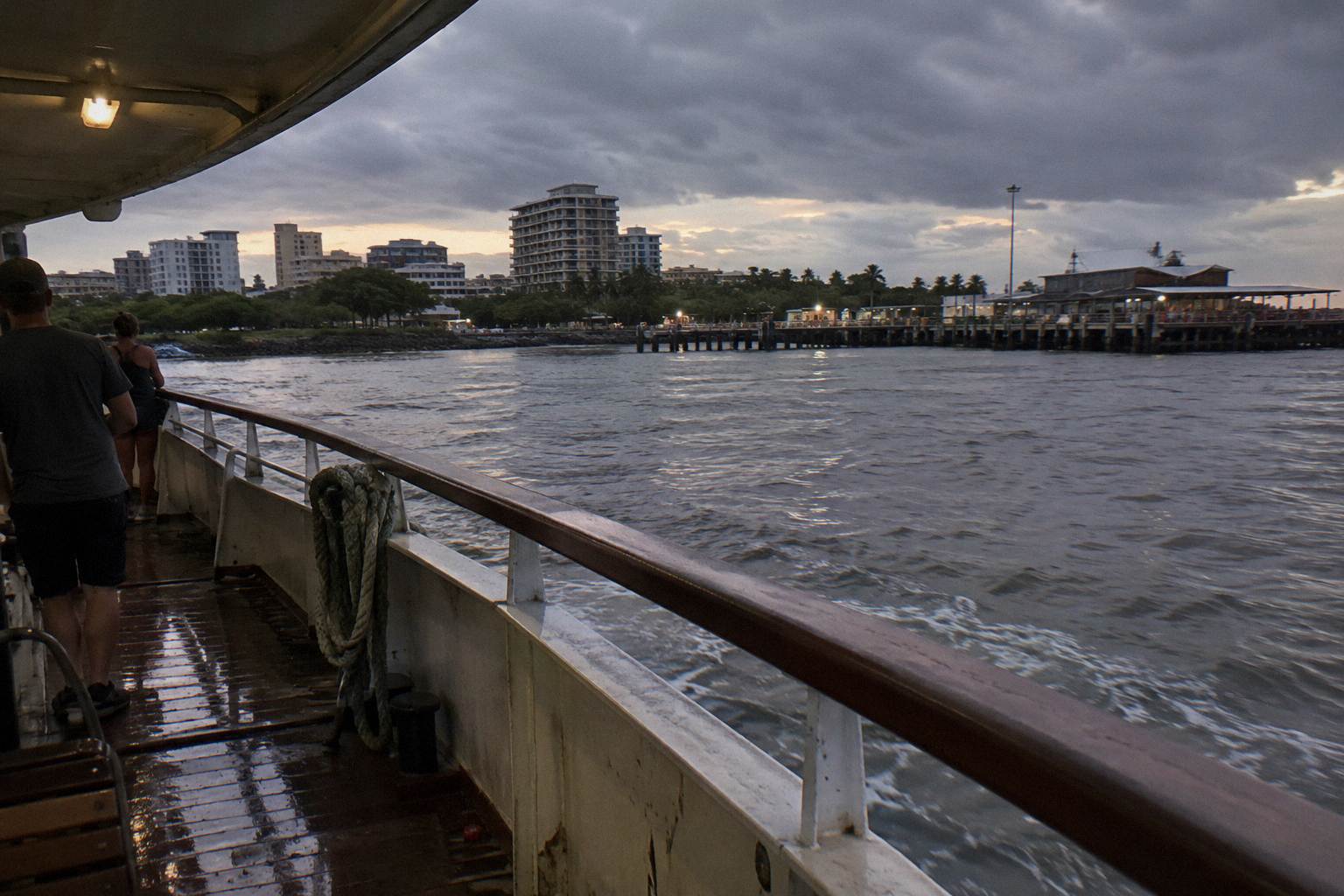
Wildlife sells harbour cruises. Brochures lean on it, travellers ask about it, and the honest answer on Darwin Harbour is more interesting than a simple yes or no. The four dinner and sunset cruises compared here make no wildlife promise at all, and the operators who do mention animals are careful with their wording: an opportunity to see, never a guarantee. Below is exactly who claims what, what the NT Government advises about crocodiles and box jellyfish, and how to plan an evening on the water with expectations that match reality rather than the marketing.
The short version: a dusk cruise on Darwin Harbour is a lovely evening out, and animals are a bonus rather than the product. Two other harbour operators, with no bookable listing here, describe dolphins, turtles, snubfin dolphins and dugong as an opportunity to see on their own trips, with no guarantee attached. None of the four cruises, the Cape Adieu ketch, the Charles Darwin catamaran, the Gaze And Graze cruise or the Sail Darwin sunset sail, states a wildlife sighting of any kind. That gap is not an accident, and reading it correctly is the difference between a good night and a disappointed one.
Maybe, but none of the four cruises promises it: one operator describes dolphins, turtles, snubfin dolphins and dugong as an opportunity to see on its harbour trips, with no guarantee, and the four cruises bookable here state no wildlife sightings at all. Crocodiles are a management story, with NT Government advice treating the harbour as a no-tolerance area, so book for the water, food and sunset and treat any animal as a bonus.
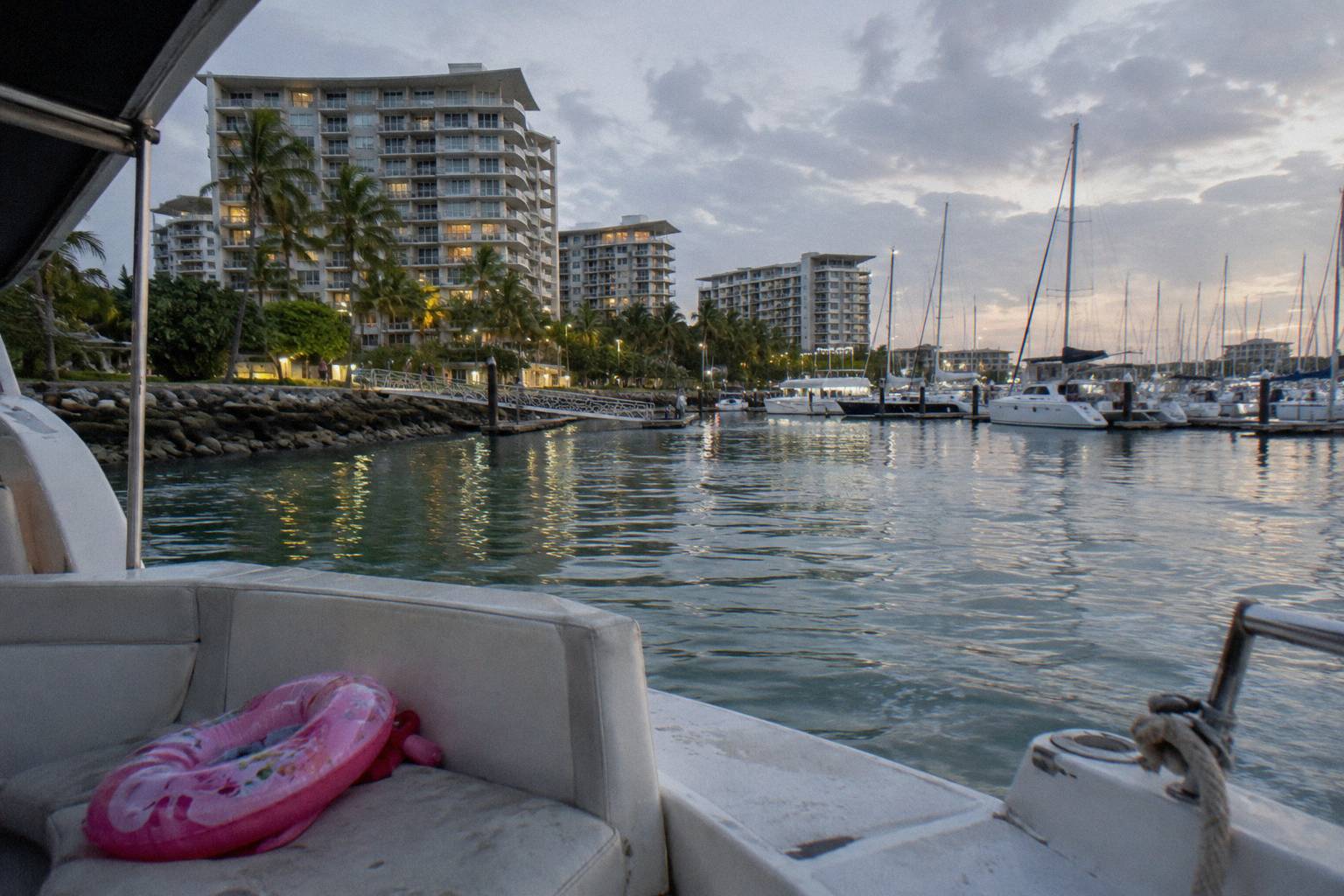
Start with the attribution, because it matters. The only dolphin and dugong claims on this harbour come from City of Darwin Cruises, a context operator that runs from Cullen Bay marina and has no listing on this site. Its own wording is that bottlenose dolphins, turtles, snubfin dolphin and dugong are an opportunity to see on its harbour, with no guarantee. That is a carefully hedged sentence from a business that actually runs the trips, and it is the strongest wildlife claim anyone on this harbour puts in print.
The second context operator, Spirit of Darwin Cruises, also family owned and berthed at Stokes Hill Wharf, says batfish feed at the bow of its own cruises, and that queenfish, trevally, barramundi and even sharks are seen on some tours. Again, its own boats, its own wording, seen on some tours. Neither of these operators can be booked through this site, and neither claim transfers to any other vessel. Never assume the boat you are on will have batfish at the bow because a different operator's boat sometimes does.
The four cruises, the ones you can actually compare and book here, are quieter still. Cape Adieu, Darwin Harbour Cruises and Sail Darwin publish pages about food, vessels, boarding and tides, and none of them states a wildlife sighting. That silence is worth respecting. It tells you the operators who run these trips every evening do not consider animals a selling point they can stand behind, which is exactly why a page like this one exists: to separate the harbour's genuine animal life from the brochure version of it.
If an evening on the water sounds good regardless of the wildlife lottery, these are the three dinner and grazing options that run at dusk:
All three board at Stokes Hill Wharf on the Darwin Waterfront, and all go out ahead of sunset, which is the hour the harbour's animals are most plausible in. Whether any appear is another matter entirely, and the rest of this page explains why.
What Animals Actually Live In Darwin Harbour?
Darwin Harbour supports bottlenose dolphins, turtles, the Australian snubfin dolphin, dugong, and a range of fish including queenfish, trevally and barramundi, according to the harbour's own tour operators. Those operators frame every one of these as an opportunity to see rather than a promise, and sharks are mentioned only as occasionally seen on some tours. No official count, sighting rate or population figure is published.
The harbour is a big, working body of tropical water, and it sits at the top of a very large tidal system. What the record supports is the species list above, attributed to two operators who run boats on it. City of Darwin Cruises names the marine mammals: bottlenose dolphins, turtles, snubfin dolphin and dugong. Spirit of Darwin Cruises names the fish drawn to its own bow: batfish that feed there, plus queenfish, trevally, barramundi and even sharks on some tours. Both use hedged language, and both are right to.
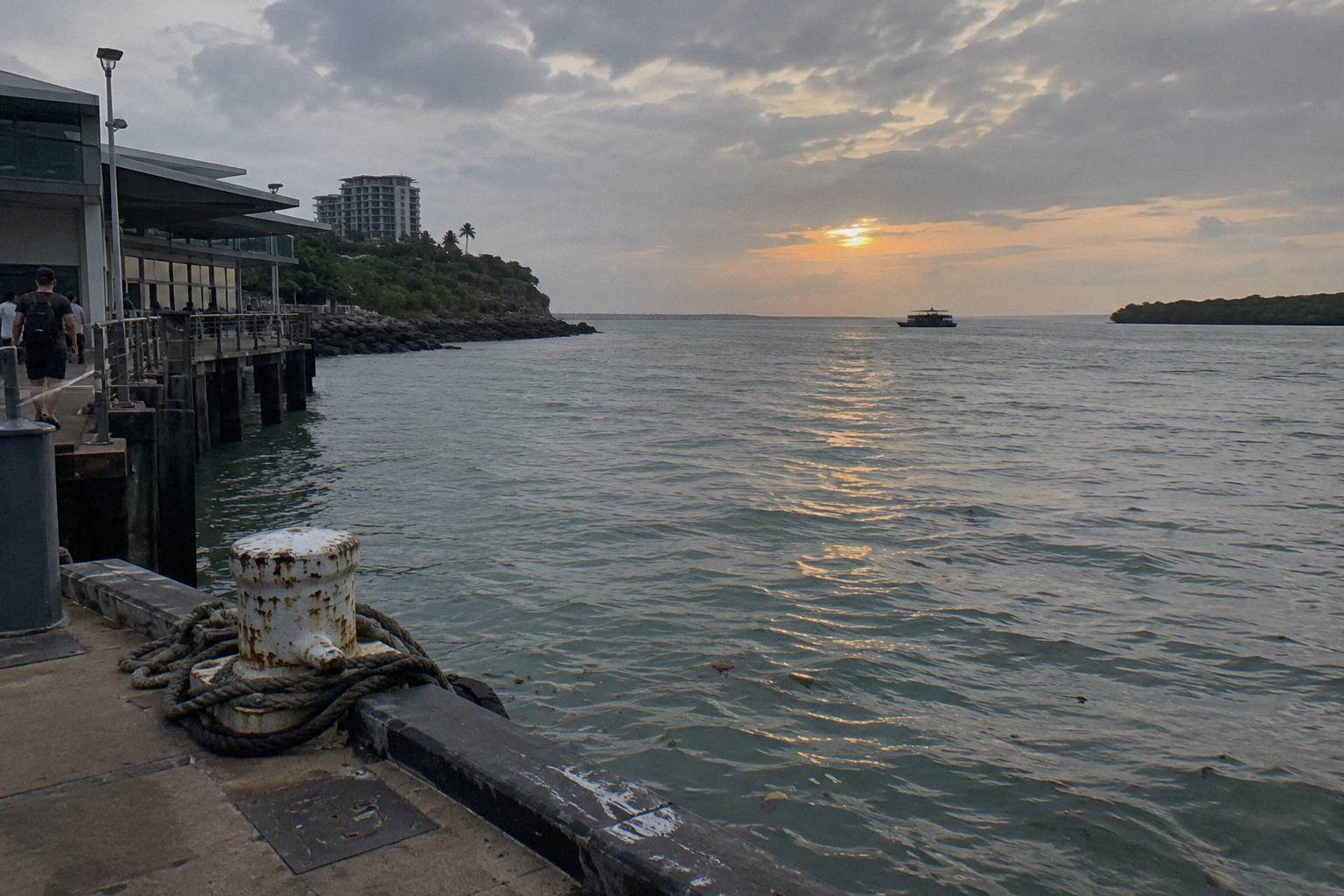
Dugong are the most interesting name on that list. They are grazing marine mammals, slow moving and tied to seagrass beds, and their presence in a working harbour near a capital city is unusual. But dugong surface briefly and unpredictably, and a three-level catamaran with a buffet and background music is not a wildlife-watching platform. If a dugong surfaces near the boat, you will remember it for years. Building the evening around it is how disappointment starts.
The fish are the more realistic proposition, and even they are attached to a specific operator. The batfish that feed at the bow of Spirit of Darwin's cruises do so around that operator's vessel, on its trips, and the claim does not cross over. On a ketch like Cape Adieu or a catamaran like the Charles Darwin, no fish feeding is stated by anyone. What you can reasonably expect from the water itself at dusk is the water: warm, generally calm in the operator Darwin Harbour Cruises' own words, and lit gold in the last half hour before the sun goes down.
| Animal | Named by | Exact framing | Bookable on this site? |
|---|---|---|---|
| Bottlenose dolphins | City of Darwin Cruises (context) | An opportunity to see, no guarantee | No |
| Turtles | City of Darwin Cruises (context) | An opportunity to see, no guarantee | No |
| Snubfin dolphin | City of Darwin Cruises (context) | An opportunity to see, no guarantee | No |
| Dugong | City of Darwin Cruises (context) | An opportunity to see, no guarantee | No |
| Batfish feeding at the bow | Spirit of Darwin Cruises (context) | On its own cruises | No |
| Queenfish, trevally, barramundi, sharks | Spirit of Darwin Cruises (context) | Seen on some tours | No |
| Any animal at all | None of the four cruises | Not stated | Yes |
Read that table twice if you are deciding. The operators whose wildlife claims are strongest are the ones you cannot book here, and the ones you can book here claim nothing. A reader hoping for wildlife is exactly who this page is written for, and the honest advice is to choose the boat for its food, duration and price, then enjoy whatever the harbour offers on the night. If you are weighing the broader question of value first, our piece on whether a Darwin sunset dinner cruise is worth it works through it.
Are There Crocodiles In Darwin Harbour?
Yes, crocodiles occur in Darwin Harbour, and the NT Government manages it as a no-tolerance area for them, which means animals that appear in the harbour are removed rather than tolerated. No crocodile count, sighting rate or risk percentage is published, and no cruise here states a crocodile sighting. NT advice is to swim only in signposted exclusion areas, and none of these cruises includes swimming.
The crocodile question deserves more care than it usually gets. Darwin sits in saltwater crocodile country, and the NT Government's approach to the harbour is active management: it is treated as a no-tolerance area, so the authorities work to remove crocodiles found there rather than leave them. That is a management description, not a safety promise, and nobody claims the harbour is safe for swimming, so do not treat it as one.
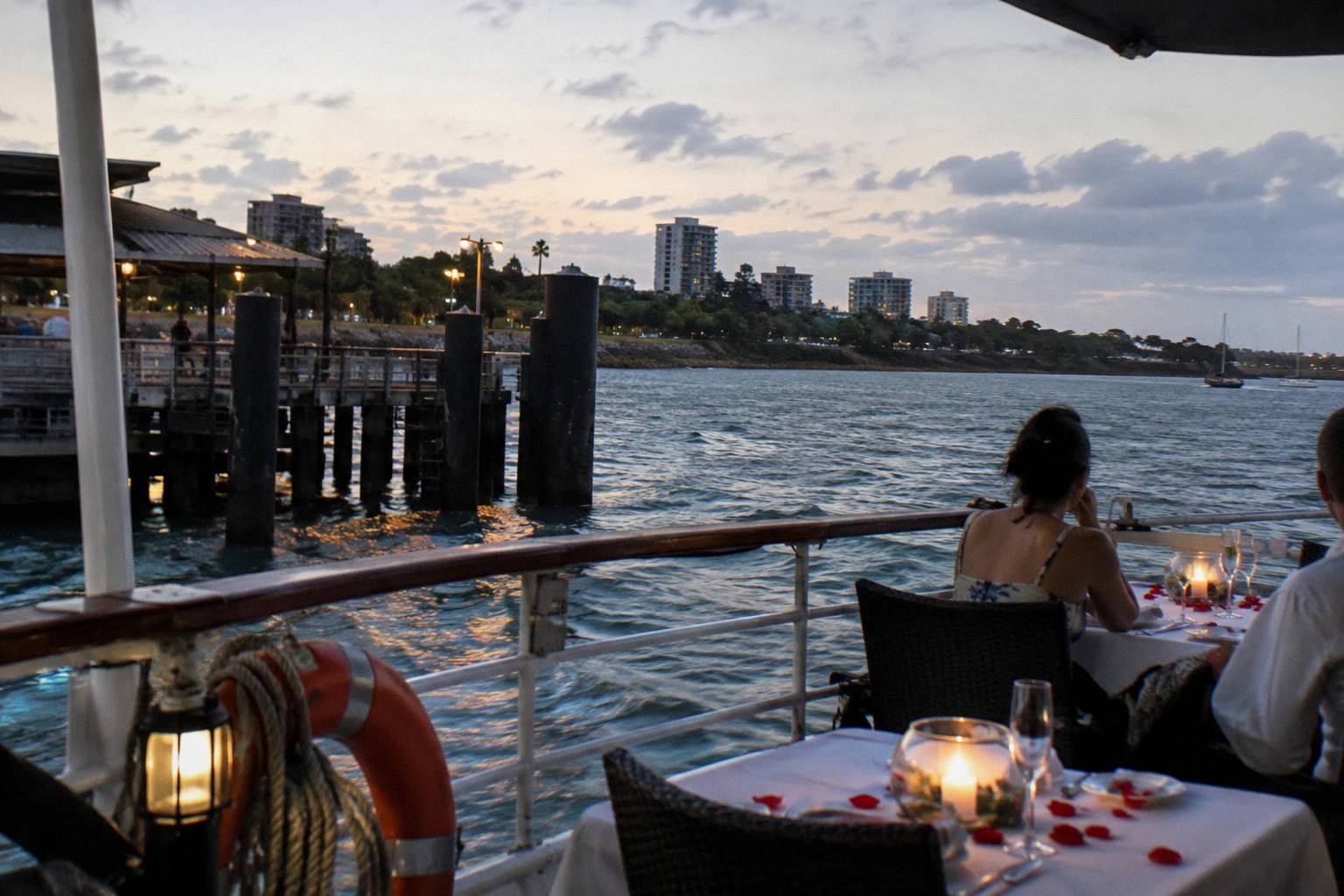
What it means for a dinner cruise is simple. You are on a vessel, on the surface, in a managed harbour, at dusk. These cruises do not include swimming, and the standing advice is the NT Government's own: do not swim from the boat or from the foreshore, and follow NT Government advice. If you want the full safety picture for the harbour, including the stinger season below, read our longer guide on stingers, crocodiles and harbour safety.
Is a crocodile sighting likely on a dinner cruise? No operator states one, and no sighting rate exists, so the honest answer is that nobody claims you will see one. A dusk crocodile photo from a Darwin dinner cruise would be a genuine rarity, not a standard feature of the evening. If crocodiles are the animal you most want to see in the Top End, tours built around crocodiles are a different trip from a harbour dinner cruise, and a dinner cruise is the wrong product for that goal.
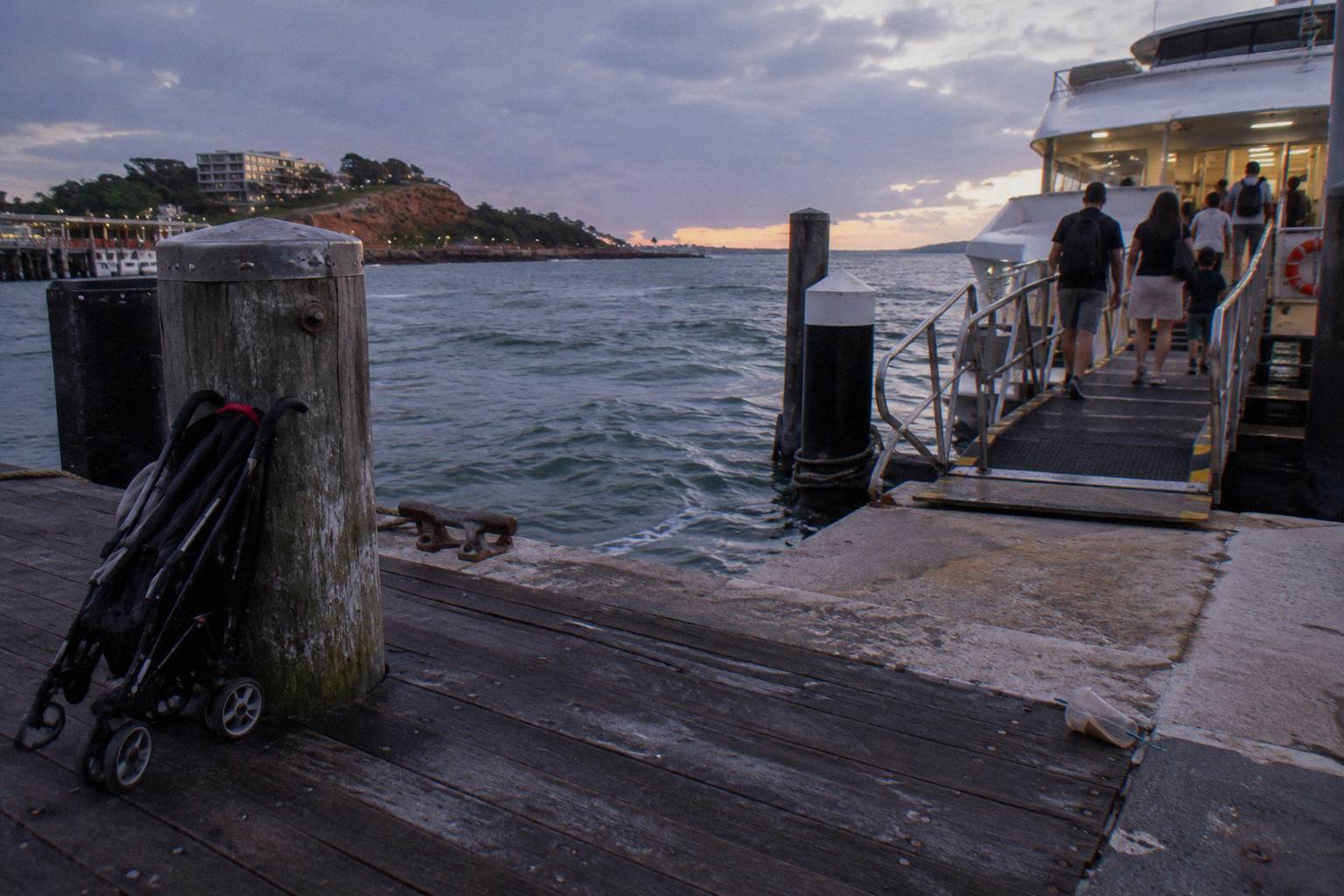
What the crocodile reality does affect is behaviour around the water. Stay aboard, keep children aboard, and treat the wharf, the gangway and the foreshore the way the NT advice frames them: as places where you do not enter the water. The tides on this harbour are very large, gangway access moves with them, and Darwin Harbour Cruises notes tides affect how its vessel boards. That is a practical reason to hold the handrail anyway, wildlife or no wildlife.
What About Box Jellyfish And Swimming?
NT Government advice says box jellyfish are more likely in Northern Territory waters during stinger season, from 1 October to 1 June, though stings have been recorded in every month, and NT Health frames the higher-risk window as October to the end of May. These cruises include no swimming, and the standing advice is do not swim from the boat or the foreshore and follow NT Government advice.
Stingers are the quieter hazard on this harbour and the easier one to handle, because the answer is just staying out of the water. Box jellyfish are more likely in NT waters across the warmer months, the two government advisories available here frame the window slightly differently, from 1 October to 1 June in one and October to the end of May in the other, and both agree stings have been recorded outside any tidy season. None of this touches a dinner cruise passenger who stays on deck. The full index of guides sits on Darwin Sunset Dinner Cruise.
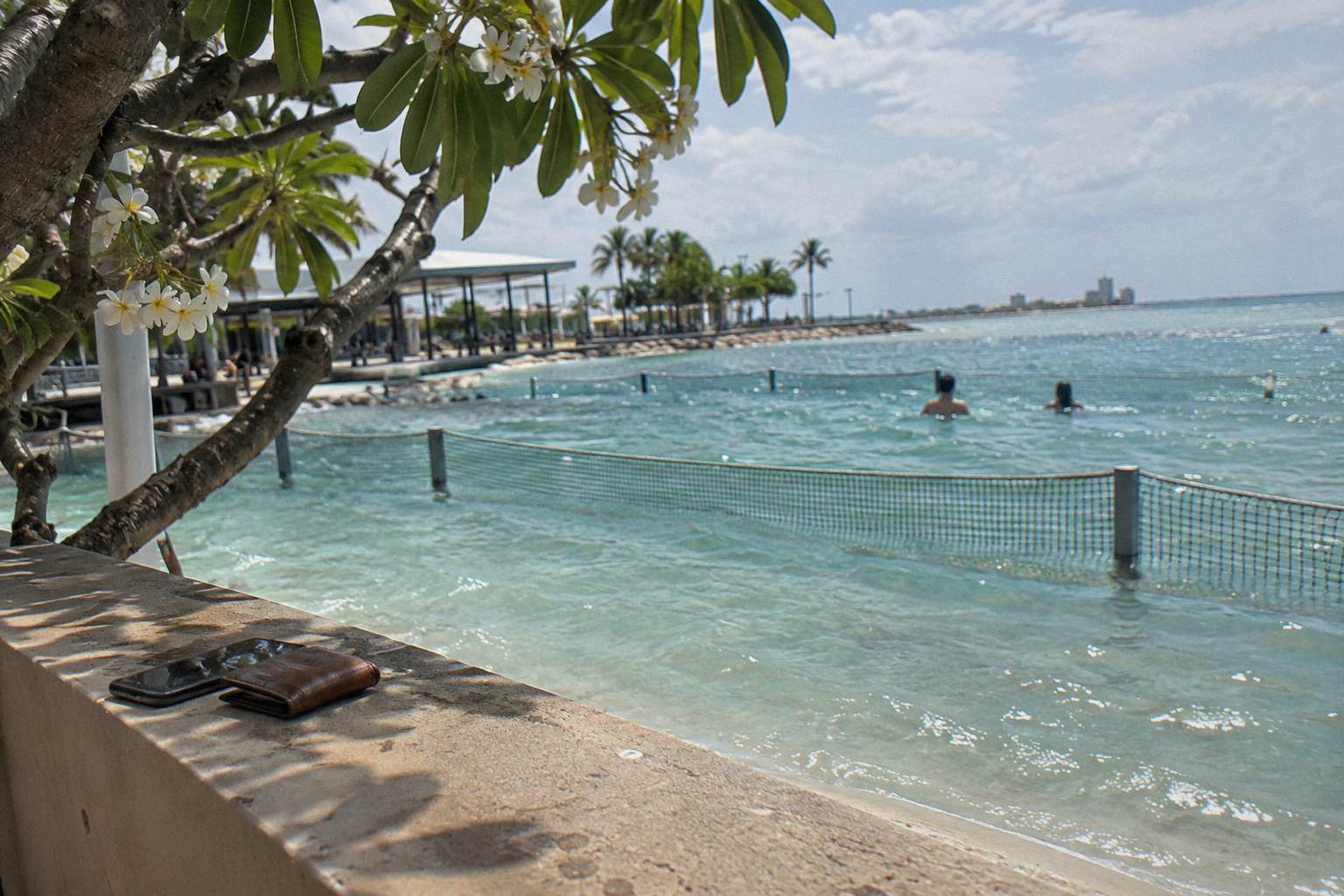
It does matter for the rest of your evening. After a cruise finishes at Stokes Hill Wharf, the Darwin Waterfront's swimming lagoon is the signposted, managed place to cool off, not the harbour itself. The NT advice to swim only in signposted exclusion areas is the rule that keeps visitors safe across the whole Top End, and it applies at dusk as much as at midday. Our longer piece on whether you can swim in the ocean in Darwin covers the full picture.
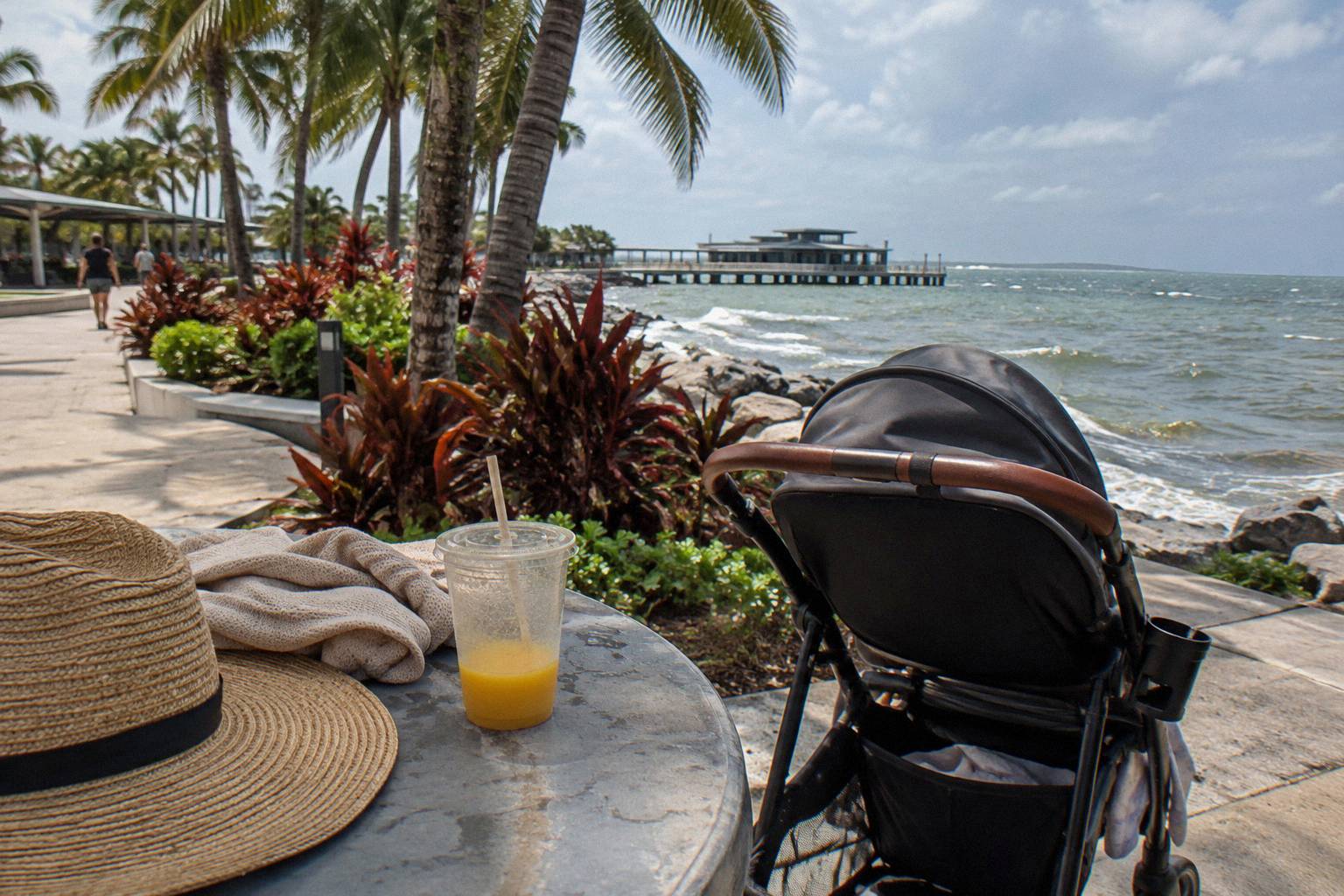
For the cruise itself, pack for the deck rather than the water. Darwin Harbour Cruises' own FAQ suggests a hat, a camera, your ticket or voucher and a light cardigan, describing the harbour at about 25 degrees at night, and suggests ginger tablets for sea sickness while calling the harbour generally calm. That is a warm-evening packing list, not a swimming one, and it is the only packing advice any of these operators publishes. The full kit list is in our guide on what to bring on a Darwin sunset boat.
Does The Time Of Year Matter For Wildlife?
No operator states a wildlife season, so there is no month to recommend for animals. What the weather record does support: reading the Bureau of Meteorology's long-term figures, Darwin's rainfall stays under about 25 mm a month from May to September, with June to September the driest months, which is also when Cape Adieu schedules its Dry season cruises, April to October. Better evenings, not better animals.
This is the section where honesty pays off. Plenty of travel content will tell you the Dry season is best for wildlife, and there is no evidence for that claim about Darwin Harbour. What the Bureau of Meteorology's long-term averages for Darwin Airport actually show is a weather pattern: rainfall under about 25 mm a month from May to September, mean rain days of 1 mm or more down to between 0.2 and 1.7 from June to August, and July and August averaging 10.2 and 10.4 sunshine hours a day with 17.6 and 19.0 clear days respectively. Those are evening-on-the-water numbers, and they are the real reason the Dry season is peak cruise season.
The operators' own scheduling follows the same logic. Cape Adieu's page states its cruises run through the Dry season, April to October, with private charters by enquiry outside those months. Darwin Harbour Cruises and Sail Darwin state no season for their sunset cruises; check the booking page for current sailings. Sail Darwin's terms also make all sailing subject to suitable tides and weather, which is the practical caveat for any month: the captain decides, and on the Sail Darwin sunset sail that means a reschedule or a 100 percent refund if weather stops the trip.
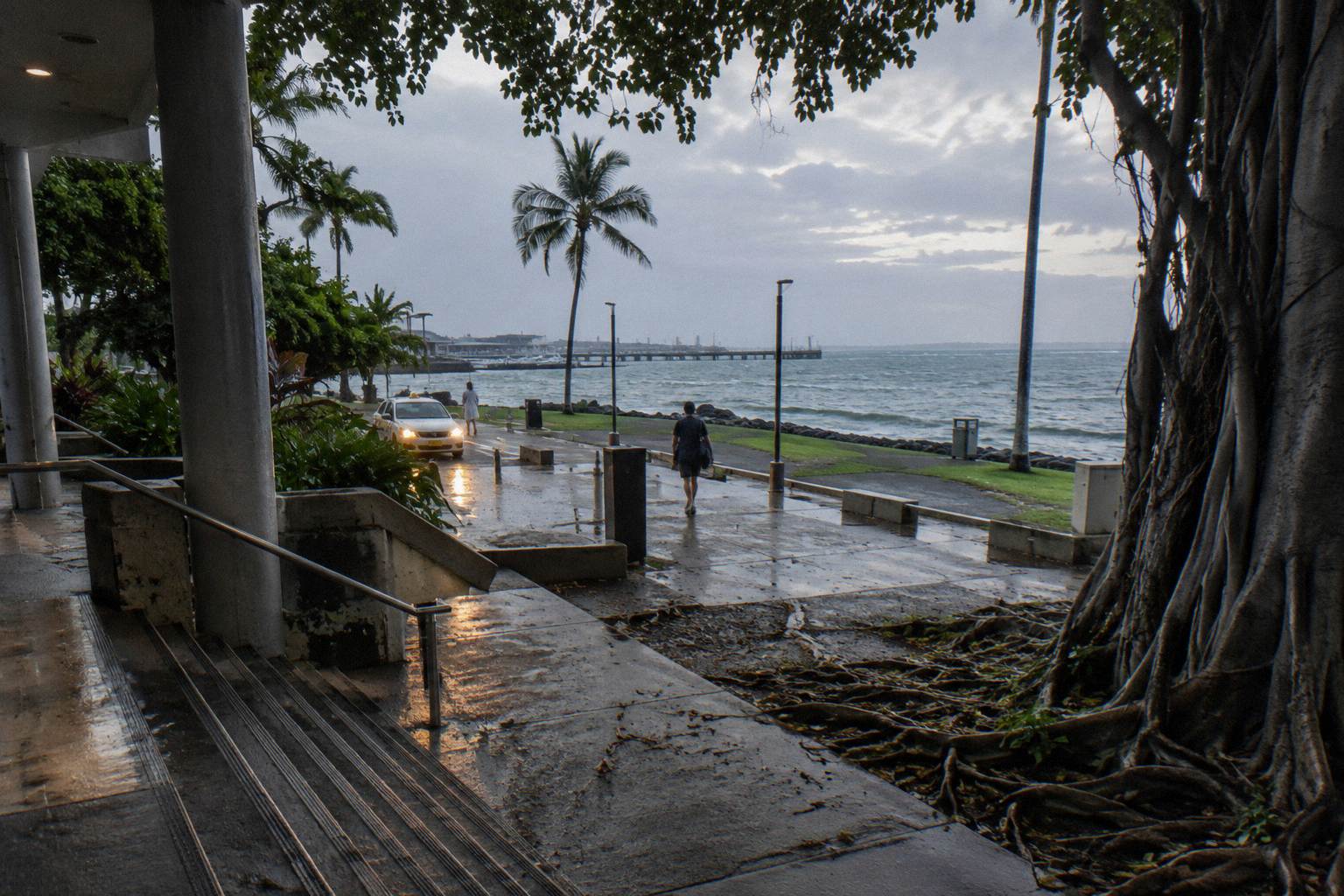
If you are picking a month, pick it for the sky, not the animals. The wet months, roughly November to April reading the BOM figures, bring spectacular cloud and the occasional storm, and a sunset behind a towering storm front is its own show, but it is a gamble the BOM table does not promise either. The dry season evening cruise guide and its wet season counterpart work through both sides of that choice in detail.
| Month | Approximate sunset (a calculation) | Mean rain days of 1 mm or more | Mean maximum temp (C) |
|---|---|---|---|
| January | about 7:19 pm | 19.0 | 31.8 |
| April | about 6:42 pm | 7.3 | 32.8 |
| July | about 6:36 pm | 0.2 | 30.7 |
| October | about 6:43 pm | 5.1 | 33.4 |
Those sunset times come from a NOAA solar algorithm calculation for Darwin's coordinates, not an official table, so treat them as approximate to within a few minutes. The useful insight in them is how little Darwin's sunset moves: only about 50 minutes across the whole year, from about 6:29 pm in late May to early July to about 7:19 pm in December and January. Every cruise here boards ahead of sunset, and the exact time moves with the season, so check the time on your booking confirmation. Our full month by month sunset table carries the whole year.
Which Boats Go Out At Dusk, And What Are They Like?
Four dusk cruises board at Stokes Hill Wharf: the Cape Adieu ketch serving a four-course dinner from A$226 per person, the Charles Darwin catamaran with buffet dining from A$149 for adults and A$89 for youths, the Gaze And Graze grazing cruise, and Sail Darwin's three-hour sail with dinner and sparkling wine, which lists no price. Trips last roughly two to three hours, and none focuses on wildlife watching.
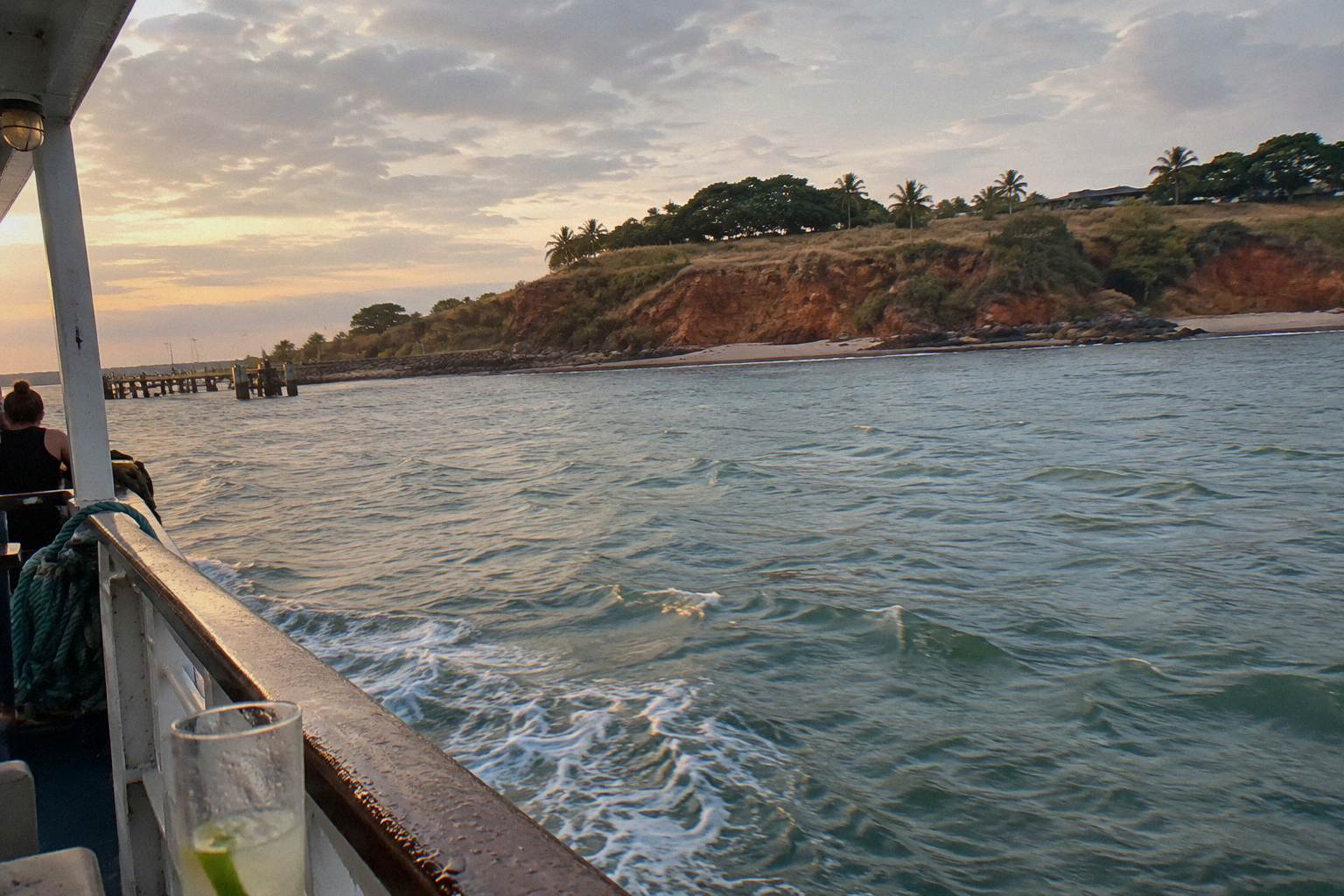
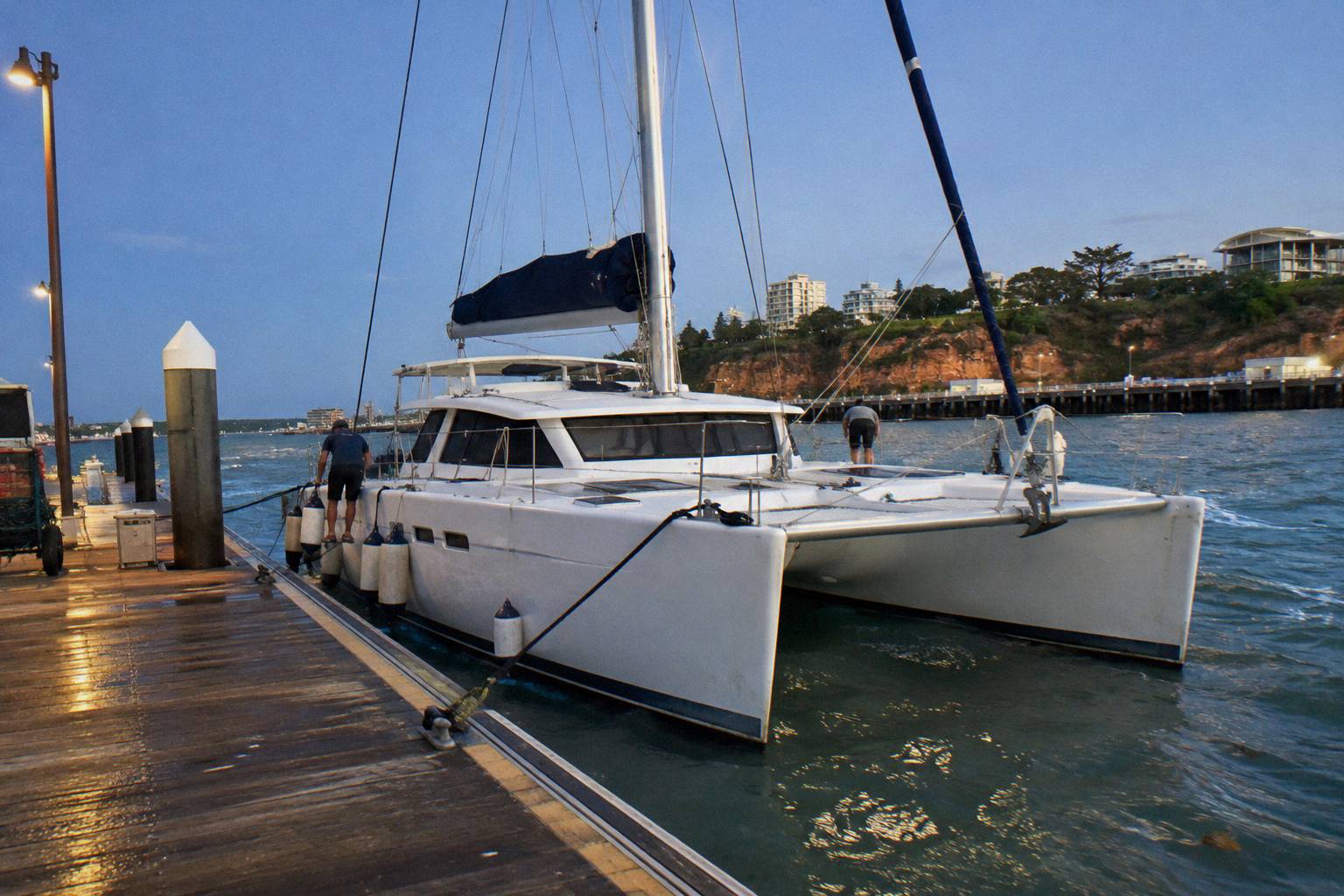
The differences between these boats matter more than the wildlife question, because the boat is the thing you are actually buying. The Cape Adieu is a traditional ketch, Cape Adieu Cruises' only vessel, carrying a chef-prepared four-course dinner built on local produce, with a fully licensed bar and no BYO alcohol, exclusive hire available up to 60 guests, about 2.5 hours on the booking page. It runs the Dry season, April to October, and boards at Dock 3, Stokes Hill Wharf. If a slow, dressed-up dinner evening is the goal, this is the shape of it, and it is the cruise featured on its ketch dinner cruise tour page.
The Charles Darwin, run by Darwin Harbour Cruises from Tenancy 13 at Stokes Hill Wharf, is the other format entirely: a three-level catamaran with an open-air Sun Deck and two air-conditioned indoor levels, serving a Territory-style buffet the operator's FAQ calls a three-course buffet, with beverages for purchase, background music, and a cashless vessel taking EFTPOS and Visa or Mastercard only. It runs about 2 hours, and it is the only cruise here with a published route: leaving Stokes Hill Wharf, running along the Esplanade past the Larrakeyah naval barracks, Cullen Bay and Fannie Bay at about 4 knots, with the skipper free to change route for tides. The operator says both of its vessels stay in the harbour.
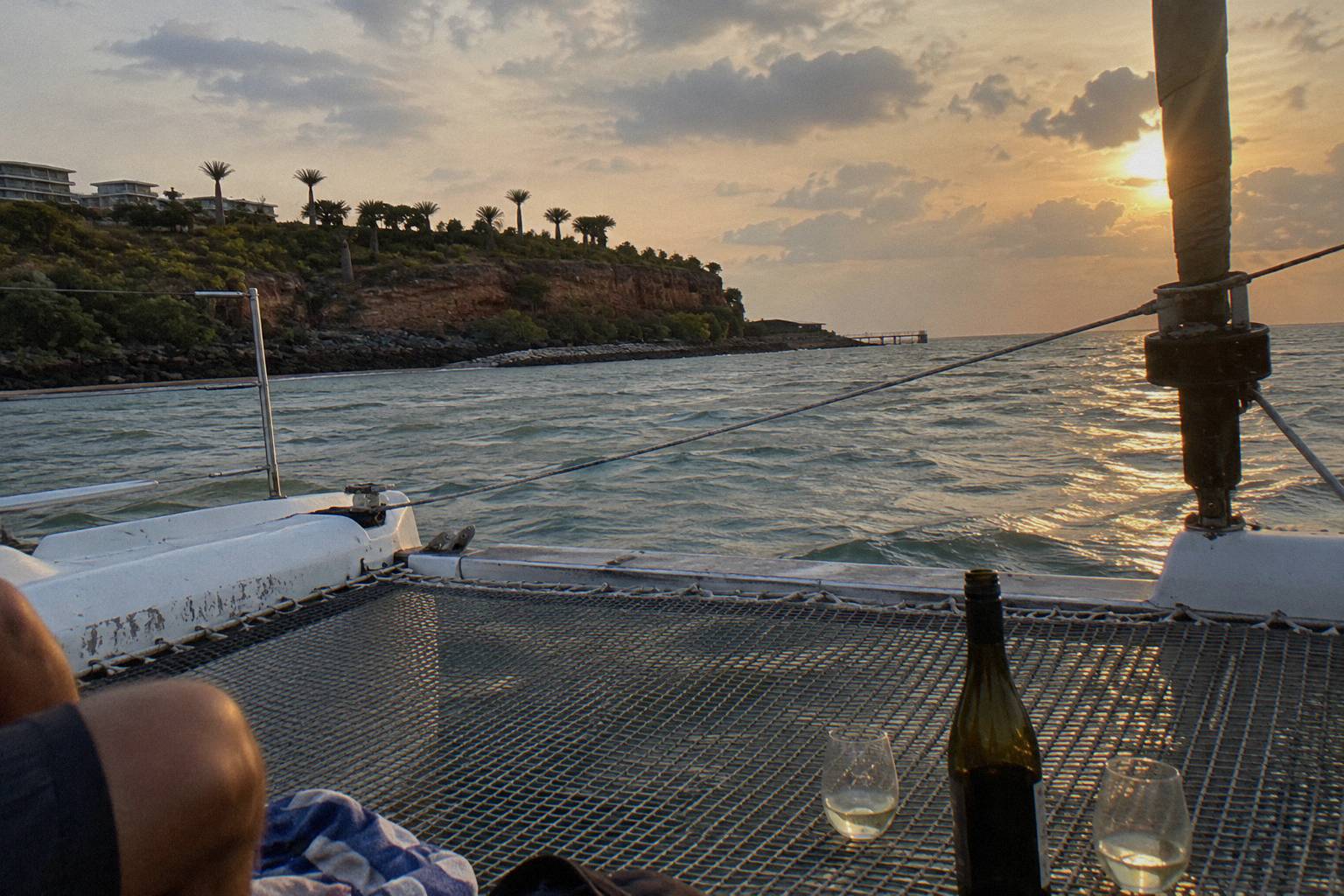
The same operator's Gaze And Graze Sunset Cruise swaps the buffet for a gourmet grazing platter and locally made mango ice cream, with allocated seating on the Sundeck, about 2 hours, price not stated. And Sail Darwin's Sundancer NT, a 15 m aluminium sailing catamaran built 2005, carries a maximum of 30 passengers in-shore on a roughly three-hour sunset sail with dinner and sparkling wine, from Dock 1, with a 10-guest minimum and arrival asked at least 15 minutes before departure. The sparkling wine is unlimited per the listing, and reviewers report bringing their own beer or other drinks, with beer also on sale at about A$5.
If the choice between formats is the real decision, and it usually is, two comparisons on this site break it down: dinner cruise or sunset sail and lugger or catamaran for sunset. The grazing-platter option gets its own treatment in the grazing platter sunset boat guide.
How Do You Plan A Dusk Cruise Around Wildlife Hopes?
Plan the evening you can control and treat wildlife as the bonus: choose your dusk cruise by food, duration and price, aim for a Dry season month for the most dependable sky, board at Stokes Hill Wharf before sunset, follow NT advice to stay out of the water, and greet any dolphin, dugong or turtle as a gift, since no operator promises one.
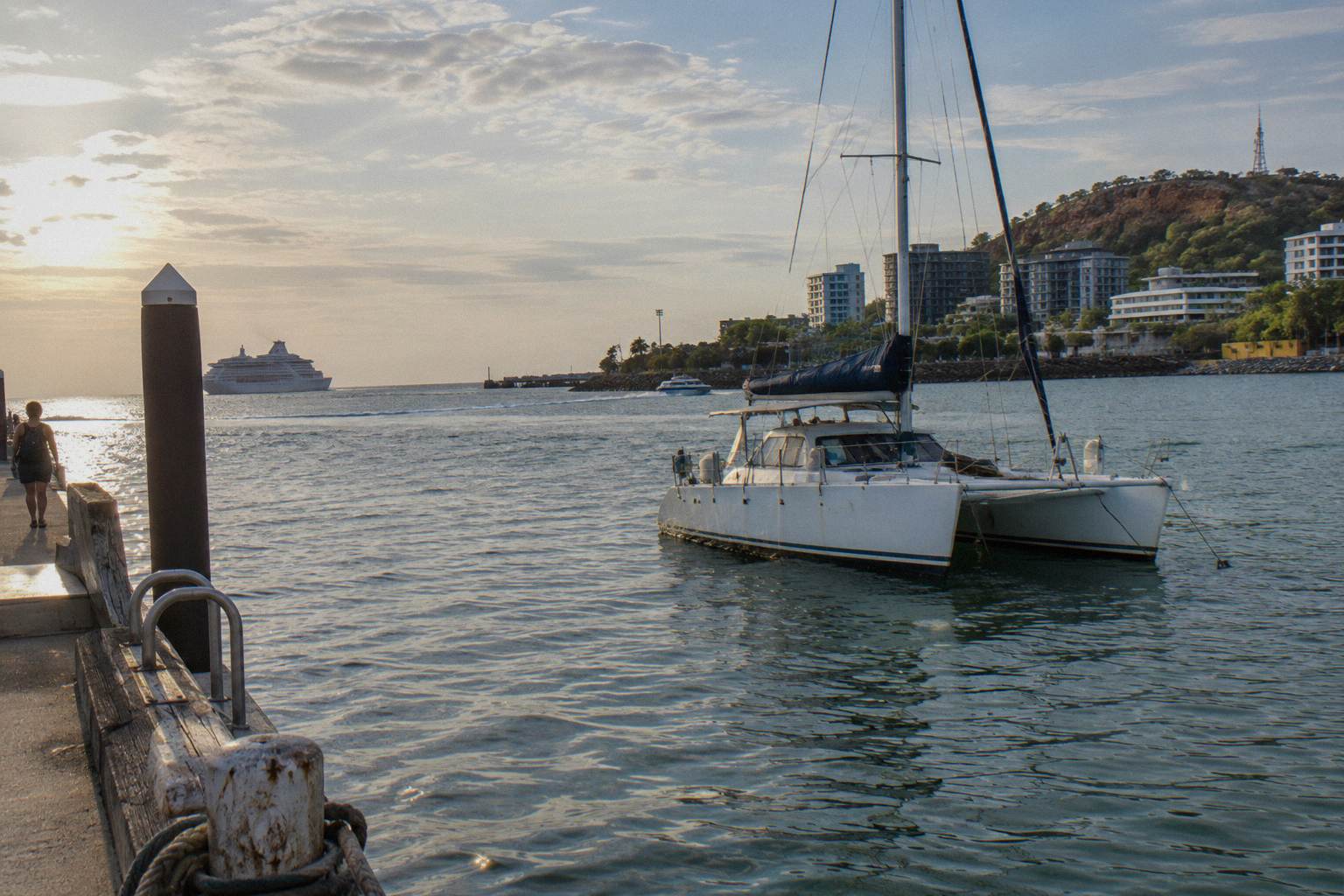
Start with the guarantee. Every cruise here puts you on warm tropical water, at the hour the light is best, with food and drink handled. That is what you are buying. Then layer the maybes: a calm harbour evening per the operator's own description, a chance of the sort of sky the tropics specialise in, and a low but real possibility of a dolphin or turtle in the water, framed by the harbour operators who know it best as an opportunity to see, no guarantee. Book the guarantee, enjoy the maybes.
Position yourself for the maybes without spending extra on them. On the Charles Darwin, the open-air Sun Deck is where you would want to be watching the water; on the Gaze And Graze cruise, Sundeck seating is allocated, so note that when you book if the water matters to you. On the Cape Adieu ketch and the Sail Darwin catamaran, the vessels are smaller and the decks are closer to the water, which is pleasant for its own sake; neither operator states anything about wildlife viewing. Keep your eyes on the water in the last hour before sunset, because that is when the harbour's surface activity, if there is any, tends to show.
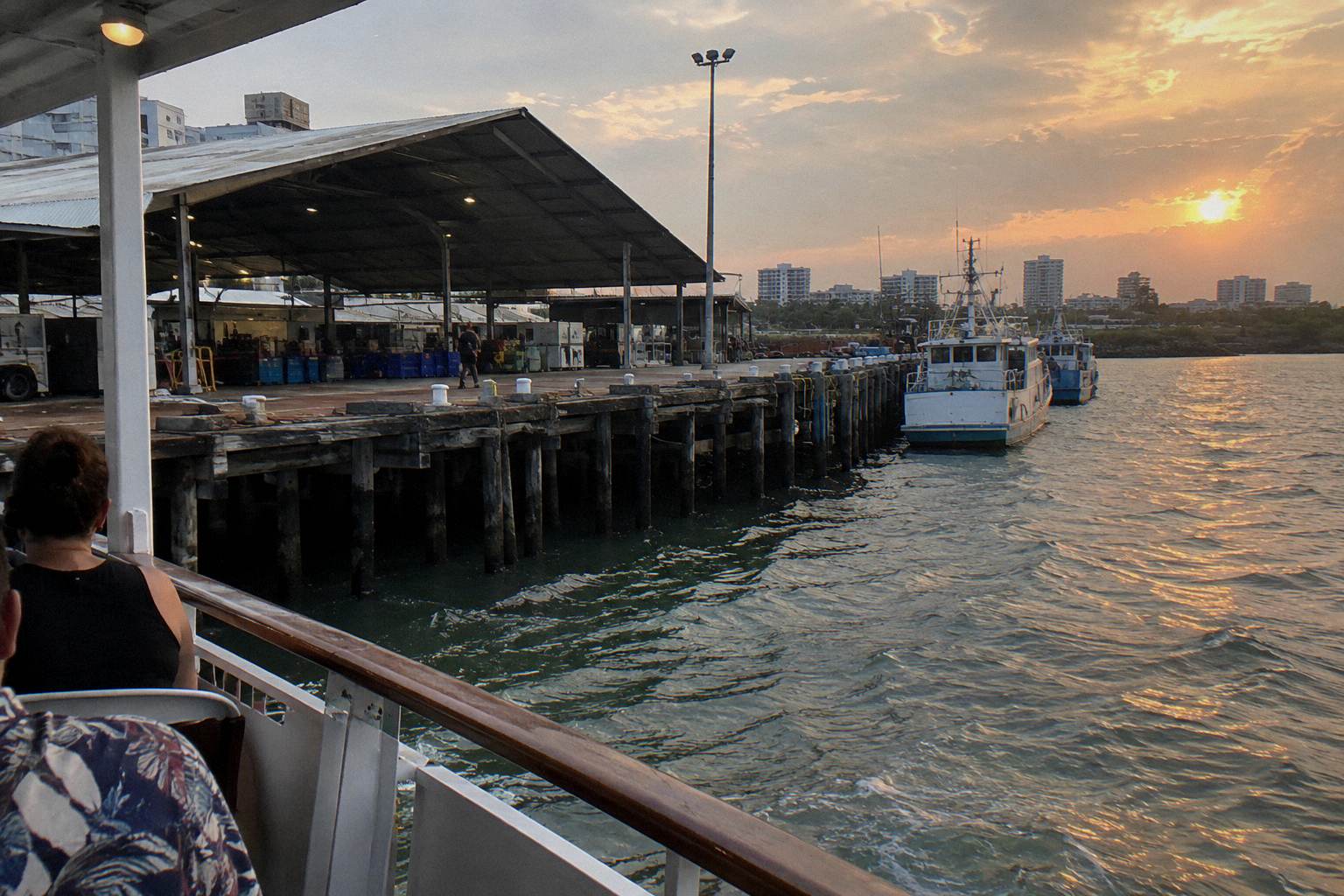
Two practical rules finish the plan. First, the water rules from NT Government advice: no swimming from the boat or the foreshore, stinger season or not, and the harbour is a no-tolerance area for crocodiles rather than a swimming spot. Second, the booking rules: check the boarding time on your confirmation rather than any published clock time, since operators' pages differ and the time moves with the season, and be aware parking details at Stokes Hill Wharf are not published, so allow time to arrive early, especially if a 15-minute-early arrival is asked of you. Beyond that, read the cancellation terms on the booking page for your specific ticket: Sail Darwin allows no changes or cancellations within 48 hours of departure, while the other operators' windows are not published.
For families, the fare structure on the Charles Darwin works in your favour for an evening like this: youth ages 4 to 17 online from A$89 and infants 0 to 3 free, with the operator saying online booking saves up to 9 percent compared with walk-up. Cape Adieu welcomes families and asks for children's ages at booking. Sail Darwin requires under 18s to be accompanied by an adult. The fuller picture, strollers included, is in our guide to a sunset boat with kids in Darwin.
One last framing thought before the boats themselves. A dusk cruise on this harbour is one of the few tourist products where the honest version is still excellent: a warm evening, a meal on the water, a sky the tropics paint for free, and a small chance of something remarkable surfacing alongside. Readers who buy it that way are the ones who write the good reviews. Readers who buy it as a wildlife tour are the ones who write the disappointed ones.
Common Questions About Wildlife On Darwin Harbour
Can You See Wildlife From A Darwin Harbour Boat At Dusk?
Sometimes, but nothing is promised. The only wildlife claims on the harbour come from other harbour operators: City of Darwin Cruises describes bottlenose dolphins, turtles, snubfin dolphin and dugong as an opportunity to see with no guarantee, and Spirit of Darwin Cruises says batfish feed at the bow of its own cruises with queenfish, trevally, barramundi and even sharks seen on some tours. None of the four cruises states a wildlife sighting.
Are There Crocodiles In Darwin Harbour?
Crocodiles occur in the harbour, and the NT Government manages it as a no-tolerance area for them. No crocodile count, sighting rate or risk figure is published, and no cruise here states a crocodile sighting. NT advice is to swim only in signposted exclusion areas, and none of these cruises includes swimming.
Can You See Dolphins In Darwin?
Bottlenose dolphins and the Australian snubfin dolphin are named on the harbour by City of Darwin Cruises, another harbour operator, as an opportunity to see on its own harbour trips, with no guarantee. No cruise bookable here states a dolphin sighting, so book for the evening and treat dolphins as a possible bonus.
Is It Safe To Swim In Darwin Harbour?
Do not count on it. The harbour is a no-tolerance area for crocodiles, NT Government advice says box jellyfish are more likely in NT waters from 1 October to 1 June though stings have been recorded in every month, and the advice is to swim only in signposted exclusion areas. Do not swim from a cruise boat or the foreshore.
What Is The Best Month For A Darwin Harbour Cruise?
No operator states a wildlife season, so no month is better for animals. Reading the Bureau of Meteorology's figures, rainfall stays under about 25 mm a month from May to September, with June to September the driest, and Cape Adieu schedules its cruises through the Dry season, April to October. Choose by weather and sunset time, not wildlife.
Do Any Darwin Dinner Cruises Advertise Wildlife?
None of the four cruises does. The wildlife wording on this harbour belongs to two other harbour operators with no bookable listing here, and both hedge carefully. Any cruise that promises animals is promising something no harbour operator will put in print, so treat that promise with caution.