
Darwin Weather By Month: Picking A Month For A Harbour Evening
Darwin sits close enough to the equator that its sunset barely moves all year, but its rainfall swings from almost nothing to more than 400 mm a month. Reading the Bureau of Meteorology averages month by month is the cleanest way to pick when to book a harbour evening.
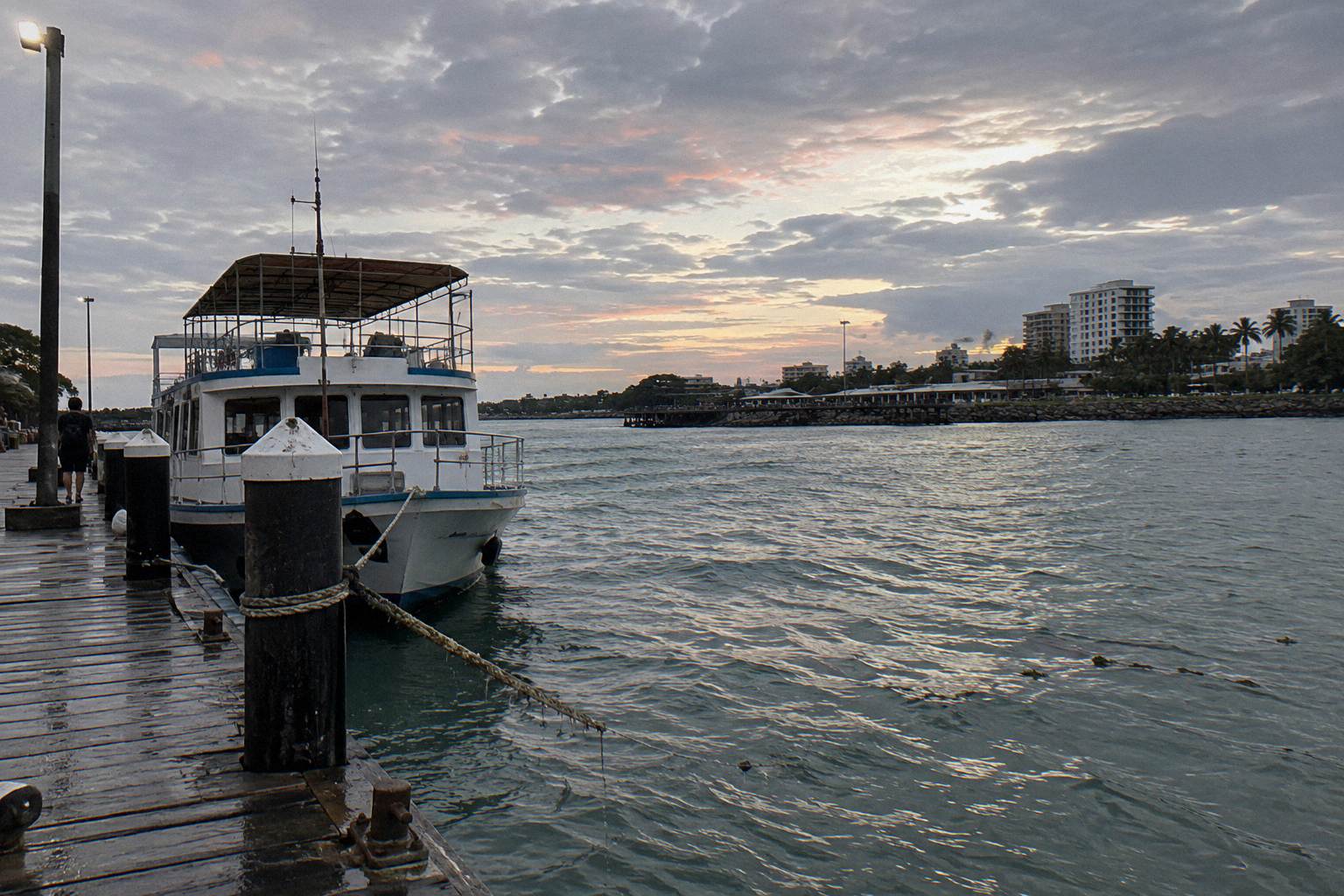
Short answer
Reading the Bureau of Meteorology long-term averages, Darwin's driest months are June to September, each with under 5 mm of rain and mean maximum temperatures of 30.7 to 32.7 degrees. Sunset stays between about 6:29 pm and 7:19 pm all year. Cape Adieu states its dinner cruises run April to October; other operators state no season.
Darwin is only about twelve degrees south of the equator, and that single fact shapes everything about planning an evening on the harbour. Daylight length barely changes. Sunset shifts by roughly 50 minutes across the whole year, from about 6:29 pm in late May to early July to about 7:19 pm in December and January. What changes dramatically is water: the Bureau of Meteorology's long-term averages for Darwin Airport show monthly rainfall ranging from 1.0 mm in July to 432.1 mm in January.
That swing is the real decision. A reader mapping weather to a trip is choosing the month to book the boat, and the month chosen decides whether the evening feels dry and mild, humid and storm-prone, or somewhere between. This guide reads the official climate averages alongside the computed sunset table and the cruise calendar, so the choice rests on figures rather than on brochures.
Every climate number below comes from the Bureau of Meteorology's long-term monthly means for Darwin Airport, station 014015, drawn from 85 years of records covering 1941 to 2026. The sunset times are a calculation from a NOAA solar algorithm, accurate to within about two minutes, and are not boat times. Where an operator states its own season or cancellation rule, that statement is quoted as the operator's, never generalised across the fleet.
What Does Darwin Weather Actually Do Month By Month?
The Bureau of Meteorology's 85-year averages for Darwin Airport split the year cleanly in two: May through September each average under 25 mm of rain, while November through April averages 69.3 mm to 432.1 mm per month. Mean maximum temperatures stay in a narrow band, 30.7 to 33.4 degrees, all year. Rain days tell the same story, from 0.2 per month in July to 19.0 in January.
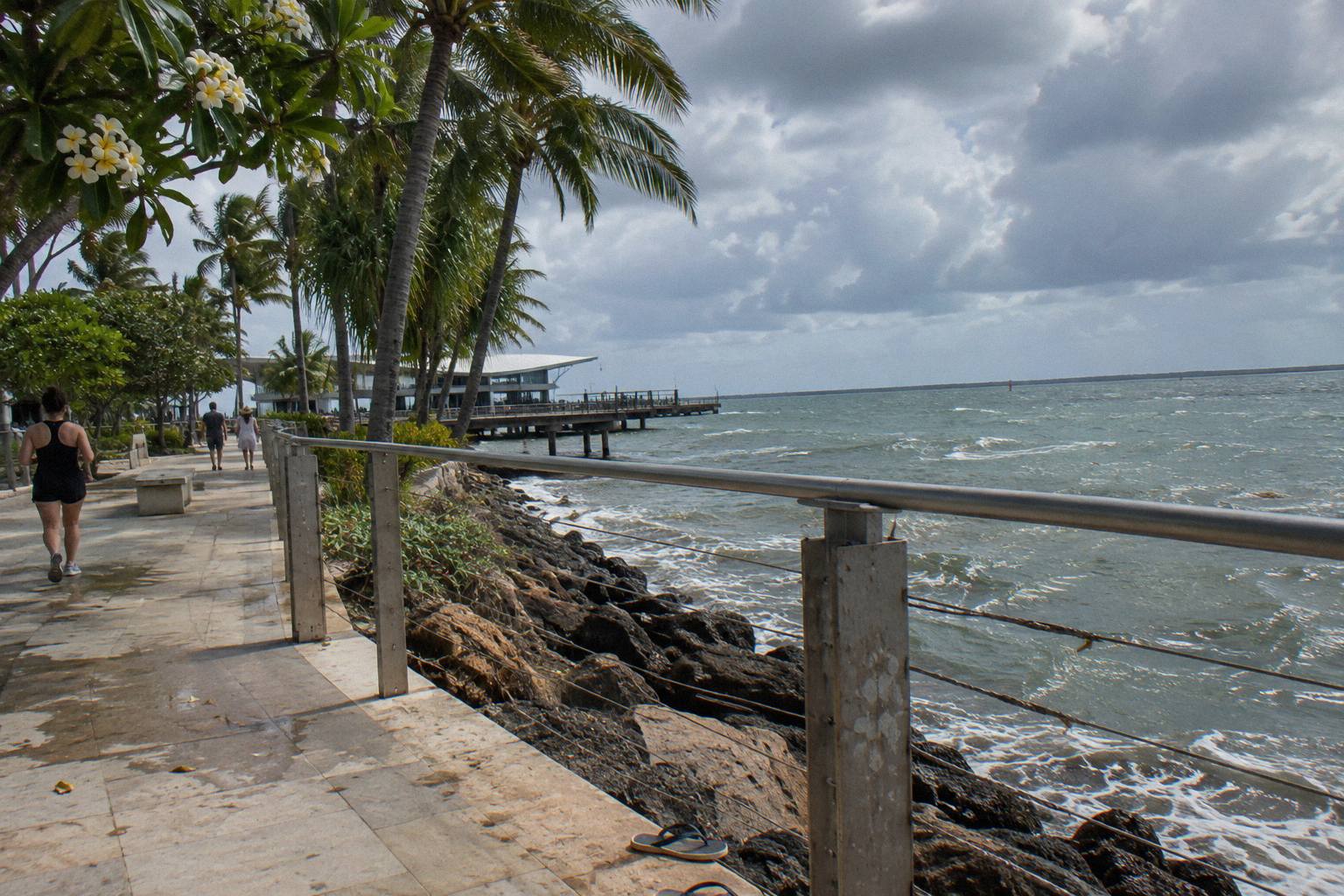
Start with the raw numbers. The table below is the Bureau of Meteorology's long-term monthly means for Darwin Airport, published for station 014015 and drawn from 85 years of records. Reading the BOM figures, the pattern is hard to miss: rainfall stays under about 25 mm a month from May to September, and the wet months run roughly November to April. The BOM page itself prints no wet-season definition, so treat those labels as a reading of the data rather than an official boundary.
| Month | Mean rainfall (mm) | Rain days (1 mm or more) | Mean max temp (C) |
|---|---|---|---|
| January | 432.1 | 19.0 | 31.8 |
| February | 372.4 | 17.8 | 31.5 |
| March | 313.1 | 16.7 | 32.0 |
| April | 102.4 | 7.3 | 32.8 |
| May | 20.0 | 1.6 | 32.1 |
| June | 1.8 | 0.3 | 30.8 |
| July | 1.0 | 0.2 | 30.7 |
| August | 4.4 | 0.3 | 31.6 |
| September | 16.7 | 1.7 | 32.7 |
| October | 69.3 | 5.1 | 33.4 |
| November | 146.5 | 10.1 | 33.4 |
| December | 255.5 | 14.2 | 32.8 |
The source is the Bureau of Meteorology's climate averages table for Darwin Airport station 014015, and the annual total across those months is 1732.4 mm. Notice how flat the temperature column is. Darwin never has a cold month in the averages, and even the "cooler" June and July means sit at 30.8 and 30.7 degrees. Warm evenings are a constant, so clothing and comfort planning is about rain and humidity patterns, not about cold. A traveller packing for July needs the same light wardrobe as one packing for November.
The rain-day column matters more for a sunset cruise than the rainfall column. A month can average heavy falls concentrated in overnight storms and still deliver clear evenings, while a moderate total spread across many days can mean cloud at dusk more often. January averages 19.0 days of rain of 1 mm or more, which is well over half the month. July averages 0.2. That is the spread a boat booker has to work with. Sunshine and clear-day figures sharpen the picture further: July averages 17.6 clear days and August 19.0, against January's 0.6. Mean daily sunshine runs 5.7 hours in January against 10.2 in July and 10.4 in August. For anyone whose whole point is the sunset itself, those clear-day counts are the difference between a likely open sky and a likely gamble.
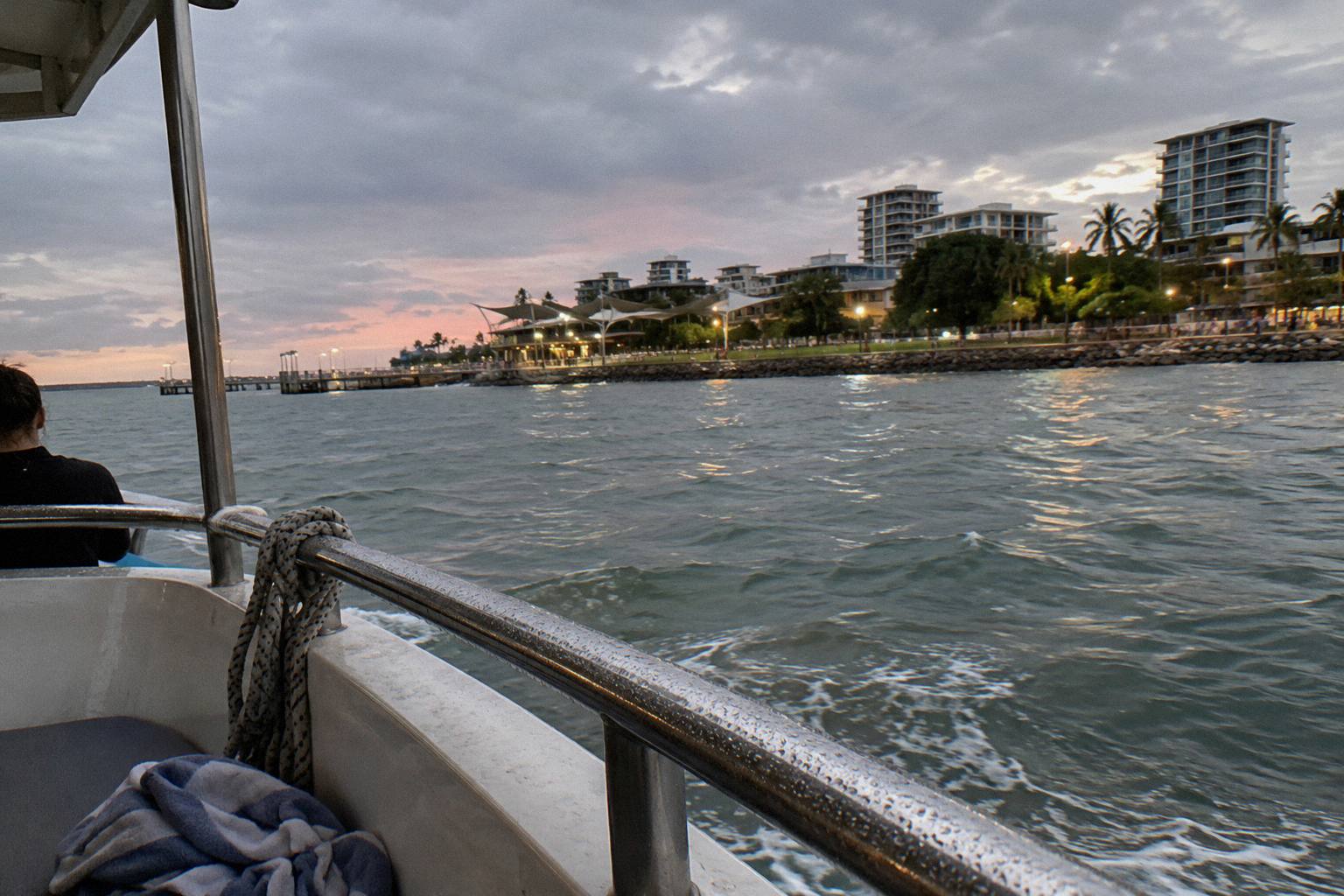
One more reading of the table is worth pausing on. The transition between the two halves of the year is fast. March still averages 313.1 mm, April drops to 102.4 mm, and by May the figure is 20.0 mm. The build-up in spring is just as sharp in reverse: September sits at 16.7 mm, October rises to 69.3 mm, November reaches 146.5 mm. A two-week shift in travel dates around either shoulder can land in a very different rainfall regime, which is exactly why thinking in months rather than in a vague "winter trip" is worth the effort here.
Which Months Give You The Best Chance Of A Clear Evening?
June to September give the clearest evenings by every measure in the Bureau's data: under 5 mm of rain each month, 0.2 to 1.7 rain days, and 17 to 19 clear days in July and August. May and October sit either side as shoulder months, with 20.0 mm and 69.3 mm respectively. November through March each average 146.5 mm or more.
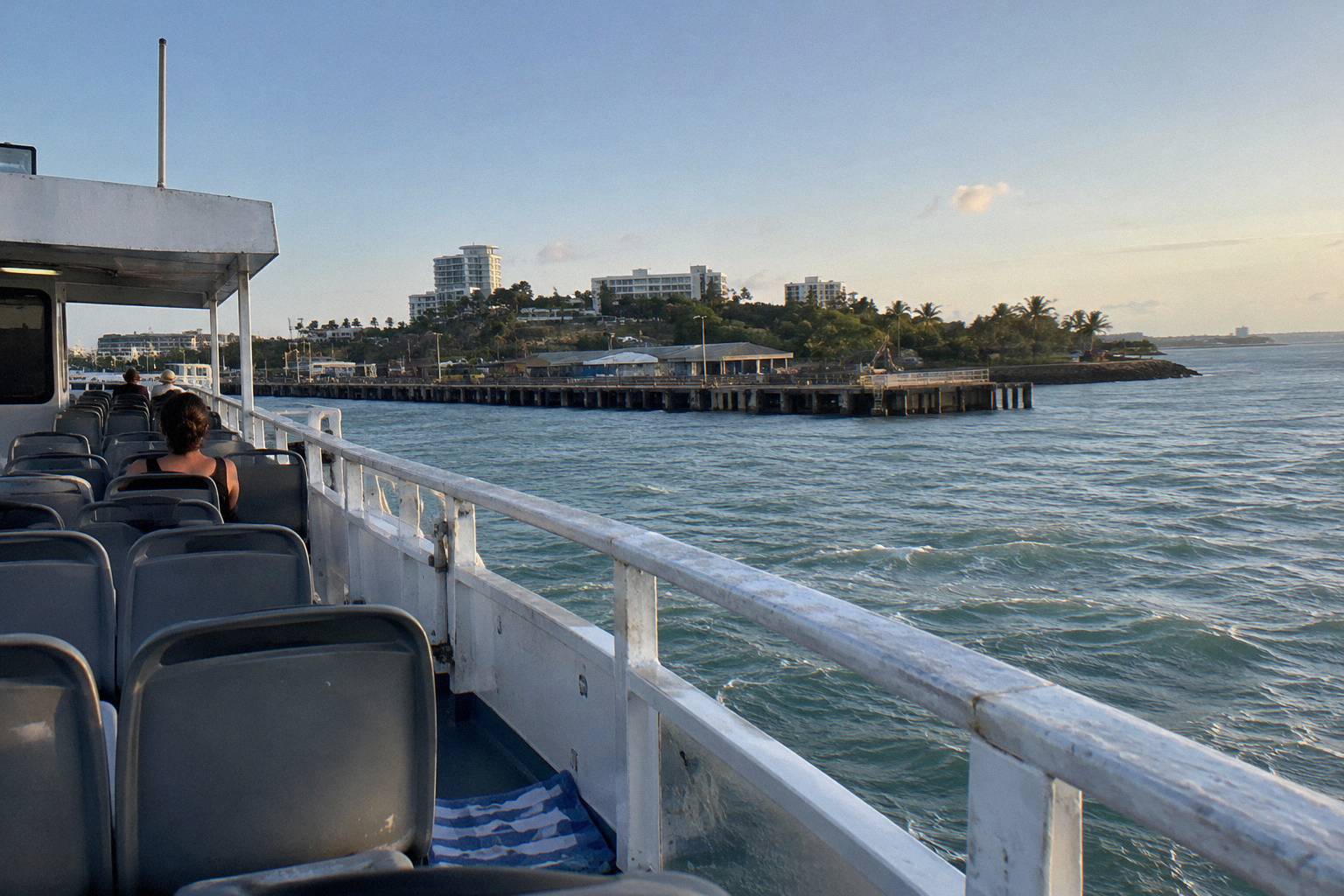
If the goal is simply the highest probability of an unobstructed sunset over the water, the averages point at July and August first. August combines 4.4 mm of rain, 0.3 rain days, 19.0 clear days and 10.4 mean daily sunshine hours, which is about as favourable as the record gets. June and September are close behind, and each of the four months keeps mean maximum temperatures between 30.8 and 32.7 degrees, warm without the October and November peaks of 33.4.
May deserves more attention than it usually gets. Its 20.0 mm monthly mean and 1.6 rain days sit firmly in the dry pattern, and its mean maximum of 32.1 degrees is no hotter than September's 32.7. The one trade-off is daylight timing: sunset in May is near its earliest for the year, about 6:29 pm mid-month, so an evening cruise means an earlier start than a December booking. Whether that matters depends on the rest of the day's plan. May also falls inside Cape Adieu's stated April-to-October sailing season, so the full dinner-cruise calendar is available, which is not true of every dry-side month on the roster.
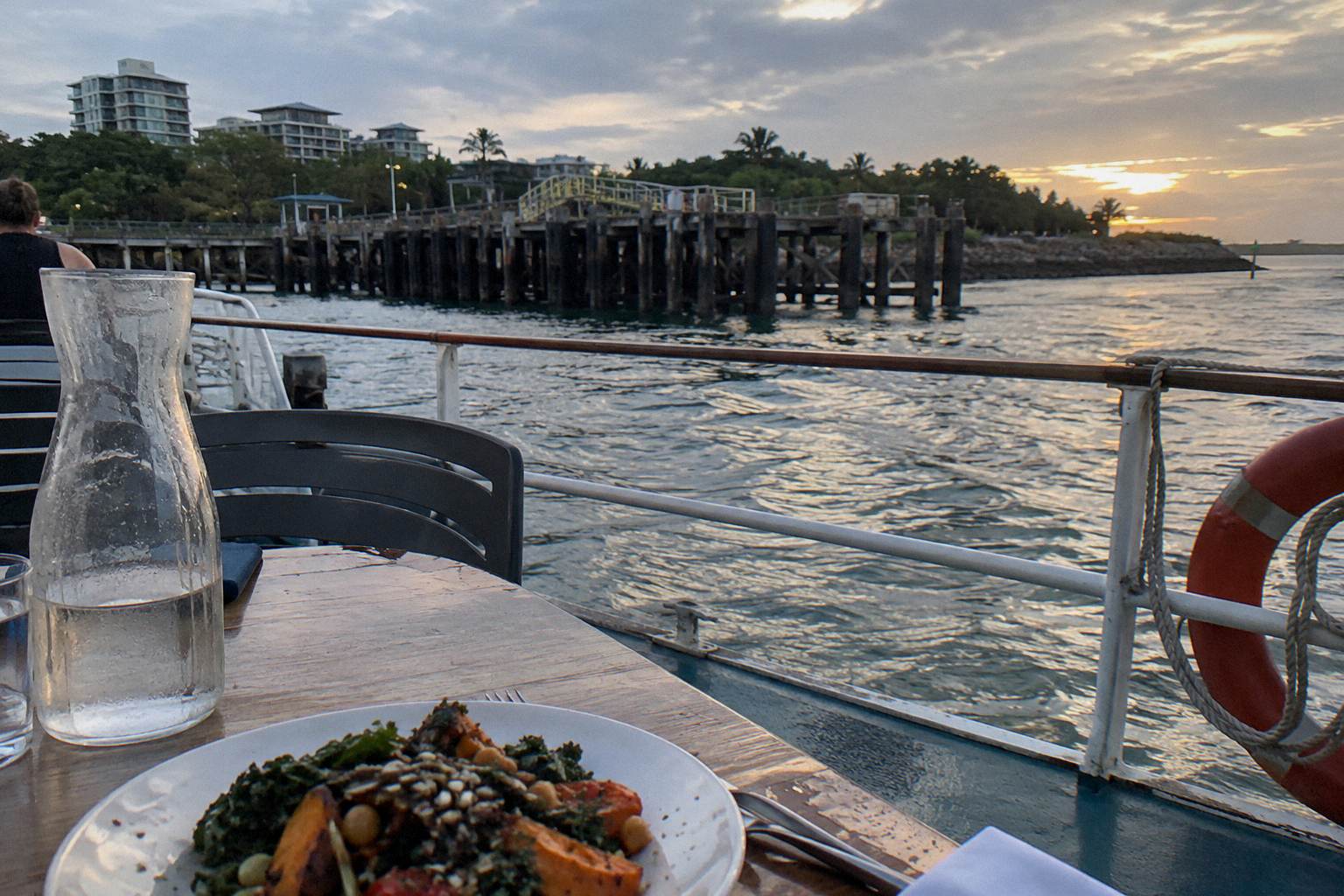
October is the pivot month. Rainfall jumps to 69.3 mm and rain days to 5.1, yet the month also carries the year's equal-highest mean maximum at 33.4 degrees alongside November. It is a month of transition: still plenty of usable evenings on the averages, but with a real chance of evening cloud or a storm rather than the near-certainty of clear sky that mid-year delivers. Anyone booking October should read the operator's weather and cancellation terms with particular care, and keep a shore-side dinner as a fallback the same evening.
Three dinner options cover the range of formats and budgets for a clear-season evening. The operator's price for the four-course ketch cruise is from A$226 per adult, the Charles Darwin buffet from A$149 adult and from A$89 for youth aged 4 to 17, and the Sail Darwin sunset sail states no price, so check the live listing.
Whichever format appeals, the weather logic does not change: the mid-year months are the statistical sweet spot, and the shoulder months of May and October trade a little reliability for warmer afternoons and, in October's case, the year's highest average daytime heat. The choice between a ketch dinner, a buffet catamaran and a sailing sunset is a format choice first, and a calendar choice second.
What Time Is Sunset In Darwin Each Month?
A solar calculation puts Darwin's sunset between about 6:29 pm and 7:19 pm year round, a total swing of roughly 50 minutes. The earliest sunsets fall late May to early July at about 6:29 pm; the latest are December to January at about 7:19 pm. Day-to-day change is under a minute, so any date in a month is close to that month's figure.
The times below were computed with a NOAA solar algorithm for Darwin's coordinates, latitude -12.4634, longitude 130.8456, in Australian Central Standard Time. The Northern Territory does not observe daylight saving, so these times hold all year. Each figure is for the 15th of the month and is accurate to about plus or minus two minutes. These are approximate calculation results, not an official table, and they are definitely not boat times: operators board ahead of sunset, and departure clocks move with the season, so check the time on your booking confirmation.
| Month | Approximate sunset (15th) | Month | Approximate sunset (15th) |
|---|---|---|---|
| January | about 7:19 pm | July | about 6:36 pm |
| February | about 7:16 pm | August | about 6:42 pm |
| March | about 7:02 pm | September | about 6:42 pm |
| April | about 6:42 pm | October | about 6:43 pm |
| May | about 6:29 pm | November | about 6:52 pm |
| June | about 6:29 pm | December | about 7:07 pm |
The practical reading is that Darwin has no bad sunset month, only earlier and later ones. A June dinner cruise will sit at the early end of the evening; a January one starts a good fifty minutes later. Travellers with young children, or anyone wanting dinner and then a full night out afterwards, may prefer the later sunsets of the wet-month end of the year. Photographers chasing warm low light may prefer the mid-year clear skies even at the earlier hour, a trade-off covered in more depth in the harbour sunset photography guide.
The narrow sunset band also means dinner cruise durations stay consistent. These evening cruises run about two hours for the Charles Darwin buffet and the Gaze And Graze cruise, about 2.5 hours for the Cape Adieu four-course dinner, and about 3 hours for the Sail Darwin sunset sail. Sunset's small annual swing keeps all four anchored to roughly the same part of the evening whenever they sail, so a cruise that ends around 9 pm in one month ends around 9 pm in another, only shifting with the month's sunset figure.
The buffet catamaran is the family-friendly option on the roster, with youth fares from A$89 for ages 4 to 17 and infants 0 to 3 free, and its two air-conditioned indoor levels give a comfortable fallback if a shoulder-month evening turns cloudy.
Its Territory-style buffet caters for vegetarian and gluten-free guests per the operator's FAQ, and the vessel is cashless, so bring a card for any beverages. The operator also says booking online is cheaper than walk-up, saving up to 9 percent on the buffet fares.
Do The Dinner Cruises Run All Year Or Only In The Dry?
Season statements differ by operator, and the honest approach is to keep them separate rather than blend them into one calendar. Cape Adieu's own page says its cruises run April to October and that outside those months it offers private charters by enquiry. Darwin Harbour Cruises and Sail Darwin publish no season for their sunset products: no season stated, check the booking page. City of Darwin Cruises, a context operator not bookable on this site, states a dry season of 1 May to 30 September for its group rate.
| Operator and product | Season stated by the operator | Notes from the operator's own pages |
|---|---|---|
| Cape Adieu, Four-Course Ketch Sunset Dinner Cruise | April to October (Dry season) | Private charters by enquiry outside those months |
| Darwin Harbour Cruises, Charles Darwin Buffet Dinner Cruise | No season stated | Check the booking page |
| Darwin Harbour Cruises, Gaze And Graze Sunset Cruise | No season stated | Check the booking page |
| Sail Darwin, Sunset Sail With Dinner And Sparkling Wine | No season published | All sailing subject to suitable tides and weather |
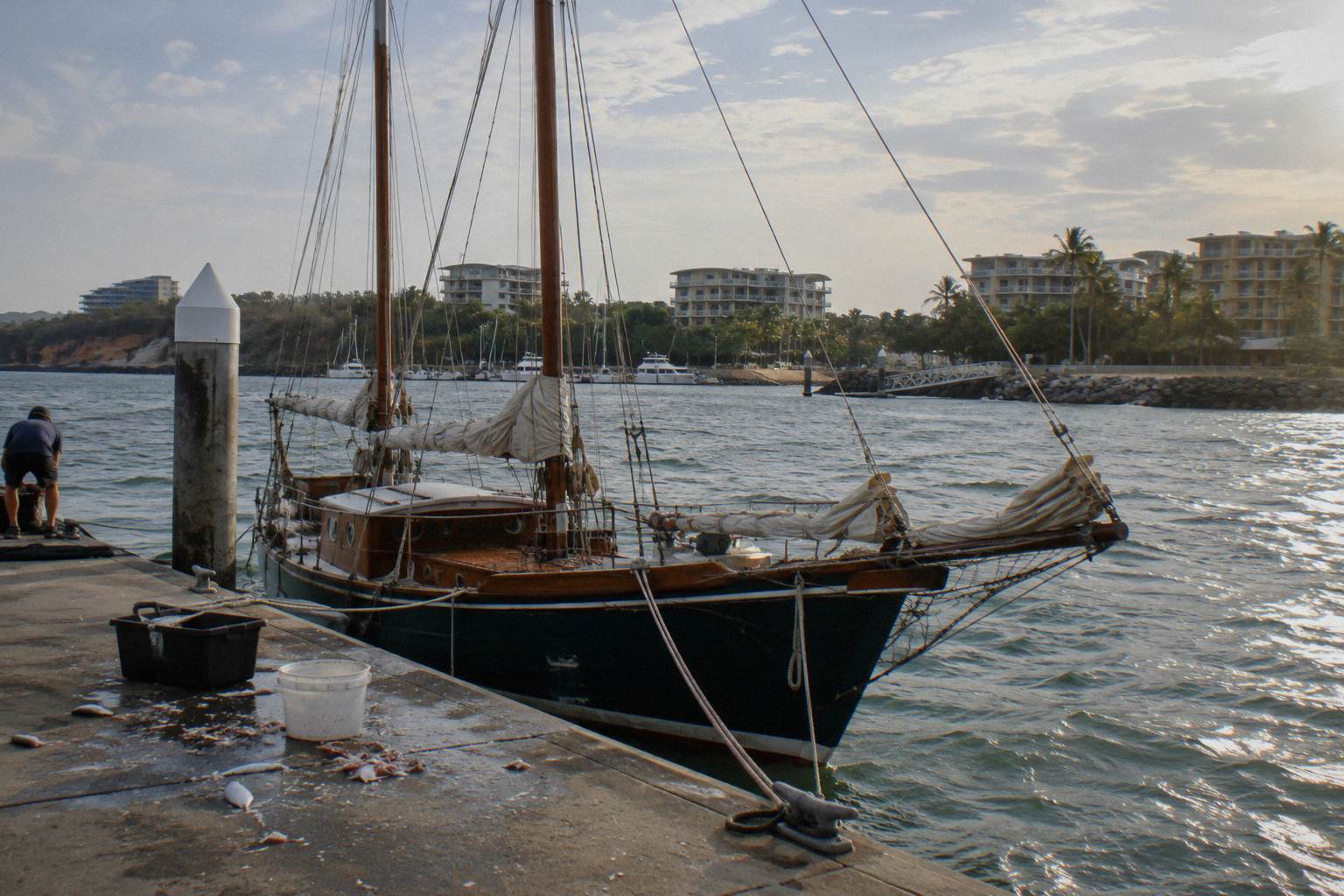
Align that table with the climate data and a pattern emerges. The one operator that publishes a season, Cape Adieu, spans April to October, which covers the entire dry half of the averages plus both shoulder months. That window matches the BOM reading almost exactly: April's rainfall has already fallen to 102.4 mm from March's 313.1, and October's 69.3 mm is still far below the November rise to 146.5. Whoever set that sailing calendar was reading the same climate this guide tabulates.
For the months when the ketch is not running scheduled dinners, roughly November to March, the options depend entirely on what the other operators are sailing. Since neither states a season, the practical move for a wet-month trip is to check the live listings for the dates in question rather than assume anything about availability. The three-hour sunset sail is the longest evening on the roster, so it suits the wet-month late sunsets well if it is sailing on your dates.
The four-course dinner cruise is the anchor product for the dry-season window, and it is this site's featured tour for good reason: a chef-prepared four-course dinner with local produce, about 2.5 hours on the water, from A$226 per person on the operator's own pricing, boarding at Dock 3, Stokes Hill Wharf.
Dietary requests, gluten-free, vegetarian or allergies, need at least 48 hours' notice with this operator, so flag them when booking rather than at the dock. This operator does not publish its cancellation terms, so check the booking page.
What Happens If The Weather Turns On The Night?
The clearest operator statement is Sail Darwin's terms: all sailing is subject to suitable tides and weather, and the captain decides, with a reschedule or a 100 percent refund if weather stops the sail. Darwin Harbour Cruises says tides decide how close to the coast the vessel can go and that the skipper may change the route. None of the operators publishes full cancellation terms beyond this.
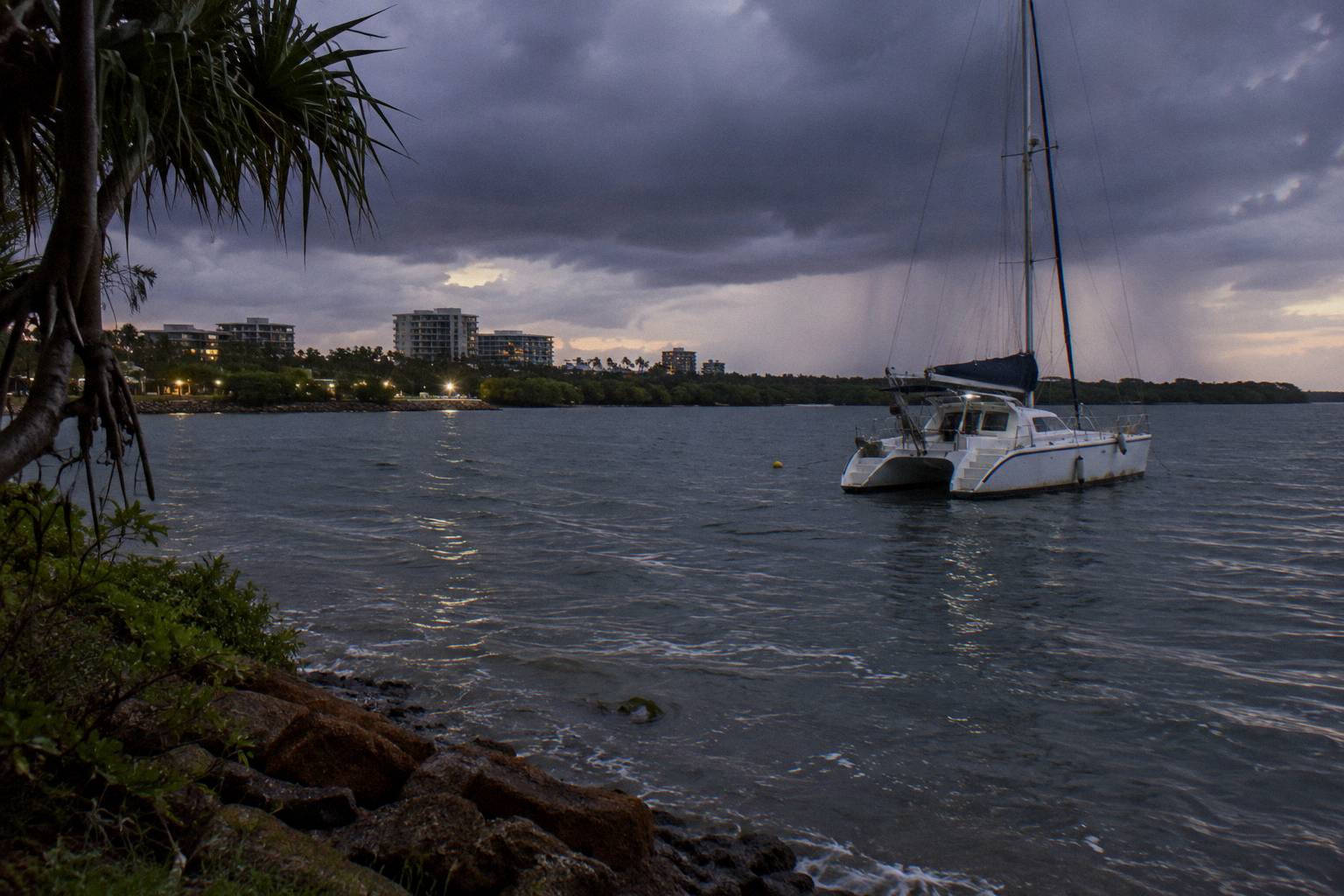
Weather cancellation policy is the detail most worth reading before booking in the shoulder and wet months, and the only detailed published statement belongs to Sail Darwin. Its terms and conditions say tickets are refundable or transferable, but there are absolutely no changes or cancellations within 48 hours of departure, the captain decides on weather with a reschedule or a 100 percent refund, and there is no refund for missing the boat. Guests must arrive at least 15 minutes before departure. If fewer than 10 guests are booked, the operator reschedules or refunds in full, with sole charters excepted.
Tides shape the evening as much as rain does. Darwin has very large tides, and Darwin Harbour Cruises says tides decide how close to the coast the Charles Darwin can go, that tides affect gangway access, and that the skipper may change the route. The Bureau of Meteorology publishes NT tide tables for Darwin covering 2026 and 2027 for anyone who wants the actual predictions; no operator ties its cruises to a specific tide figure.
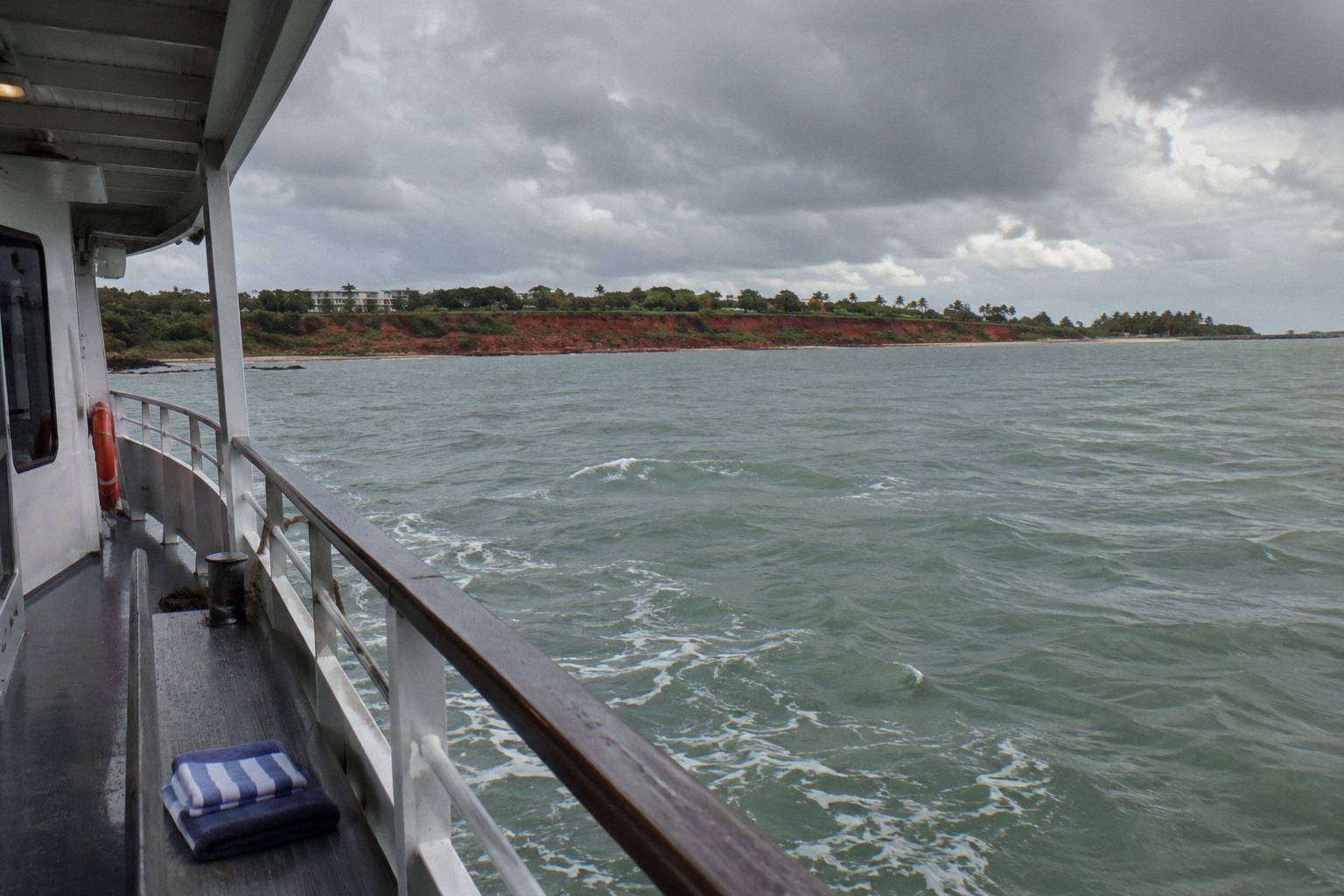
What a weather change actually looks like on the water varies by vessel. The Charles Darwin is a three-level catamaran with an open-air Sun Deck and two air-conditioned indoor levels, so an evening that turns showery still has a covered, seated place to eat. A sailing catamaran or a ketch is a more open experience by nature. Neither fact makes one better; it just means the clear-month statistics and the vessel type are worth weighing together when booking outside June to September.
One point of safety advice that belongs here because the wet months bring it to mind: none of these cruises includes swimming, and NT Government advice is to swim only in signposted exclusion areas, so do not swim from the boat or the foreshore. That advice holds in every month, not only in stinger season from October to the end of May, when NT Health says box jellyfish are more likely in Territory waters, and though stings have been recorded in every month.
For a shoulder-month evening where the sky may or may not cooperate, the grazing option keeps things flexible in format: a gourmet grazing platter with locally made mango ice cream, allocated Sundeck seating, about two hours on the water.
The operator publishes no price for this cruise, so check the live listing for the current fare, and note the same cashless rule applies as on the sister buffet cruise.
So Which Month Should You Book Your Harbour Dinner?
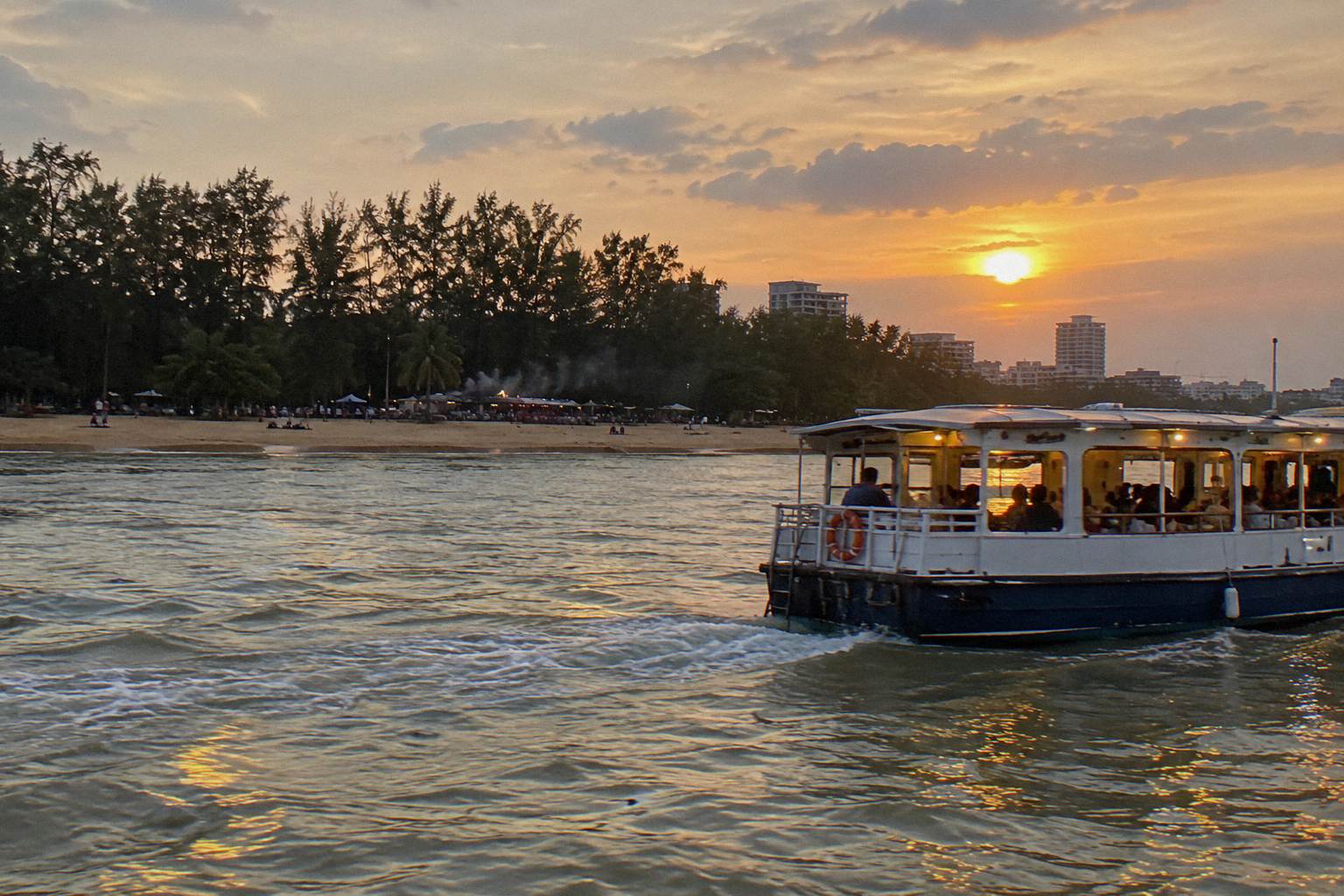
On the averages alone, July and August are the safest months for a clear evening, with 19 clear days or near it and under 5 mm of rain. June and September are close behind. May and October work with earlier sunsets or storm risk respectively, and November to March trades cloud statistics for the year's latest sunsets.
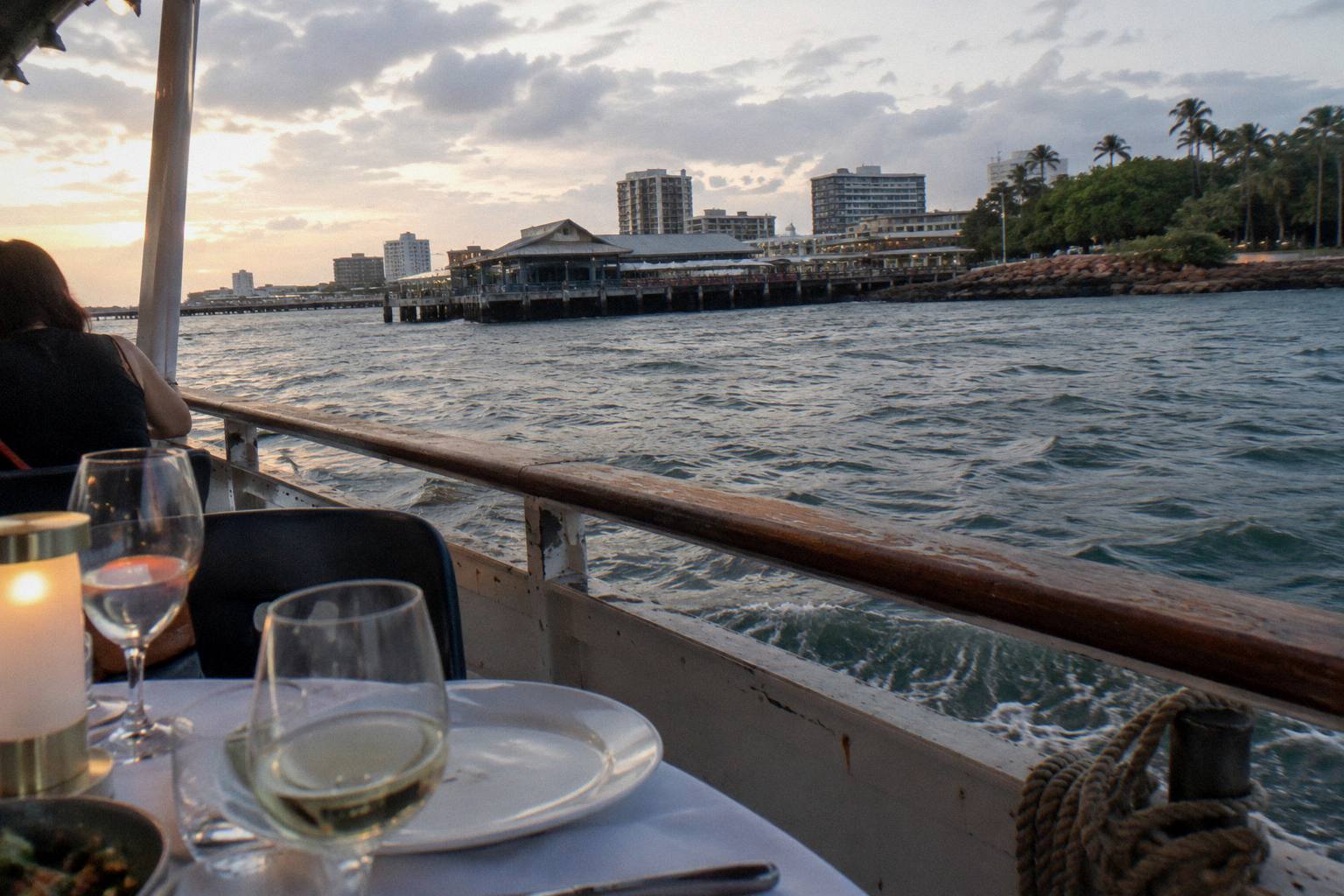
Map the choice to priorities. For the highest chance of an open sky, book July or August. For the latest sunset and a longer day beforehand, book December or January and accept that January averages 19.0 rain days. For a balance of warm weather, clear evenings and the full cruise calendar, the shoulder months of May and October sit inside Cape Adieu's stated April-to-October window while still showing dry-side rain statistics in May's case. For anyone weighing the boat against the famous shore-side alternative, the Mindil Beach versus boat comparison walks through that exact choice.
Families have an extra reason to lean dry-season. The Charles Darwin's youth fares and the infant-free policy make an early dry-season sunset inexpensive for children, and the operator suggests a light cardigan because it describes the harbour at about 25 degrees at night. The fuller planning picture, including what else to pack, is in the what to bring on a sunset boat guide. Small strollers are permitted on board if you tell reservations ahead.
Two honest gaps remain. No operator publishes a sell-out or demand figure, so how far ahead to book is not stated. And the operators do not publish parking details for Stokes Hill Wharf, so check current arrangements before driving to the wharf. Neither gap changes the weather logic; they are just worth knowing before the night itself. A final practical note: booking and card fees can apply on some tickets, so read the total at checkout rather than the headline fare.
This is the month-by-month core of what Darwin Sunset Dinner Cruise covers across its guides: match the Bureau's averages to the operator calendars, then pick the date. A deeper dive into the rainiest half of the year, for travellers set on a wet-season trip, continues in the wet season evening cruise guide.
Common Questions About Darwin Weather By Month
What Does Darwin Weather By Month Look Like For A Boat Evening?
Reading the BOM averages for Darwin Airport, May to September each average under 25 mm of rain, while November to April averages 69.3 mm to 432.1 mm. Mean maximum temperatures sit between 30.7 and 33.4 degrees all year, so the decision is about rain and cloud, not cold.
Which Is The Driest Month In Darwin?
July is the driest in the long-term averages, with 1.0 mm of rain and 0.2 rain days of 1 mm or more, plus 17.6 clear days on average. June and August are nearly as dry at 1.8 mm and 4.4 mm respectively.
What Time Is Sunset In Darwin?
A NOAA-based calculation puts sunset between about 6:29 pm and 7:19 pm across the year, accurate to about two minutes. The earliest sunsets fall late May to early July and the latest in December and January, with day-to-day change under a minute.
Do Darwin Dinner Cruises Run In The Wet Season?
Cape Adieu states its dinner cruises run April to October with private charters by enquiry outside that. Darwin Harbour Cruises and Sail Darwin state no season for their sunset cruises, so check the booking page for the dates you want.
What Happens If It Rains On The Night Of The Cruise?
Sail Darwin's terms say all sailing is subject to suitable tides and weather, the captain decides, and weather cancellations bring a reschedule or a 100 percent refund. The other operators do not publish their cancellation windows, so check the booking page.
Which Month Is Hottest In Darwin?
October and November share the highest mean maximum temperature in the long-term averages, 33.4 degrees each. The coolest months, June and July, still average 30.8 and 30.7 degrees, so evenings stay warm year round.